
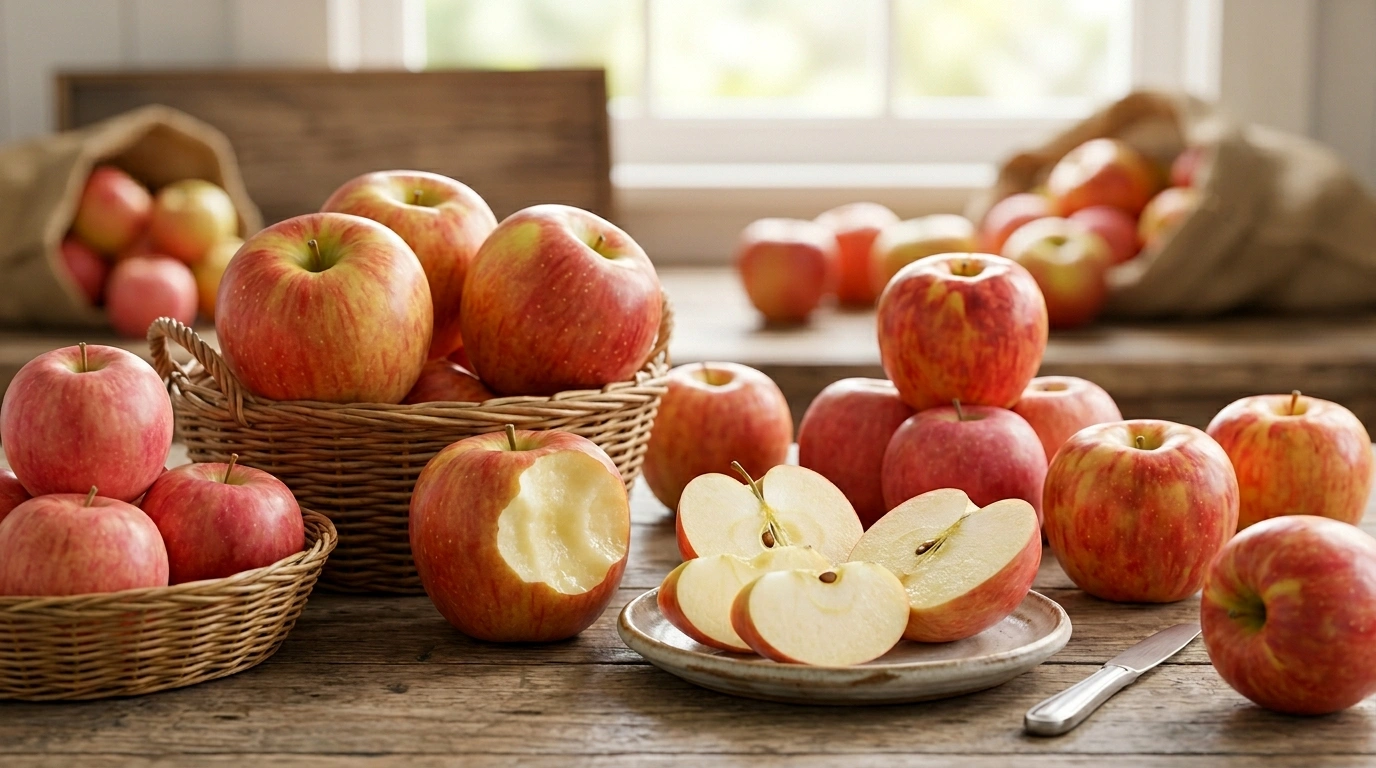
What is the sweetest apple is a question many shoppers ask when they want a fruit that tastes naturally sugary, crisp, juicy, and easy to enjoy straight from the bag. For most people, the best mainstream answer is the Fuji apple, because it is widely available, consistently sweet, and often measures around 15–18 Brix, which is higher than many common supermarket apples. Some growers and apple lovers also point to KIKU apples as even sweeter in some cases, often around 16–17 Brix, but they are not always as easy to find as Fuji apples, Gala apples, or Honeycrisp apples.
That said, the answer is not always as simple as naming one variety and moving on. There are more than 7,500 apple varieties in the world, and sweetness depends on more than just sugar content. Acidity, texture, ripeness, storage, and even the way an apple was grown can change how sweet it tastes. A very crisp apple with low tartness may seem sweeter than another apple that has similar sugar levels but sharper acidity.
This guide will give you a clear, practical answer. You will learn which are the sweetest apples, how an apple sweetness chart works, how the Brix scale helps measure apple sweetness, and which sweet apples are best for snacking, baking, applesauce, and salads. You will also see how Fuji, Gala, Honeycrisp, Golden Delicious, Envy, Cosmic Crisp, and KIKU compare in real life, not just on paper.
The Sweetest Apple Varieties Ranked From Sweet to Less Sweet
If you want a practical apple sweetness chart from sweet to tart, it helps to focus on apples that people can actually buy. Some niche varieties are extremely sweet, but most readers want sweetest apples found at commercial grocery stores or farmers markets. That is why the varieties below matter most.
-
KIKU Apples
If your goal is pure sweetness, KIKU apples often lead the conversation. They are known for very high sugar content, a crisp bite, and a clean, honeyed taste. They are often described as one of the sweetest modern apples on the market. The drawback is that they are not available everywhere, so not every shopper will find them easily.
-
Fuji Apples
When people ask what apple is the sweetest at the grocery store, Fuji apples are among the sweetest and usually the safest answer. They are rich, juicy, dense, and naturally sugary without much tart acidity getting in the way. Fujis are the sweetest apples for many everyday shoppers because they combine sweetness, crunch, and easy availability.
-
Envy Apples
Envy apples are another top choice if you love sweet apple varieties with a firm, elegant texture. They often have a balanced sweetness that feels polished and premium, making them a favorite for fresh eating.
-
Gala Apples
Gala apples are widely loved because they are mild, pleasant, and easy to like. They are sweet, soft-crisp, and very approachable, especially for children and people who do not enjoy tart apples. If you want a dependable sweet apple that is easy to find, Gala is a smart choice.
-
Golden Delicious Apples
Golden Delicious apples have a mellow sweetness and softer texture than some ultra-crisp modern varieties. They may not always top a list of the 10 sweetest apples, but they are consistently sweet and versatile.
-
Honeycrisp Apples
Many people assume Honeycrisp apples are the sweetest because they taste amazing. In truth, they are often more sweet-tart than purely sweet. Still, they deserve a place high on the list because their explosive crunch and juiciness make them feel very sweet.
-
Ambrosia Apples
Ambrosia apples are known for their mild, sugary flavor and low-acid profile. They can be an excellent option for people who want sweet apples without sharp tang.
-
Cosmic Crisp Apples
Cosmic Crisp apples bring a mix of sweetness, juiciness, and brightness. They are not always the single sweetest apple, but they are strong all-around fruit with great fresh-eating appeal.
If you want the short version, KIKU may be the sweetest niche pick, but Fuji apples are among the sweetest mainstream apples and remain the easiest recommendation for most readers. That is why Fuji apples sit at the center of so many discussions about the sweetest apple.
A Quick Sweet Apple Comparison Table
| Apple Variety | Sweetness Level | Tartness | Texture | Best For |
| KIKU | Very high | Low | Very crisp | Snacking |
| Fuji | Very high | Low | Dense, crisp, juicy | Snacking, salads, sauce |
| Envy | High | Low | Firm, crisp | Snacking |
| Gala | High | Low | Tender-crisp | Kids, lunchboxes, fresh eating |
| Golden Delicious | Medium-high | Low | Softer, tender | Baking, sauce, fresh eating |
| Honeycrisp | Medium-high | Medium | Extra crisp, juicy | Snacking, salads |
| Ambrosia | Medium-high | Low | Tender-crisp | Snacking |
| Cosmic Crisp | Medium-high | Medium | Crisp, juicy | Salads, snacking, baking |
This kind of sweet apple comparison table is useful because sweetness alone does not decide the best apple. Texture and tartness matter just as much.
How Apple Sweetness Is Measured
To understand how apple sweetness is determined, you need to know a little about the Brix scale. Brix measures the amount of dissolved sugar in fruit juice. In simple terms, a higher Brix reading usually means a sweeter apple. For example, Fuji apples Brix scale 15 to 18 is often cited as a reason they taste so sweet. Kiku apples Brix scale 16 to 17 also helps explain their reputation. By comparison, most apples Brix scale 12 to 14 fall into a more moderate range.
But apple sweetness is not just about one number. Apple acidity changes the way sweetness feels in your mouth. That is why what makes some apples sweet and others tart is not just sugar content. Apples with lower acidity often taste sweeter, even if their sugar is similar to another variety. In other words, higher sugar content overpowers tart acidity, while sharper acidity can make an apple seem less sweet.
Texture also matters. A very juicy, crisp apple may feel more refreshing and sweeter than a softer apple. Aroma matters too. A sweet smell can make flavor seem richer and rounder. That is why people sometimes disagree about the sweetest apples even when looking at the same variety list.
So, if you are choosing between two apples, do not think only about the Brix scale. Think about the full picture: sugar content, sweet-tart balance, texture, juiciness, and ripeness.
Fuji vs Gala vs Honeycrisp vs KIKU: Which Sweet Apple Should You Choose?
This is one of the most useful real-world questions because many shoppers are not asking for a scientific chart. They want to know which apple to put in the cart.
If you want the sweetest all-around mainstream option, go with Fuji. It is ideal for people who want strong sweetness, firm bite, and broad availability. If you want a gentler, friendlier sweet apple for school lunches or picky eaters, choose Gala apples. They are smaller, softer in flavor, and very easy to like.
If texture matters most, Honeycrisp apples are hard to beat. They are not always the most sugary, but their huge crunch and juicy bite make them feel exciting. They are perfect for people who like sweetness with a little brightness.
If you are lucky enough to find them, KIKU apples are even sweeter than many common varieties. That makes them a great pick for people chasing maximum sweetness. The trade-off is that they may cost more or be harder to find.
So the simplest answer is this:
Fuji vs Gala sweetness favors Fuji.
Fuji vs Honeycrisp sweetness also favors Fuji if pure sweetness is your goal.
Kiku vs Fuji sweetness may favor KIKU, but Fuji wins on accessibility and consistency for most shoppers.
Best Sweet Apples for Snacking, Baking, Applesauce, and Salads
The best apple varieties for baking and snacking are not always the same. A perfect snack apple may not be your best pie apple, and a great sauce apple may not be the crispest salad apple.
For snacking, the winners are usually Fuji apples, Envy apples, Gala apples, and KIKU apples. These varieties are naturally sweet, easy to bite into, and satisfying on their own. If you want best sweet apples with crisp texture, Fuji, Envy, and KIKU are especially good.
For baking, you may want sweetness, but you also need structure. Golden Delicious, Honeycrisp, and sometimes Cosmic Crisp apples work well because they hold up better than softer apples. If you are making pie, the best apples for baking often include a sweet variety mixed with a slightly tart one for balance.
For applesauce, softer apples can be very helpful. Golden Delicious and McIntosh are classic, but Fuji can also work if you want naturally sweeter sauce. In fact, many people looking for the best apples for applesauce choose sweet varieties so they can use less added sugar.
For salads, texture matters a lot. Honeycrisp, Fuji, Gala, and Cosmic Crisp are all strong choices because they stay crisp and add bright, fresh flavor.
So if you are asking for best apples for applesauce and salads, the answer depends on the dish. Sauce loves tender flesh. Salads love firm crunch. That is why popular sweet apple uses should always be matched to texture, not only sweetness.
How to Choose a Sweet Apple at the Store
A smart sweet apple buying guide starts with the label. If you truly want the sweetest apples to buy, look for names like Fuji, KIKU, Gala, Envy, or Golden Delicious. Do not guess based only on color. A red apple is not automatically sweeter than a yellow or striped apple.
Next, pick up the fruit. A good apple should feel firm, heavy for its size, and free from major bruises. Soft spots can mean age or damage. Wrinkled skin can suggest that the apple has lost moisture.
This is also where apple storage matters. Some people do not realize that all apples get sweeter over time to a point because starches convert to sugar while fruit is in storage. That means a well-stored apple can taste better than you expect. At the same time, poor storage can hurt texture.
If you are shopping for kids, lunchboxes, or easy fresh eating, Gala apples are often a safe and friendly choice. If you want a stronger sweet flavor, buy Fuji apples. If you want a premium-feeling crisp apple, try Envy or Cosmic Crisp. And if you see KIKU, it is worth trying at least once.
A good rule is this: choose by variety first, then by freshness and firmness.
Why Some Apples Taste Sweeter Than Others
Many shoppers assume sweetness is fixed, but apples are more complex than that. What makes some apples sweet and others tart includes genetics, growing conditions, harvest timing, and storage.
First, each variety is naturally different. Fuji apples, Gala apples, and KIKU apples were developed or selected for sweeter flavor profiles. Granny Smith, on the other hand, leans tart because of its acidity.
Second, ripeness matters. Apples harvested at the right stage usually taste fuller and sweeter. Third, growing conditions such as sunlight, cool nights, and soil can influence fruit sugar and flavor development.
Then there is storage. One of the most interesting facts about apples is that starches convert to sugar while fruit is in storage. That is one reason all apples get sweeter over time to some degree. It does not mean every stored apple becomes perfect, but it explains why sweetness can shift after harvest.
Finally, human perception matters. A low-acid apple with floral aroma and crisp bite may seem sweeter than a softer apple with similar numbers. That is why sweet-tart balance is such an important idea when talking about the sweetest apple.
Are the Sweetest Apples Also Good for You?
Some people worry that sweeter apples are less healthy, but that is too simple. Apples are still whole fruit, not candy. A medium apple is often around 100 calories, contains about 85% water, and can provide helpful fiber, vitamin C, and other plant compounds. Some sources also note around 5 grams of fiber for certain apple servings or varieties.
So, do sweeter apples have more sugar? Sometimes yes, but that does not automatically make them a bad choice. Whole apples come with fiber and water, which helps make them filling. The health value of an apple is not erased just because it tastes sweet.
If you are comparing the sweetest apple vs healthiest apple, the better question is how you plan to eat it. A sweet apple that helps you choose fruit over processed sweets is a good outcome. For many people, Fuji, Gala, and Honeycrisp are all healthy options as part of a balanced diet.
This is especially important for families. The sweetest apple for kids may simply be the one they will actually eat happily and regularly.
Sweetest Apples by Season and Availability
When apples are in season can affect both flavor and price. Some sweet apples are easier to find in early fall, while others show up later and remain available for months because apples store well.
Gala apples often appear early in the season, making them one of the first sweet choices shoppers see. Honeycrisp apples usually become common in September. Fuji apples often arrive a bit later, sometimes peaking in mid- to late October, and then remain widely available because they store well. Some sweet varieties may be sold from December to March, while others circulate from May to October depending on region, imports, and storage.
This matters because the sweetest apple available year-round is not always the same as the freshest in peak season. A fresh local apple in fall may taste better than a stored apple in another month, even if both carry the same variety name.
So if you care about flavor, it helps to pay attention to apple season, local harvest times, and store turnover. Freshness plus the right variety usually leads to the best result.
A Short Real-Life Example
Imagine two shoppers standing in front of an apple display. One wants the sweetest apple for school lunch. The other wants apples for pie.
The first shopper should probably choose Gala or Fuji. Both are sweet, easy to eat, and child-friendly. The second shopper may still use a sweet apple, but should think about structure and balance. Golden Delicious or Honeycrisp may work better, especially when paired with a tarter apple.
This simple example shows why the question is not only what is the sweetest apple, but also what is the right sweet apple for the job.
FAQs About the Sweetest Apples
Is Fuji the sweetest apple?
For mainstream supermarket varieties, Fuji is one of the strongest answers. It is widely considered among the sweetest apples and is often the easiest recommendation for most shoppers.
Which is sweeter, Fuji or Honeycrisp?
In pure sweetness, Fuji vs Honeycrisp sweetness usually favors Fuji. Honeycrisp has more bright acidity and a sweet-tart profile.
What apple has the most sugar?
Among commonly discussed sweet varieties, KIKU and Fuji are often near the top. 15–18 Brix for Fuji and 16–17 Brix for KIKU are often cited reference points.
Are Gala apples sweeter than Honeycrisp?
Many people find Gala apples sweeter in a softer, milder way, while Honeycrisp apples feel brighter, juicier, and more balanced between sweet and tart.
What is the sweetest apple for kids?
Gala apples are one of the best choices for children because they are sweet, mild, and easy to enjoy. Fuji apples are another strong option if the child likes a firmer bite.
What sweet apple is best for applesauce?
If you want naturally sweet sauce, Fuji and Golden Delicious are excellent picks. They can reduce the need for added sugar.
Conclusion: The Best Answer for Most Readers
If you came here asking what is the sweetest apple, the clearest answer for everyday shopping is Fuji. It is sweet, crisp, juicy, widely available, and consistently satisfying. If you want an even sweeter option and can find it, KIKU apples are worth trying. If you want a gentler sweet apple, choose Gala. If you care most about texture, Honeycrisp remains a favorite.
The best choice depends on what matters most to you: pure sweetness, crunch, baking performance, or kid-friendly flavor. But for most shoppers looking for a reliable answer, Fuji apples are among the sweetest and remain the easiest top pick.
Disclaimer: This article is for general informational purposes only. Taste, sweetness, and quality may vary based on variety, ripeness, and growing conditions. Always choose based on personal preference and local availability.