
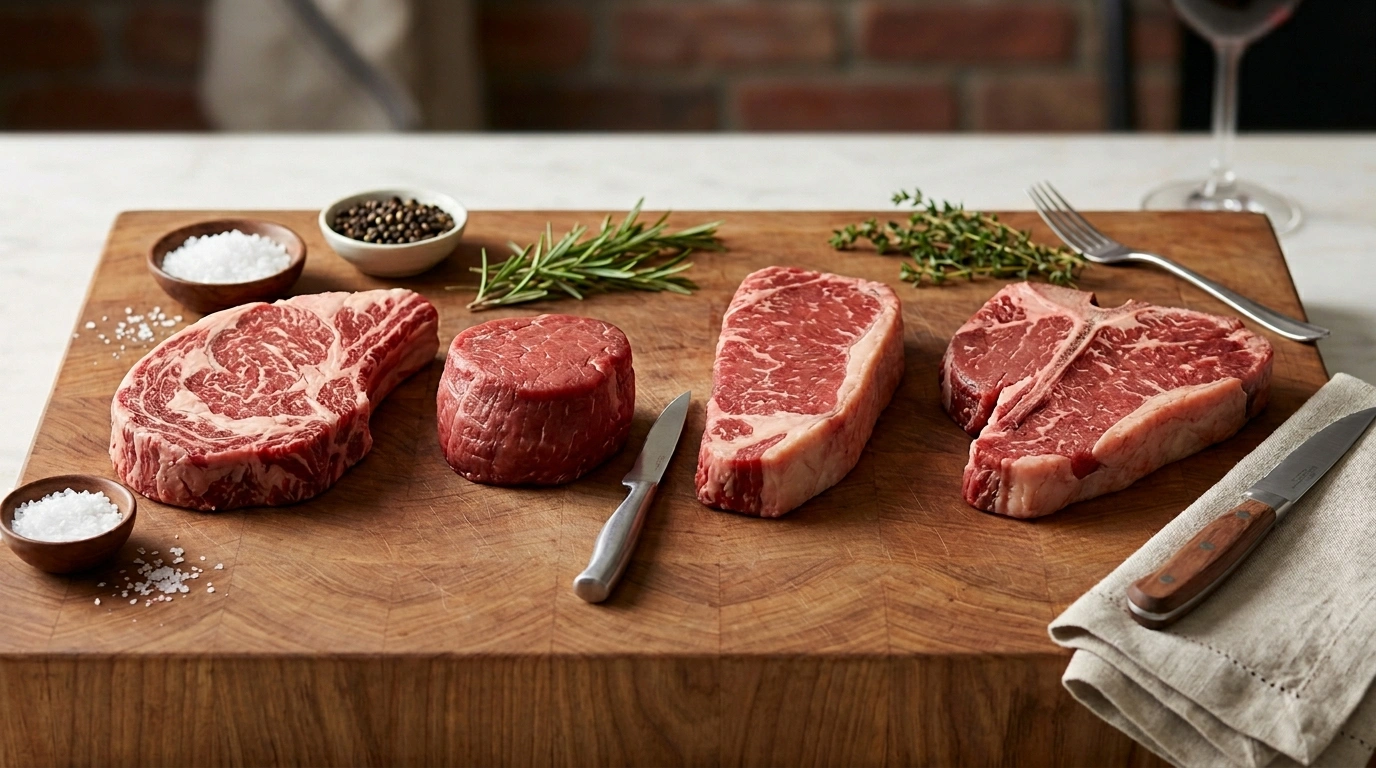
What is the best cut of steak depends on what matters most to you: flavor, tenderness, price, or the way you plan to cook it. For many steak lovers, ribeye is the best overall steak cut because its rich marbling, deep beefy flavor, and juicy bite make it hard to beat. But that does not mean it is the right choice for everyone. If you want the most tender cut of steak, filet mignon or tenderloin often wins. If you want the best middle ground between tenderness and flavor, New York strip is one of the smartest picks.
That is why this guide is not just another list of types of steak. Instead, it is a practical steak cut guide that helps you understand which steak cut is right for you. Some readers want a premium steak cut for a special dinner. Others want affordable steak cuts that still taste excellent. Some want the best steak for grilling, while others want the best steak for pan-searing in a cast-iron skillet at home. The real answer comes from matching the steak to your goal.
In the sections below, you will see how the most popular different types of steak cuts compare, which ones offer the best value, what steak cuts to avoid for a classic steak dinner, and how to choose a steak at the butcher’s counter or grocery store like a pro. By the end, you will know exactly how to choose the best steak cut for your taste, budget, and cooking style.
What Is the Best Cut of Steak Overall?
If you want one clear answer, ribeye is usually the best cut of steak overall. It has generous intramuscular fat, excellent marbling, and the kind of bold, rich flavor that steak fans often look for first. It is especially good for people who care more about flavor than pure softness. A well-cooked bone-in ribeye or boneless ribeye can deliver the kind of restaurant-quality steak at home that many people are trying to recreate.
That said, the best steak for tenderness is usually filet mignon. Cut from the tenderloin, it has a buttery-soft texture and very little chew. If someone asks, “what is the best cut of steak for tenderness?” the answer is almost always filet. The trade-off is that it has less strong beef flavor than ribeye.
Then there is New York strip, which many people consider the best all-rounder. It has a firmer bite than filet, less fat than ribeye, and a satisfying balance of tenderness and flavor. If you have ever wondered which steak cut is best for a dependable steak dinner, strip steak is always in the conversation.
For a quick answer, think of it this way: ribeye is the most flavorful cut of steak, filet mignon is the most tender cut of steak, and New York strip may be the smartest choice if you want a reliable middle ground.
Ribeye vs Filet Mignon vs New York Strip: Which One Wins?
The question “which is better ribeye or filet mignon?” comes up all the time, and the truth is that both are excellent for different reasons. Ribeye wins on flavor. Thanks to its fat cap, rich marbling, and juicy texture, it gives you the bold, meaty experience many people imagine when they think of a great steak. If your priority is deep flavor and a rich mouthfeel, ribeye usually comes out on top.
Filet mignon, on the other hand, wins on texture. It is leaner, softer, and more delicate. It does not have the same strong umami flavor as ribeye, but it feels luxurious and refined. That makes it a favorite for date night, elegant dinners, and people who care more about tenderness than intensity.
New York strip sits in the middle. It has more beefy flavor than filet and a firmer bite that many steak lovers enjoy. It is also easier for many home cooks to prepare well because it gives you a nice balance of tenderness and structure. If you are asking which is better ribeye or sirloin, ribeye usually wins on flavor and richness, but top sirloin can still be a great value option.
Here is a simple comparison:
| Steak Cut | Best For | Texture | Flavor | Price Level | Best Cooking Method |
| Ribeye | Best overall flavor | Tender, juicy | Rich, bold | Higher | Grilling, pan-searing, reverse searing |
| Filet Mignon | Best tenderness | Very soft | Mild, buttery | Higher | Pan-searing, oven finishing |
| New York Strip | Best balance | Firm but tender | Beefy, satisfying | Mid to high | Grilling, pan-searing |
If you want one winner for most people, ribeye vs filet mignon vs New York strip usually ends with ribeye taking the crown. But if your personal taste leans toward tenderness or a cleaner bite, the answer may change.
Best Steak Cuts by Flavor, Tenderness, and Value
One reason the keyword best steak cuts is so popular is because people define “best” in different ways. For flavor, ribeye is still the standout. Its marbling melts as it cooks, creating a rich and juicy steak with real depth. Some steak lovers would even argue that rib cap, also known as spinalis, is even more flavorful, though it is less common and often more expensive.
For tenderness, filet mignon remains the standard. Because it comes from a less-worked muscle, it has less connective tissue and a softer bite. It is a classic premium steak cut, especially when you want an elegant presentation.
For value, however, the conversation changes. Top sirloin, flat iron steak, and tri-tip are often among the smartest choices. They may not sound as luxurious as filet or porterhouse, but they offer strong flavor, solid texture, and better pricing. If you are searching for the best cheap cut of steak or the best value steak cut, these are often the best places to start.
There are also most underrated steak cuts worth mentioning. Picanha, bavette, and flat iron can be excellent when cooked correctly. They bring strong flavor and often cost less than the big-name cuts. For many everyday cooks, these can be the best everyday steak cut because they offer real satisfaction without the price tag of Wagyu or filet.
In simple terms, the best steak by category looks like this: ribeye for flavor, filet mignon for tenderness, New York strip for balance, and sirloin or flat iron for value.
The Most Popular Steak Cuts Explained
Understanding the most popular cuts of steak makes it easier to shop with confidence. Ribeye comes from the rib section and is known for generous marbling, a tender texture, and strong flavor. It is often considered the best steak for people who want a rich, juicy result. A bone-in ribeye can feel even more impressive on the plate.
Filet mignon comes from the beef tenderloin and is prized for tenderness. It is not the boldest steak in terms of flavor, but it has a smooth texture that feels luxurious. Many steakhouse guests order it when they want softness above everything else.
New York strip, sometimes called strip steak or Kansas City strip, comes from the short loin. It has a tighter grain than filet and less fat than ribeye, but still delivers strong flavor. It is one of the safest choices for anyone wondering what steak is best for a classic steak dinner.
Porterhouse and T-bone are closely related. Both include a T-shaped bone and feature two steaks in one: part strip and part tenderloin. The main difference is size. A porterhouse has a larger tenderloin section, which is why it is often seen as the more premium option. If you want a dramatic, shareable steak, porterhouse is a top pick.
Sirloin is leaner and more affordable. It may not have the same richness as ribeye, but it can still be delicious, especially for people who prefer a less fatty steak. Top sirloin in particular is one of the most practical affordable steak cuts.
Flat iron steak is one of the best value options on the market. It is usually tender, flavorful, and easy to cook. Flank steak and skirt steak are different. They are flavorful, but they have more pronounced muscle fibers, which means they should usually be sliced against the grain. These cuts shine in dishes like tacos, salads, and sandwiches, even if they are not always the best for a formal steak dinner.
There are also specialty cuts like tomahawk steak, picanha, bavette, onglet, rump steak, and scotch fillet. Some are more common in certain regions, such as Australia or South America, where churrasco and asado styles celebrate different cuts in different ways. These options add variety, but for most readers, ribeye, filet, strip, porterhouse, and sirloin remain the main cuts to know.
Which Steak Cut Is Best for Grilling, Pan-Searing, and Reverse Searing?
The best cut of steak by cooking method is not always the same. For grilling, steaks with good fat content usually perform best because they stay juicy over high heat. That is why ribeye, New York strip, porterhouse, and picanha are excellent choices. They develop a great crust while keeping plenty of moisture inside.
For pan-searing, especially in cast iron, filet mignon, strip steak, and flat iron steak are reliable options. They brown well, cook fairly evenly, and are easy to control. If you are looking for the best cut of steak for cast iron, ribeye and strip are both strong picks, with filet close behind if you want tenderness.
For the best cut of steak for reverse sear, thick steaks are ideal. A thick ribeye, a large porterhouse, or a tomahawk works especially well because the gentle first phase of cooking helps the inside reach the right temperature before the final hot sear creates a crisp crust.
Some cuts are better for different uses entirely. Skirt steak, flank steak, and bavette are great for very quick high-heat cooking, while cuts such as brisket or oxtail belong more in slow-cooking or braising than on a plate as a classic steak.
A simple rule helps here: choose fatty cuts for grilling, thick cuts for reverse searing, and more uniform cuts for pan-searing. That small shift alone can dramatically improve your results.
USDA Prime vs Choice vs Select — Does Beef Grade Matter?
Yes, beef grade matters more than many buyers realize. If you have ever wondered how beef grade affects steak quality, the main thing to know is that grading usually reflects the amount of marbling and the likely eating experience.
USDA Prime usually has the highest marbling of the common retail grades, which means more richness, more juiciness, and often a more tender result. Choice is still very good and often gives excellent value, especially in cuts like ribeye and strip. Select is leaner and can still work well, but it usually has less marbling and may be less forgiving during cooking.
This matters when comparing steaks. A Choice ribeye may still outperform a lower-grade filet in pure flavor because of the fat and richness. When you move into very premium territory, such as American Wagyu or A5 Japanese Wagyu, the marbling level becomes even more dramatic. A5 grade beef is famous for its intense richness, though it is not what most people eat every day.
So, if you are asking what is the best cut of steak and want the fullest answer, the cut is only part of the story. The grade, aging, thickness, and cooking method matter too.
Best Cut of Steak by Budget
The best cut of steak by budget depends on how much you want to spend and what type of result you expect. If you are shopping in the premium range, ribeye, filet mignon, porterhouse, and Wagyu are the stars. These cuts are often reserved for special dinners, celebrations, or restaurant-style meals at home.
In the mid-range, New York strip, top sirloin, and flat iron often give the smartest mix of quality and value. They are easier on the wallet than filet or Wagyu but still satisfying enough for a great steak dinner.
In the budget-friendly range, tri-tip, flank steak, skirt steak, and bavette can be excellent. The key is understanding their best use. A budget steak may not be the best option for a thick, center-of-the-plate steakhouse presentation, but it can still be delicious when cooked correctly and sliced properly.
This is where many people make mistakes. They buy a cheaper cut expecting it to behave like filet mignon, then feel disappointed. But if you treat each cut on its own terms, the best steak cut depends on budget far less than people think. Smart buying often beats expensive buying.
How to Choose the Best Cut of Steak at the Grocery Store or Butcher Counter
Knowing how to buy steak at the grocery store can save money and improve your results immediately. First, look at the marbling. Fine streaks of fat running through the meat usually mean better flavor and juiciness. Next, check thickness. A steak that is too thin can overcook quickly, while a thicker steak gives you more control, especially for grilling or reverse searing.
Color matters too. You usually want beef with a fresh, appealing red color, not something dull-looking. Then consider fat distribution. A good fat cap can add flavor, but huge outer chunks of fat do not always help if they will not render properly.
If you are shopping at a butcher’s counter, ask practical questions. Good examples include: Which steak is best for grilling? Which cut is best for a beginner? Which steak has the best value today? What cut should I use if I want a restaurant-style result? These are exactly the kinds of questions that help you choose wisely.
It also helps to know how much steak per person to buy. For a standard meal, many people plan around half a pound per person, though big cuts like porterhouse may be shared. If you are serving a crowd, planning carefully matters just as much as choosing the right cut.
Bone-In vs Boneless Steak: Which Tastes Better?
The debate over bone-in vs boneless steak taste difference is interesting because both sides have a point. Some people believe bone-in steaks have better flavor, while others simply enjoy the presentation and the feeling of eating a more dramatic cut like a porterhouse, T-bone, or tomahawk.
In practice, the actual flavor difference often comes down more to thickness, fat content, and cooking than the bone itself. Still, bone-in cuts can cook a little differently and often look more impressive. A 7-inch bone on a tomahawk, for example, certainly adds visual impact.
Boneless steaks, however, are easier to cook evenly and easier to slice and serve. For many home cooks, boneless ribeye or strip steak is simply more practical. If convenience matters, boneless often wins. If presentation and steakhouse drama matter, bone-in is hard to beat.
Best Steak Cuts for Beginners, Home Cooks, and Special Occasions
If you are new to steak, the best cut of steak for beginners is usually New York strip, top sirloin, or flat iron steak. These cuts are easier to manage, reasonably forgiving, and less intimidating than ultra-expensive options. They are great for home cooks who want good results without the pressure of cooking a costly steak.
For reliable home cooking, ribeye is also fantastic because the marbling helps protect against dryness. That makes it one of the best steak cuts for home cooks. Even if you are not perfect with temperature, ribeye still tends to stay enjoyable.
For special occasions, the answer changes. Filet mignon, porterhouse, tomahawk steak, and Wagyu all feel celebratory. They are ideal for a classic steak dinner, a holiday meal, or a memorable date night. If you want the best steak for sharing, porterhouse is especially appealing because it offers both strip and tenderloin in one cut.
Steak Cuts to Avoid for a Classic Steak Dinner
When people talk about steak cuts to avoid, it does not mean those cuts are bad. It usually means they are better suited to another purpose. Cube steak, for example, is great in comfort food dishes but not the best choice for a luxurious steakhouse-style plate. Brisket and oxtail are wonderful, but they belong more to low and slow cooking and braised dishes.
The same idea applies to some lean or heavily worked cuts. They may shine in tacos, sandwiches, or salads, but they are not always the best answer when someone wants the classic image of a thick, juicy steak on a plate.
That is why it is better to think in terms of fit, not good or bad. The right cut for tacos may not be the right cut for a formal dinner, and that is perfectly fine.
Frequently Asked Questions About the Best Cut of Steak
A common question is whether ribeye is the best steak overall. For many people, yes. It offers the strongest mix of richness, juiciness, and satisfaction. Another question is whether filet mignon is overrated. Not really. It is simply different. If you want tenderness above all, filet earns its reputation. If you want bold flavor, ribeye usually beats it.
People also ask, what is the best cheap cut of steak? The answer often includes top sirloin, flat iron, and sometimes tri-tip. These cuts can offer outstanding value when cooked properly. Another popular question is what steak should I order at a steakhouse? If you want balance, choose strip. If you want luxury, choose filet. If you want the biggest flavor, choose ribeye.
And what is the best cut of steak for medium-rare? Ribeye, strip, filet, and porterhouse all work very well at medium-rare, though fatty steaks like ribeye especially shine there because the heat softens the fat beautifully without drying out the meat.
So, What Is the Best Cut of Steak?
The final answer is simple: the best cut of steak is the one that matches your taste, cooking method, and budget. If you want the most satisfying answer for most people, choose ribeye. If tenderness matters most, choose filet mignon. If you want a balanced, dependable option, choose New York strip. If value matters, sirloin, flat iron, and tri-tip deserve serious attention.
That is the real key to understanding what is the best cut of steak. It is not just about which steak is most expensive or most famous. It is about choosing the right cut for the result you want. Once you understand marbling, texture, price, and cooking style, picking the right steak becomes much easier.
So whether you want a premium steakhouse-style dinner, a smart everyday steak, or the best value cut for the grill, you now have a clear answer — and a better way to buy.
FAQs About the Best Cut of Steak
What is the best cut of steak overall?
For most people, ribeye is the best cut of steak overall because it offers the best mix of flavor, juiciness, and tenderness. Its rich marbling gives it a bold, beefy taste that many steak lovers prefer over leaner cuts.
What is the most tender cut of steak?
The most tender cut of steak is filet mignon, which comes from the tenderloin. It has a soft, buttery texture and very little chew, making it a popular choice for people who value tenderness most.
What is the most flavorful cut of steak?
The most flavorful cut of steak is usually ribeye. Because it has more intramuscular fat and marbling than many other cuts, it delivers a richer and juicier taste than leaner steaks.
Which is better: ribeye, filet mignon, or New York strip?
It depends on what you want. Ribeye is best for flavor, filet mignon is best for tenderness, and New York strip is best for a balanced mix of texture and beefy flavor. If you want an all-rounder, New York strip is a smart choice.
What is the best steak cut for grilling?
The best steak cuts for grilling are ribeye, New York strip, porterhouse, and T-bone. These cuts handle high heat well and develop a flavorful crust while staying juicy inside.
What is the best cut of steak for pan-searing?
For pan-searing, filet mignon, New York strip, and ribeye are excellent choices. They cook evenly in a hot pan and create a beautiful outer crust, especially in a cast-iron skillet.
Disclaimer: This article is for general food and cooking information only. Results may vary based on meat quality, cooking method, and personal preferences. Always follow proper food safety guidelines when handling and cooking meat.