
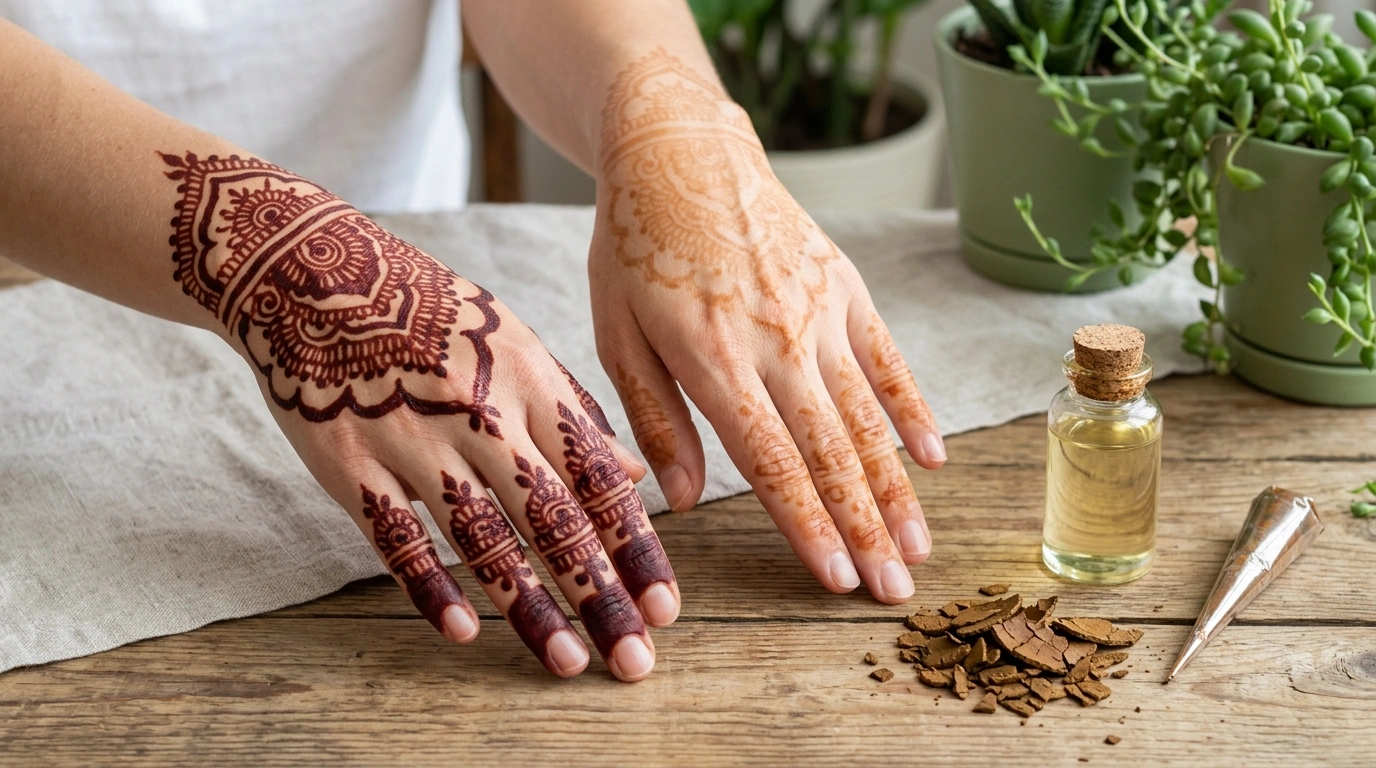
How long does the henna tattoo last is one of the first questions people ask before getting one, and the honest answer is that most natural henna tattoos last about 1 to 2 weeks, although some fade sooner and some stay visible closer to 1–3 weeks depending on where the henna is placed, how long the paste stays on, your skin type, and how well you care for it afterward. Henna King describes a typical range of 7 to 14 days, while MedicineNet notes some henna tattoos may last 4 to 7 days, which shows why results can vary so much from person to person.
If you are trying to figure out how long does henna last on skin, the best answer is not just a number. Henna tattoo duration depends on the stain’s development, how much water exposure and friction it gets, and whether you are using natural henna or something marketed as black henna. In this guide, you will learn how long do henna tattoos last, how long does henna take to dry, how to make henna tattoos last longer, and what to know about henna tattoo aftercare, fading, and safety.
How Long Do Henna Tattoos Normally Last?
A natural henna tattoo usually stays visible for 7 to 14 days, though some people notice fading after 4 to 7 days, and others may keep a clear stain close to two weeks or even a little longer on the best body areas. That is why you will see different answers online to how long does a henna tattoo last and how long do henna tattoos normally last. They are not really conflicting. They are describing different skin, placement, and aftercare conditions.
Fresh henna does not look fully developed right away. At first, the stain often appears orange. Over the next 24–48 hours, it deepens into a richer reddish-brown stain. So when people ask how long does henna last on your skin, they are really asking two things at once: how long it takes to reach peak color and how long it remains visible before fading away.
A simple way to think about it is this: the darkest stain usually appears after one or two days, then gradually fades as your skin naturally exfoliates. If you want a long-lasting henna tattoo, the goal is to help that stain develop fully and then protect it from the things that make it fade faster.
What Affects How Long a Henna Tattoo Lasts?
Several factors decide whether your henna tattoo fading starts quickly or whether your design holds nicely for days.
The first is body placement. Henna generally lasts longer on hands and feet, especially on palms and the tops of the hands, because the skin there tends to stain more deeply than areas like the upper arm, chest, or back. Henna King specifically highlights hands and feet as the best areas for long-lasting results.
The second factor is skin type. If you have oily skin, the stain may not hold as long. If you have dry skin, the color can still last well, but excessive dryness plus rubbing may make the design look patchy sooner. This is why some people search henna longevity by skin type or does oily skin make henna fade faster. While competitors only touch on this lightly, it is a real part of why one person gets nearly two weeks and another gets less than one.
The third factor is paste time. If the henna paste stays on long enough, the stain usually develops better. Henna King notes that once the design dries, many people leave it on for 3 to 6 hours or even overnight for a deeper result.
Finally, daily habits matter. Water exposure, chlorine, hot tubs, harsh soaps, exfoliants, and repeated rubbing from clothing can all shorten the life of the design. That is the real answer behind why is my henna tattoo fading so fast: it is usually not one single issue, but a mix of placement, skin, and aftercare.
Where Does Henna Last the Longest? Hands, Feet, Arms, and Other Body Parts
If you want the best answer to what’s the best place to apply henna for long-lasting results, this section matters more than almost anything else.
Here is a quick comparison:
| Body area | How well henna usually lasts | Why |
| Palms | Longest | Thick skin stains deeply |
| Feet / soles | Longest | Dense skin holds pigment well |
| Tops of hands | Very good | Strong stain with visible contrast |
| Wrists / forearms | Moderate | Good, but fades faster than hands |
| Upper arms / shoulders | Shorter | Skin turns over faster |
| Back / torso / neck | Shorter | More friction, sweat, and faster fading |
So, where henna lasts the longest is usually the palms, feet, and hands. If your goal is a long-lasting henna tattoo, choose those areas when possible. If you are asking about henna on hands vs arms vs feet, hands and feet almost always win.
This is especially useful if you are getting henna for a special event. A simple placement decision can change the result from 4 to 7 days to something closer to 7 to 14 days or more.
How Long Does Henna Take to Dry—and When Does It Get Darker?
A lot of people confuse drying time with final stain time, but they are not the same thing.
In many cases, how long does henna take to dry depends on the thickness of the paste and the room conditions. Henna King says the paste may dry in about 30 minutes to 1 hour, although humidity can affect the process. After that, many artists recommend leaving the dried paste on for 1 to 3 hours, 3 to 6 hours, or even overnight if you want a darker stain.
When you first remove the paste, the color is often a bright orange stain. That is normal. If you have ever wondered why henna is orange at first, it is because the stain is still developing. Over the next 24–48 hours, it usually deepens into a darker red and brown tone. MedicineNet also notes this color shift from orange to darker brown shades.
This matters because some people panic too early and assume the henna will not last. In reality, the design often looks best on day two. That is why sections like henna color stages and henna stain development chart can add more value than a simple one-line answer.
Henna Aftercare Timeline: What to Do in the First 48 Hours
If you care about henna tattoo aftercare, think in stages rather than random tips.
While the paste is still on, let it dry fully and avoid smudging. Do not rush to wash it off. If the paste flakes naturally, remove it gently instead of scrubbing. Henna King advises users to gently remove the paste and give it time to develop rather than using water right away.
In the first 12 hours, try to keep the area as dry as possible. Many people search how long to wait before showering after henna, and the safest answer is to delay full water exposure as long as you reasonably can. Some people use a waterproof bandage, while others apply a protective layer like Vaseline or lip balm before contact with water, which Henna King mentions as part of protecting the stain.
During the first 24–48 hours, the stain is still darkening. This is when you want to avoid chlorine, hot tubs, long showers, harsh soaps, and anything that strips the skin. If you are wondering can I shower after getting a henna tattoo or can I go swimming with henna, the honest answer is yes eventually, but waiting and minimizing exposure early on will help the design last longer.
A helpful rule is this: the first two days determine how well the rest of the week will go.
How to Make a Henna Tattoo Last Longer
If your main concern is how to make henna tattoos last longer, focus on three things: longer paste contact, less early water, and better skin protection.
First, let the paste stay on long enough. A stain that only sat briefly on the skin usually will not have the same depth as one left on for several hours. Second, protect the area from water in the first day. Third, keep the skin lightly moisturized to reduce cracking and fading. Henna King mentions oils and emollients such as coconut oil, olive oil, shea butter, and almond oil as ways to help protect the stain.
It also helps to avoid exfoliants, rough scrubbing, tight clothing rubbing over the design, and extended pool time. This is the practical answer to how to keep a henna tattoo dark longer and how to protect henna from water and friction.
A simple real-world example: two friends get the same design the same evening. One leaves the paste on overnight, avoids water, and uses coconut oil before showering. The other washes early and spends the next day in a pool. By day four, their results can look completely different. That is why henna tattoo aftercare matters so much more than people think.
Why Is My Henna Tattoo Fading So Fast?
If your stain disappeared faster than expected, there is usually a reason.
The most common causes are short paste time, oily skin, poor placement, early washing, heavy sweating, and constant rubbing. If you had henna on the arm or shoulder instead of the hands and feet, fading is often faster. If you showered soon after application or used harsh soaps, that can also cut down the lifespan.
People often search does exfoliation remove henna faster, and the answer is yes. Henna sits in the upper layers of skin, so anything that speeds up skin turnover will make it fade. The same goes for friction from sleeves, bags, bedding, or even repetitive handwashing.
So if you are asking why is my henna tattoo fading so fast, look back at the first 24 hours. That is usually where the answer is hiding.
Can a Henna Tattoo Be Permanent? Natural Henna vs Black Henna
A henna tattoo permanent design is not what natural henna does. Natural henna is temporary. It stains the outer layer of skin and then fades as the skin sheds. MedicineNet is very clear on this point when discussing whether a henna tattoo can be permanent.
That is where black henna creates confusion. It is often marketed as stronger or darker, but it is not the same as traditional plant-based henna. MedicineNet warns that black henna may contain PPD, also called paraphenylenediamine, which has been associated with serious skin reactions including blisters, allergic dermatitis, chemical burn, and even permanent scarring.
So if someone asks can I make henna tattoos permanent, the truthful answer is no, not with natural henna. And if someone offers a very dark, fast-developing “henna” product, the smarter question becomes is black henna safe to use on skin. That is where caution matters most.
Is Henna Safe? What to Know About Allergic Reactions and Sensitive Skin
Most discussions about henna safety should separate natural henna from black henna.
Natural henna has a long traditional history, but any skin-applied product can still irritate some people. That is why a patch test for henna is a smart idea if you have sensitive skin. The biggest red flags are severe redness, pain, swelling, blisters, or signs of a strong allergic reaction. MedicineNet specifically links the more serious injuries to black henna and PPD exposure rather than ordinary natural henna paste.
For readers with concerns, a practical safety note helps build trust: a temporary beauty choice should never leave a permanent skin problem. That is also why including an FDA black henna warning angle strengthens an article like this, even though competitors do not fully develop it. The FDA has warned consumers about temporary tattoos and “black henna” products that may cause harmful skin reactions.
When Should You Get Henna Before a Wedding, Festival, or Party?
This is one of the most useful questions and one of the least covered by competitors.
Because henna usually darkens over 24–48 hours, the best time to get it done is often 1 to 2 days before your event. If you wait until the same day, the design may still look light orange when photos are taken. If you get it too early, the stain may already be fading by the event date.
This is especially important for bridal mehndi timing, Eid looks, festivals, vacations, and parties. If you want the design at its deepest tone, plan for that oxidation window. This single tip can make a huge difference, and it fills a real gap in the current competitor content.
How to Remove Henna Faster if You Need It to Fade
Even though most people want a long-lasting henna tattoo, sometimes you need it to fade sooner.
MedicineNet mentions approaches such as soap and warm water, baby oil, lemon juice, and baking soda paste when discussing how to remove a henna tattoo. These methods may help speed fading, but they do not erase it instantly because henna is a stain, not a sticker.
The best advice is to be gentle. Over-scrubbing can irritate the skin. If you need to fade henna safely, think gradual rather than aggressive. Gentle cleansing, moisturizing, and normal exfoliation over time are usually the better path.
Henna vs Jagua vs Temporary Stick-On Tattoos
If you are comparing options, henna vs temporary tattoo is not a silly question at all.
Natural henna usually gives a warm brownish stain and can last around 1 to 2 weeks or sometimes longer on ideal areas. Stick-on temporary tattoos may look sharp at first but often behave differently because they sit on top of the skin rather than staining it. Jagua is another popular temporary body art option and is often chosen by people who want a darker bluish-black look without using black henna. This comparison helps readers choose the right style and sets your article apart by addressing broader temporary body art intent.
FAQs About Henna Tattoo Longevity
How long does henna last on hands?
Usually longer than most other areas. Hands, especially the palms and tops of the hands, tend to hold the stain very well.
How long does henna last on feet?
Often among the longest-lasting spots, similar to or even better than hands in some cases.
Can I shower after getting henna?
Yes, but delaying water exposure helps. The longer you protect it in the early stage, the better the stain may develop.
Why is my henna orange at first?
That is normal. It usually darkens over 24–48 hours.
Is black henna safe?
It can be risky because some black henna products may contain PPD, which has been linked to serious skin reactions.
Final Thoughts: How Long Does the Henna Tattoo Last?
So, how long does the henna tattoo last in real life? For most people, natural henna lasts about 7 to 14 days, sometimes less, sometimes closer to 1–3 weeks, with the darkest color usually showing up after 24–48 hours. The biggest factors are body placement, paste time, water exposure, and overall henna tattoo aftercare.
If you want the best result, choose hands and feet, leave the paste on long enough, protect it during the first day or two, and be careful with chlorine, exfoliants, and frequent washing. And if anyone tries to sell you “permanent henna” or very dark black henna, take a closer look before saying yes. A beautiful temporary design should stay beautiful and temporary—not turn into a skin problem later.
Disclaimer: This article is for general information only. Results may vary based on skin type, care, and product used. Always consult a professional if you have sensitive skin or concerns.