
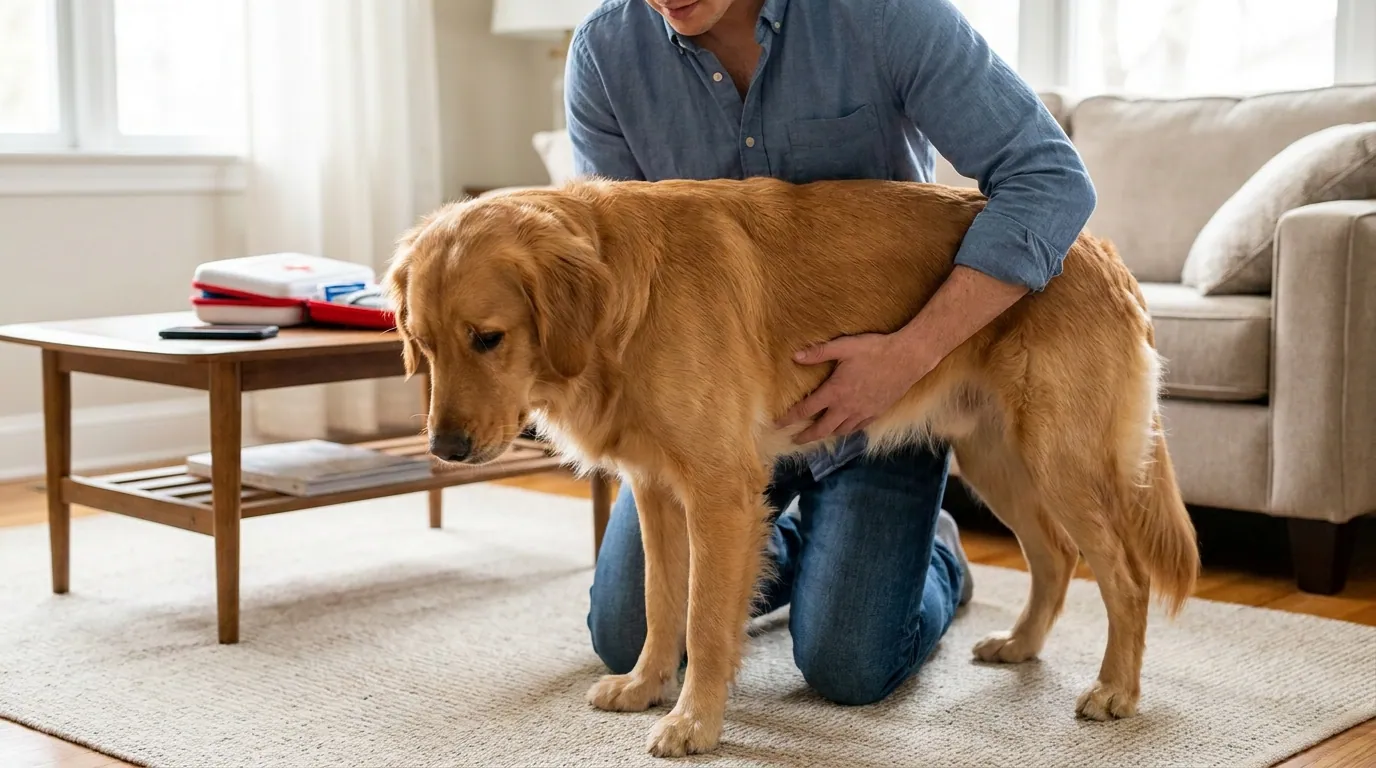
How to do the Heimlich maneuver on a dog is something every pet parent should understand before an emergency happens, because dog choking can become life-threatening very quickly. If your dog cannot breathe, has blue gums, collapses, or appears panicked with something stuck in the throat, act fast and contact an emergency vet right away.
This guide explains what to do if your dog is choking, how to recognize the signs, when to use the dog Heimlich maneuver, how to adjust the steps for small dogs and large dogs, and what to do after the object comes out.
Important safety note: This article is for general pet first-aid education. If your dog is in severe distress, cannot breathe, or becomes unconscious, seek emergency veterinary care immediately.
Quick Answer: What to Do If Your Dog Is Choking
If your dog is choking, first check whether they can still move air. A dog that is coughing, gagging, or making noise may have a partial airway blockage, while a dog that cannot breathe, turns blue, or collapses may have a complete airway obstruction.
Start by staying calm and looking inside your dog’s mouth only if it is safe. If you can clearly see a foreign object, try to remove it carefully with your fingers. Do not push the object deeper, and do not blindly sweep the mouth.
If the object cannot be removed and your dog cannot breathe, perform the Heimlich maneuver for dogs using controlled abdominal thrusts. Place pressure just behind or beneath the rib cage, push inward and upward, then check the mouth again. If the dog becomes unconscious, call an emergency veterinarian immediately and begin dog CPR only if you are trained or being guided by a veterinary professional.
The main goal is simple: clear the obstruction, restore breathing, and get veterinary help as quickly as possible.
Signs Your Dog Is Choking
Knowing the signs of choking in dogs helps you act quickly without confusing choking with normal coughing or gagging. A choking dog often looks frightened, restless, or panicked. They may paw at the mouth, rub their face against the ground, drool heavily, or make repeated gagging and retching motions.
Common dog choking symptoms include difficulty breathing, loud breathing sounds, wheezing, hacking noises, and signs that the dog is struggling to breathe. In a serious dog choking emergency, the gums, tongue, or skin may turn blue or pale because the body is not getting enough oxygen. This is called cyanosis and should be treated as urgent.
A dog may also suddenly collapse, become weak, or stop responding. These signs may mean the airway is blocked and the dog is not getting enough air. If your dog is not breathing, has blue gums, or becomes unconscious, treat it as a life-threatening emergency.
A useful rule is this: if your dog can cough strongly, some air is likely moving. If your dog cannot cough, breathe, or make sound, the situation is much more dangerous.
Dog Choking vs Coughing vs Reverse Sneezing
One of the most common questions pet owners ask is about the choking and coughing difference. This matters because the Heimlich maneuver should not be used for every cough or gag.
A dog that is coughing may still be able to breathe. Coughing can happen because of irritation, water going down the wrong way, kennel cough, allergies, or throat inflammation. The dog may sound uncomfortable, but if they are moving air, have pink gums, and are alert, it may not be a complete blockage.
Reverse sneezing can also scare owners. It may sound like snorting, honking, or repeated inward sneezing. A dog may stand still, stretch the neck, and make loud breathing sounds. However, reverse sneezing usually does not mean a solid object is stuck in the airway.
Choking is different. A choking dog may appear frantic, paw at the mouth, fail to breathe normally, or show blue or pale gums. If your dog is choking but still breathing, do not rush into forceful thrusts. Watch closely, call your vet, and act immediately if breathing becomes blocked.
| Situation | What It Looks Like | What to Do |
| Choking | Cannot breathe, blue gums, panic, collapse | Emergency action and vet care |
| Coughing | Air still moving, repeated cough | Monitor and call vet if persistent |
| Reverse sneezing | Snorting or honking, usually still breathing | Stay calm and call vet if unsure |
What to Do Before Performing the Heimlich Maneuver
Before you perform the Heimlich maneuver for dogs, take a few seconds to check the mouth safely. This step can sometimes solve the problem without abdominal thrusts.
Approach your dog calmly. Remember that even a gentle dog may bite during a painful or frightening pet emergency. Open the mouth only if you can do so safely. If possible, gently pull the tongue forward and look for a visible object, such as a toy piece, bone, rawhide, or food.
If you can clearly see and grasp the object, remove it carefully. This is sometimes called a finger sweep, but it should never be blind. A blind sweep can push the object deeper into the dog’s airway and make the blockage worse.
Do not spend too long trying to remove something that is stuck. If the object is lodged in the throat, if your dog cannot breathe, or if your dog is turning blue, move quickly to emergency action and contact an emergency veterinary hospital.
The safest approach is: look, remove only if visible and reachable, avoid pushing deeper, then act fast if the airway remains blocked.
How to Do the Heimlich Maneuver on a Dog
The dog Heimlich maneuver uses pressure on the abdomen to force air upward and help push a foreign object out of the airway. It is most appropriate when a dog has a serious airway blockage and cannot breathe normally.
For a standing dog, position yourself behind the dog. Place your hands around the dog’s belly, just behind the rib cage. With one hand made into a fist or with both hands depending on your dog’s size, push inward and upward toward the ribs. Use firm, controlled pressure rather than wild force.
A common method is to give five rapid thrusts, then check the mouth to see whether the object has moved. If the object appears, remove it carefully. If it does not come out and the dog is still choking, repeat the process while getting emergency veterinary help.
The pressure should come from beneath the rib cage, not directly on the ribs or chest. Think of the motion as pushing the belly toward the spine and slightly upward. The goal is to create enough air pressure to clear the obstruction without causing unnecessary injury.
If your dog is lying down, carefully place them on their side. Put one hand on the back for support and use the other hand to apply pressure beneath the rib cage. Check the mouth after each set of thrusts.
Because forceful thrusts can cause internal trauma, bruising, or even broken ribs, use the Heimlich only when needed. If your dog is breathing, coughing strongly, or moving air, call a vet for guidance before using strong abdominal pressure.
How to Do the Heimlich Maneuver on a Small Dog
The method for how to do the Heimlich maneuver on a small dog is similar, but the force must be gentler. Small dogs, puppies, and toy breeds are more fragile, so controlled pressure is important.
Hold the small dog carefully with their back against your chest or support them in your lap. Place your fingers or a small fist just below the rib cage, on the upper abdomen. Give quick but gentle inward and upward thrusts. After a few thrusts, check the mouth for the object.
Some first-aid instructions also describe carefully lifting a small dog’s hind end so gravity may help move the object. If you do this, support the dog by the hips and thighs, not by the legs alone. Never shake a dog violently.
For puppies, be even more careful. A puppy choking emergency requires fast action, but too much force can injure the chest, abdomen, or throat. If the object comes out, still call your veterinarian because the puppy may have throat injury, swelling, or aspiration risk.
Small dogs can choke on kibble, tiny toys, dental chews, rawhide, or food pieces that are too large. After the emergency, review kibble size, toy size, and treat safety to reduce future risk.
How to Do the Heimlich Maneuver on a Large Dog
Learning how to do the Heimlich maneuver on a large dog is important because large dogs are usually too heavy to lift. For a conscious large dog, stand behind them and wrap your arms around the abdomen. Place your hands just behind the rib cage. Push inward and upward with firm, controlled thrusts.
If the dog is standing, keep your body stable so you do not fall or lose control. If the dog is panicking, ask another person to call the emergency vet while you help the dog.
If the large dog is lying on their side, place one hand on the back for support and use the other hand to press upward and forward beneath the rib cage. After each set of thrusts, check the mouth. Remove the object only if it is visible and easy to grasp.
For medium and large dogs, the thrust may require more force than with a small dog, but it should still be controlled. Do not press directly on the chest or lower belly. The pressure point should be near the upper abdomen, under or just behind the ribs.
Once the object comes out, check for steady chest movement, normal breathing, and gum color. Even if your dog seems better, contact a vet.
What If Your Dog Collapses or Becomes Unconscious?
If your dog collapses while choking, this is a severe emergency. Call an emergency vet immediately. If someone else is nearby, have them call while you continue helping your dog.
Place your dog on their side and open the mouth carefully. Look for a visible object. If you can remove it safely, do so. If the dog is not breathing and you are trained in pet first aid, you may need to begin rescue breaths or CPR after choking. If you are not trained, follow instructions from the emergency veterinary team over the phone.
Check for breathing and a pulse if you know how. If there is no breathing, no pulse, or the dog is unresponsive, chest compressions and rescue breathing may be needed. This is where proper dog first-aid training becomes valuable.
Do not delay professional care. A dog that has been deprived of oxygen may need emergency treatment even after the object is removed. The vet may check the lungs, throat, airway, and oxygen levels to make sure there is no hidden damage.
When Not to Do the Heimlich Maneuver on a Dog
The Heimlich maneuver can help during a serious blocked airway, but it is not always the right first step. You should not perform forceful abdominal thrusts if your dog is coughing strongly, breathing normally, or only gagging without signs of airway obstruction.
If your dog is making noise, coughing, or breathing, air is likely still moving. In that case, forcing the Heimlich may cause unnecessary pain or injury. Instead, keep your dog calm, check for visible hazards, and call your veterinarian for advice.
You should also avoid the Heimlich if you only suspect your dog swallowed something but they are acting normal. A swallowed object may still be dangerous, but it is different from a choking blockage. That situation needs veterinary guidance, not abdominal thrusts.
The main warning signs that may justify the Heimlich are cannot breathe, blue gums, collapse, panic with no air movement, or a visible object blocking the airway. When in doubt, contact an emergency veterinary clinic immediately.
What to Do After Your Dog Stops Choking
Many owners feel relieved once the object comes out, but the emergency may not be completely over. After your dog stops choking, check breathing, gum color, and behavior. The gums should return to a healthy pink color, and breathing should become more regular.
Watch for labored breaths, continued coughing, wheezing, weakness, vomiting, or signs of pain. These could suggest throat injury, swelling, aspiration, or remaining foreign material in the airway.
Do not immediately give food or treats after the choking incident unless your vet says it is okay. The throat may be irritated, and eating too soon could cause more coughing or another problem.
Call your veterinarian even if your dog seems fine. Your vet may recommend an exam or X-rays, especially if the dog choked on a bone, rawhide, toy, or sharp object. In some cases, a dog may need lung X-rays to check for aspiration or fluid accumulation.
A good rule is: if the choking was serious enough to require the Heimlich maneuver, it is serious enough to call a vet afterward.
Common Choking Hazards for Dogs
Dogs explore the world with their mouths, so choking hazards are common. Some objects are risky because they are small and slippery. Others are dangerous because they can splinter, swell, or break into sharp pieces.
Common hazards include balls, tennis balls, toy pieces, cooked bones, rawhide bones, hard treats, dental chews, sticks, plastic items, and large food pieces. Dogs can also choke on kibble if they eat too fast or if the kibble is not appropriate for their size.
Cooked bones are especially risky because they can splinter and injure the mouth, throat, stomach, or intestines. Rawhide can also become soft, slippery, and difficult to swallow safely. Broken toys should be thrown away because small pieces can lodge in the airway.
Fast eaters may gulp food without chewing. In these cases, a slow-feeder bowl or puzzle feeder may help reduce choking risk.
How to Prevent Choking in Dogs
You cannot prevent every accident, but you can lower the risk with smart daily habits. Choose size-appropriate toys that are too large to fit completely in your dog’s mouth. Avoid toys that break easily, and inspect them often for cracks, loose parts, or missing pieces.
Supervise your dog during play and meals, especially if they enjoy chewing rawhide, bully sticks, dental chews, or hard treats. If your dog tries to swallow chews whole, choose safer options and ask your vet for advice.
For dogs that eat too quickly, use a slow-feeder bowl, puzzle feeder, or smaller meal portions. This can help reduce gulping and improve mealtime safety.
Training can also help. Teaching commands like “drop it” and “leave it” may prevent your dog from swallowing dangerous items during walks or play. Keep small household objects, children’s toys, bones, and trash out of reach.
Think of prevention as part of pet first aid. The safest emergency is the one you avoid before it happens.
Mistakes to Avoid During a Dog Choking Emergency
During a choking emergency, panic can lead to mistakes. The first mistake is blindly sweeping your dog’s mouth. If you cannot see the object, do not push your fingers deep into the throat. This can move the object farther down and worsen the airway blockage.
Another mistake is using too much force. The Heimlich maneuver can injure a dog if done too aggressively, especially small dogs and puppies. Use firm but controlled pressure.
Do not wait too long to call for help. If your dog is not breathing, has blue gums, or collapses, emergency care is needed immediately. Also, do not assume your dog is fine just because the object came out. Choking can cause hidden injury to the throat, airway, lungs, or abdomen.
Finally, do not continue using the same unsafe toys or chews after the emergency. If a toy, bone, treat, or food caused the choking, remove it from your dog’s routine.
FAQs About the Heimlich Maneuver for Dogs
Can you do the Heimlich maneuver on a dog?
Yes, you can perform the Heimlich maneuver for dogs when a dog has a serious airway obstruction and cannot breathe. The method must be adjusted for the dog’s size, and you should contact an emergency vet as soon as possible.
Where do you press when a dog is choking?
Press on the upper abdomen, just behind or beneath the rib cage. The motion should be inward and upward, toward the ribs. Avoid pressing directly on the chest or lower belly.
What if my dog is choking but still breathing?
If your dog is coughing strongly or breathing, do not immediately use forceful thrusts. Monitor closely, check for a visible object, and call your vet. Use emergency action if breathing becomes blocked or the dog turns blue.
Should I reach into my dog’s mouth if they are choking?
Only reach into the mouth if you can safely see and grasp the object. Do not perform a blind finger sweep because it can push the object deeper. Be careful because a frightened dog may bite.
What if my dog is choking on a bone?
A bone can splinter or lodge in the throat. If your dog cannot breathe, treat it as an emergency. If the bone comes out, still call your vet because there may be throat injury, cuts, or swallowed fragments.
What is the difference between CPR and the Heimlich for dogs?
The Heimlich maneuver helps clear a blocked airway. CPR is used when a dog is not breathing or has no heartbeat. CPR may include rescue breaths and chest compressions, but it should be done only if you know how or are guided by a professional.
Should I take my dog to the vet after choking?
Yes, it is wise to contact a vet after a serious choking incident. Your dog may need an exam, X-rays, or monitoring for aspiration, swelling, or injury.
Conclusion: Act Quickly, Then Call a Vet
Knowing how to do the Heimlich maneuver on a dog can help you respond faster during a frightening emergency. If your dog is choking, stay calm, check whether air is moving, remove only a visible object, and use abdominal thrusts only when the dog cannot breathe.
The most important signs to watch for are blue gums, panic, collapse, and no normal breathing. Small dogs and large dogs need slightly different handling, but the goal is always the same: clear the airway and restore breathing.
Even after the object comes out, contact an emergency veterinarian or your regular vet. A dog may still have throat injury, aspiration risk, or internal trauma. Fast action can save your dog’s life, but safe follow-up care helps protect them after the crisis.