
Introduction
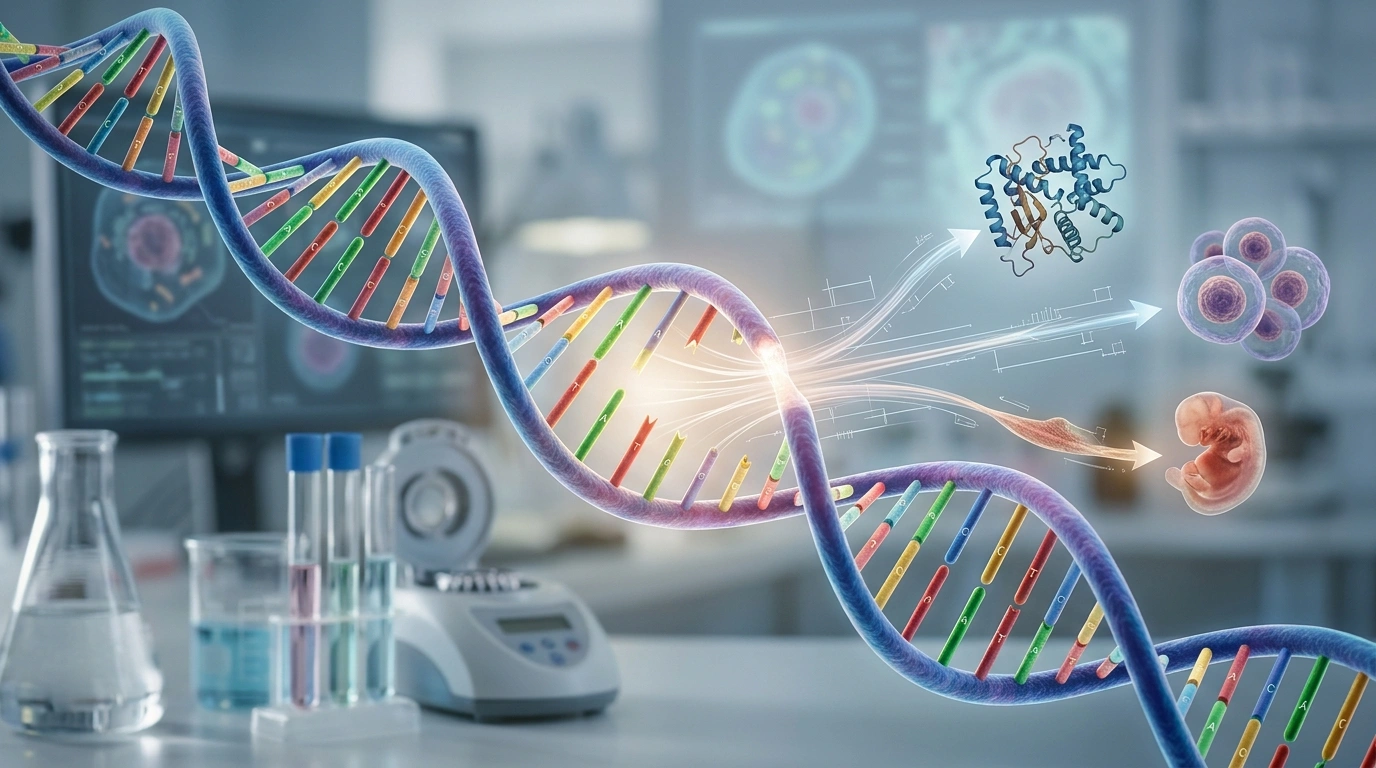
Why is DNA called the blueprint of life? It is called that because DNA stores the genetic instructions that living things use to grow, function, repair themselves, and reproduce. In the simplest sense, DNA works like a biological instruction manual. It does not build the body directly with tiny tools in hand, but it contains the information that cells use to make proteins, regulate cellular functions, and pass inherited traits from one generation to the next. Scientists describe DNA as deoxyribonucleic acid, the molecule that carries hereditary information in almost all living organisms. Genes are segments of DNA, and those genes provide instructions that help determine how an organism is built and how it works.
The phrase “blueprint of life” is powerful because it helps readers picture DNA as a stored plan. At the same time, the metaphor is a little simplified. A building blueprint is static, while DNA instructions are read, regulated, copied, and expressed in different ways depending on the cell and the organism’s needs. That is why a strong explanation has to go beyond the catchy phrase and show how DNA, genes, RNA, proteins, chromosomes, and inheritance all connect.
What Does “Blueprint of Life” Mean in Biology?
In biology, calling DNA the blueprint of life means that it holds the information needed to build and maintain a living organism. Think of a house blueprint: it tells builders where walls, doors, wiring, and plumbing should go. In a similar way, DNA contains coded instructions that tell cells how to make the molecules they need, especially proteins, which perform much of the real work inside the body. Those instructions also help guide growth and development, support normal body processes, and allow organisms to survive and reproduce.
Still, DNA is not a literal architectural drawing. It does not say “build a nose here” in plain language. Instead, it stores information in a chemical code made from four bases: adenine, thymine, cytosine, and guanine. The order of those bases forms instructions that cells can read. So when people ask why DNA is called the blueprint of life, the best answer is this: DNA stores the coded biological information that cells use to create and regulate life’s essential structures and processes.
What Is DNA and What Information Does It Store?
DNA is a long molecule made of smaller units called nucleotides. Each nucleotide contains one of four bases: A, T, C, or G. DNA’s famous double helix shape comes from two strands wound around each other, with bases pairing in a specific way: adenine pairs with thymine, and cytosine pairs with guanine. That pairing helps DNA replicate accurately when cells divide. The most important point, though, is that the sequence of bases stores information.
You can think of DNA like a language with four letters. A single letter does not say much, but long sequences can hold enormous amounts of information. In humans, the genome contains over 3 billion base pairs, which is why even a microscopic molecule can carry the information needed for a complex organism. Human cells package DNA into 23 pairs of chromosomes, helping organize and protect it inside the nucleus.
Here is a simple way to see it:
| DNA Feature | Why It Matters |
| A, T, C, G bases | These act like the letters of the genetic code |
| Double helix | Gives DNA stability and helps replication |
| Base sequence | Stores the actual biological information |
| Chromosomes | Organize DNA inside cells |
| Genes | Specific DNA segments with instructions |
That is why how DNA stores genetic information is central to the whole topic. Without that stored information, cells would not know which proteins to make, when to make them, or how to maintain life.
How Do Genes Fit Into DNA?
A lot of readers confuse DNA, genes, chromosomes, and genome, so this is one of the most important sections in the article. DNA is the molecule itself. A gene is a specific segment of DNA that contains instructions for making a functional product, usually a protein or an RNA molecule. A chromosome is a packaged structure made of DNA and proteins. The genome is the complete set of DNA in an organism.
That means genes are not separate from DNA. They are made of DNA. If DNA is the full instruction library, then genes are like individual recipes or chapters inside it. This is why articles that explain how DNA in chromosomes contains genes tend to be much clearer for beginners. Once readers understand that relationship, the phrase DNA instructions for life makes more sense.
You can picture it like this:
- Genome = the full collection
- Chromosomes = organized packages
- DNA = the information-carrying molecule
- Genes = specific instruction segments within DNA
That hierarchy helps explain why DNA is called the blueprint of life instead of just “genes.” DNA is the larger molecular system that stores and passes on the information, while genes are the meaningful pieces cells use most directly.
How DNA Instructions Become Proteins
This is where the “blueprint” idea becomes real. DNA matters because its instructions are used to make proteins, and proteins help determine structure, function, signaling, repair, metabolism, and much more inside cells. The classic flow of information is often called the central dogma: DNA → RNA → protein.
First comes transcription. In this step, a cell copies a gene’s DNA sequence into messenger RNA (mRNA). Then comes translation, where a ribosome reads the mRNA in groups of 3 nucleotides, called codons. Each codon corresponds to one amino acid or a stop signal. For example, A-U-G is the usual start codon, while U-G-A, U-A-A, and U-A-G are stop codons. As codons are read, amino acids are linked together into a chain that folds into a protein. Because proteins are built from about 20 amino acids, the combination possibilities are enormous.
This is the heart of how DNA stores information needed to create proteins. DNA itself is not doing the construction work directly. Instead, it provides the coded instructions that the cell’s machinery interprets. That is why phrases like gene expression, protein synthesis, and how the information contained in a gene is used to make a protein matter so much for topical depth. They explain the mechanism behind the metaphor instead of stopping at a catchy phrase.
A short quote-style takeaway fits here:
DNA is called the blueprint of life because cells read its instructions to make the proteins that keep life running.
Why Proteins Matter for Life
If DNA is the blueprint, then proteins are the builders, machines, messengers, and maintenance crew. Some proteins act as enzymes, speeding up metabolic reactions. Others serve as signaling molecules, structural components, transport systems, or regulators of cellular activity. In other words, DNA’s value comes from the fact that it encodes products that make life possible.
This also helps answer a common pain point: readers often know that DNA is important, but they do not know why. The answer is not just “because it has information.” It is because that information leads to the production of proteins that affect everything from energy use to cell communication to tissue structure. When an article explains how DNA regulates cellular functions through gene expression, it becomes far more useful than a short homework-answer page.
How DNA Helps Organisms Grow, Function, and Reproduce
The reason DNA contains instructions is not abstract. Those instructions help organisms grow, develop body systems, repair damage, respond to internal and external signals, and ultimately survive and reproduce. This is why educational biology resources repeatedly tie DNA to growth and development, body systems, and organism-level function.
A fertilized egg begins as a single cell, yet that one cell carries DNA that can guide the development of many specialized cell types. Over time, cells divide, differentiate, and organize into tissues and organs. DNA does not act alone, but it provides the stored information that makes those processes possible. So when someone asks how DNA provides instructions for an organism to grow, the answer is that genes direct the production and regulation of molecules needed for development and function.
DNA, Chromosomes, and Inheritance
Another reason DNA is called the blueprint of life is that it is inherited. Organisms pass DNA from parents to offspring, which is why children often resemble their parents in certain ways. In humans, DNA is organized into 23 pairs of chromosomes. One set comes from each parent. The sex chromosomes are commonly XX or XY, while the other chromosome pairs are numbered 1–22.
This inherited DNA helps explain traits, but it is important to be precise. DNA does not mechanically stamp out a person the way a photocopier duplicates a page. Instead, inherited DNA provides a framework of genetic possibilities and instructions. Those instructions are then expressed in context, which is part of why heredity is powerful but not simplistic. Still, inheritance is central to the phrase DNA and heredity because DNA is the molecule that carries hereditary information across generations.
Why the Blueprint Metaphor Is Useful—But Not Perfect
This is where your article can be better than many competitors. The metaphor is useful because it gives beginners a fast mental model: DNA stores instructions. That part is true and helpful. But a literal blueprint suggests a fixed, one-time plan. Living systems do not work that way. Cells constantly regulate which genes are active, how strongly they are used, and when proteins are produced. Different cell types can carry the same DNA yet behave very differently.
That is why the better explanation is that DNA is a dynamic information system, not just a frozen plan. The same genetic code can lead to different outcomes depending on gene regulation, the cellular environment, development, and other biological factors. So if a reader asks why the blueprint metaphor is imperfect, the answer is that it is helpful as a first explanation, but it leaves out how flexible and regulated gene activity really is.
Gene Regulation: How Cells Read the Same DNA Differently
One of the most valuable missing angles in competitor content is gene regulation. Nearly all the cells in your body contain the same DNA, yet a nerve cell does not behave like a skin cell, and a muscle cell does not behave like a liver cell. That happens because cells turn different genes on and off. In other words, they do not all read the same parts of the blueprint at the same time.
This process involves regulatory elements such as promoters, enhancers, and transcription factors. These help control gene expression, deciding which instructions are used, when they are used, and how strongly they are used. This explains different cell types, same DNA, which is one of the best examples of why DNA is more than a static code. It is stored information interpreted through a highly regulated system.
Epigenetics and Mutation: Why DNA Is Only Part of the Story
To build even more authority, it helps to mention epigenetics and mutation in simple language. Epigenetic changes affect how genes are used without changing the actual DNA sequence. These changes can involve DNA packaging and chemical marks associated with histones and other regulatory systems. In short, cells can alter how the blueprint is read without rewriting the underlying letters.
Mutations, on the other hand, are changes in the DNA sequence itself. Some mutations have little or no effect. Others can change how a gene works or how a protein is made. This is important because it shows that DNA is both stable enough to preserve life and flexible enough to support variation, adaptation, and sometimes disease. Bringing in mutation, epigenetics, and nucleotide sequence gives the article more real scientific depth than most simple competitor pages offer.
DNA vs RNA: What’s the Difference?
Many readers asking this question also need a quick DNA vs RNA clarification. DNA is the long-term storage molecule for genetic information. RNA is often involved in helping use that information. For example, messenger RNA carries instructions copied from DNA to the ribosome, where proteins are assembled.
A simple comparison helps:
| Feature | DNA | RNA |
| Main role | Stores genetic information | Helps use genetic information |
| Sugar | Deoxyribose | Ribose |
| Bases | A, T, C, G | A, U, C, G |
| Typical structure | Double-stranded | Usually single-stranded |
| Example job | Long-term instruction storage | Carries or helps read instructions |
This small section clears up a lot of confusion and supports the explanation of DNA to RNA to protein.
A Quick Look at the Discovery of DNA’s Structure
The history of DNA adds authority and makes the topic feel more complete. DNA was first identified in 1869 by Friedrich Miescher. Later, work by Rosalind Franklin, especially Photo 51, helped reveal the molecule’s structure. In 1953, James Watson and Francis Crick published the double-helix model that became famous in biology.
This discovery mattered because it showed how DNA could both store information and replicate. Once scientists understood the structure, it became much easier to explain how a chemical molecule could act as life’s information carrier. That historical angle is not the main reason people search this keyword, but it adds trust and educational value.
Frequently Asked Questions About DNA as the Blueprint of Life
Is DNA really a blueprint or just a metaphor?
It is a metaphor, but a very useful one. DNA really does store biological instructions, yet the term “blueprint” simplifies how dynamic gene expression and regulation are.
What is the difference between DNA and a gene?
DNA is the full molecule that stores genetic information. A gene is a specific segment of DNA that contains instructions for a functional product.
How does DNA affect traits?
DNA influences traits by encoding products, especially proteins, that shape cell structure and function. But traits are also influenced by gene regulation and, often, environment.
Do all cells use the same DNA the same way?
No. Most cells contain the same DNA, but different genes are active in different cell types. That is why skin, brain, and muscle cells behave differently.
Why do people also mention RNA in this topic?
Because DNA instructions usually need to be copied into RNA before proteins are made. RNA is part of the pathway that turns stored information into action.
Final Takeaway
So, why is DNA called the blueprint of life? Because DNA stores the genetic information that living things use to build proteins, regulate cells, support growth, and pass traits from one generation to the next. That metaphor works because DNA truly is a master information molecule. But the strongest explanation goes one step further: DNA is not just a static plan. It is part of a living, regulated system involving genes, RNA, proteins, chromosomes, inheritance, gene regulation, and epigenetics. Once you understand that, the phrase DNA blueprint of life stops sounding like a slogan and starts making real biological sense.
Disclaimer: This article is for general educational and informational purposes only. Scientific concepts may be simplified for clarity. For detailed study or academic use, refer to official textbooks or qualified educators.