
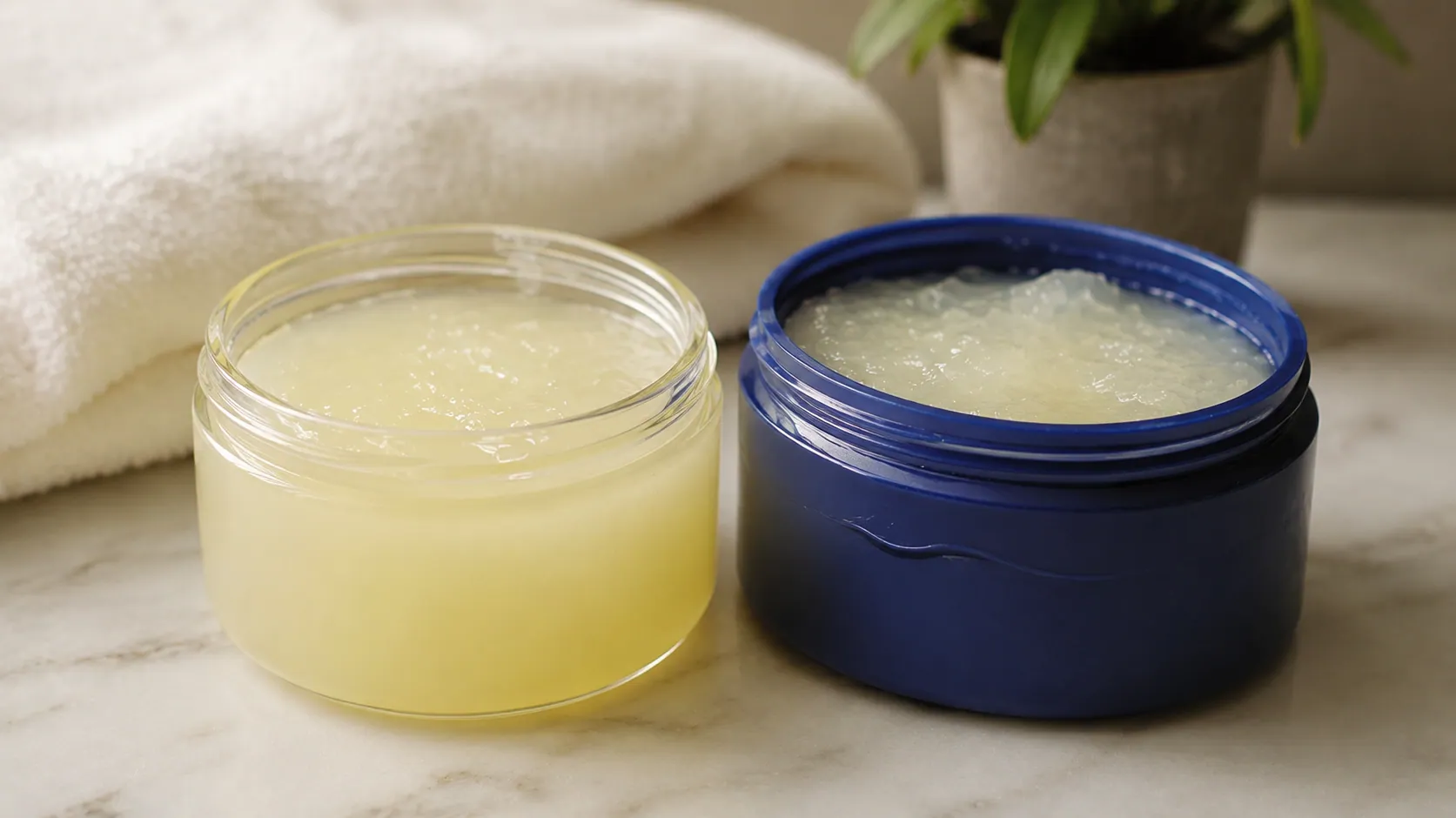
Is petroleum jelly the same as Vaseline? Yes, in simple terms, Vaseline is a brand name for petroleum jelly, but the two terms are not always perfectly interchangeable. Petroleum jelly is the generic name for a soft, semi-solid substance also called petrolatum or white petrolatum, while Vaseline is one of the most famous branded versions of it.
The confusion happens because many people use the word Vaseline the same way people use Coca-Cola to describe cola. In everyday conversation, someone may say “Vaseline” when they mean any generic petroleum jelly, even if the product is not made by the Vaseline brand.
The real difference usually comes down to branding, purification, ingredients, quality standards, additives, fragrance, and intended use. Some products are made for skin care, while others may be designed for industrial applications, so reading the label matters.
What Is Petroleum Jelly?
Petroleum jelly is a semi-solid mixture of hydrocarbons that comes from refined petroleum. In skincare and medical products, it is often listed as petrolatum or white petrolatum on the label. It has a thick, smooth, greasy texture and is best known for forming a protective barrier over the skin.
This barrier helps reduce moisture loss, which is why petroleum jelly is commonly used for dry skin, chapped lips, cracked hands, minor cuts, scrapes, diaper rash, and rough areas like elbows or heels. It does not hydrate the skin by adding water. Instead, it helps lock in moisture that is already present.
Chemically, petroleum jelly is made from a blend of mineral oils, microcrystalline wax, and related hydrocarbon compounds. Some technical descriptions identify petroleum jelly with CAS number 8009-03-8, and its carbon chains are often described as being higher than C25. Depending on the grade and formulation, its melting point is commonly associated with a range around 38 to 60 °C.
For everyday users, the most important point is simple: skin-safe petroleum jelly should be refined, purified, and labeled for personal care or medical use.
What Is Vaseline?
Vaseline is a brand closely associated with petroleum jelly. The brand became famous through Vaseline Jelly, Vaseline Healing Jelly, and Vaseline Original Wonder Jelly. Its story is often connected to Robert Chesebrough, who developed and marketed petroleum jelly after observing oil workers using residue from oil rigs on their skin.
Historically, petroleum jelly is linked with Titusville, Pennsylvania, the 19th century, and dates such as 1859, 1870, and 1872, which appear in many discussions about the early petroleum industry and the rise of the Vaseline brand. Today, Vaseline is owned by Unilever and remains one of the most recognized names in personal care.
The brand often describes its original jelly as 100 percent triple-purified petroleum jelly or 100% pure petroleum jelly. This is why many people trust Vaseline for dry skin, chapped lips, minor cuts, and skin barrier protection.
So, what is Vaseline? It is not a separate substance from petroleum jelly. It is a branded version of petroleum jelly, usually marketed with an emphasis on purity, refinement, and skin safety.
Is Petroleum Jelly the Same as Vaseline? The Simple Answer
The easiest answer is this: Vaseline is petroleum jelly, but not all petroleum jelly is Vaseline.
That means Vaseline belongs inside the larger category of petroleum jelly products, but petroleum jelly can also refer to store-brand, generic, cosmetic-grade, pharmaceutical-grade, or even industrial-grade products made by other companies.
Think of it like this: Coca-Cola is cola, but not all cola is Coca-Cola. In the same way, Vaseline is petroleum jelly, but not every jar labeled petroleum jelly is made by the Vaseline brand.
For most household skincare uses, a high-quality generic petroleum jelly may work similarly if it is labeled 100% white petrolatum, fragrance-free, and safe for skin. However, not every product has the same purity, refinement, or quality standards.
That is why the answer to “is Vaseline just petroleum jelly?” is mostly yes, but with one important detail: Vaseline is a specific brand name, while petroleum jelly is the generic product name.
Petroleum Jelly vs Vaseline: Key Differences
Here is a simple comparison of petroleum jelly vs Vaseline:
| Feature | Petroleum Jelly | Vaseline |
| Meaning | Generic product category | Brand name |
| Common label name | Petrolatum or white petrolatum | Vaseline Jelly or Vaseline Healing Jelly |
| Main ingredient | Refined hydrocarbons | Usually purified petroleum jelly |
| Purity | Depends on manufacturer | Known for triple purification |
| Additives | May include fragrance or other ingredients | Depends on the Vaseline product line |
| Price | Often cheaper | Usually brand-priced |
| Best use | Depends on grade and label | Skin protection and moisture locking |
The biggest difference between regular petroleum jelly vs Vaseline is not the basic ingredient. It is usually the brand trust, purification process, and the intended use. A jar of generic petroleum jelly may be just as useful for dry skin if it meets the right standards. But if the product is not clearly labeled for skin use, you should avoid using it on your body.
When comparing Vaseline vs petroleum jelly, look for words like white petrolatum, skin protectant, fragrance-free, hypoallergenic, and 100% petroleum jelly. These details matter more than the brand alone.
Petrolatum vs Petroleum Jelly vs White Petrolatum
Many people get confused because skincare labels use different names. Petrolatum, petroleum jelly, and white petrolatum are closely related terms.
Petroleum jelly is the common name people use at home. Petrolatum is the ingredient name often seen on cosmetic and medical labels. White petrolatum usually refers to a more refined, purified form commonly used in skin protectant products.
If a label says active ingredient: white petrolatum, that generally means the product is designed to create a moisture barrier and protect the skin. If a product says 100% white petrolatum, it is usually a plain petroleum jelly product without many extra ingredients.
This is helpful when comparing Vaseline vs store brand petroleum jelly. A generic jar may be a good option if the label clearly says 100% white petrolatum or 100% petrolatum, and it is made for skin care, not industrial use.
What Is Petroleum Jelly Made Of?
Petroleum jelly is made from refined petroleum-derived materials, mainly hydrocarbons, mineral oils, and microcrystalline waxes. This may sound concerning at first because people hear the word “petroleum” and think of crude oil. However, cosmetic and pharmaceutical petroleum jelly is not the same as raw petroleum residue.
The key difference is refinement. Skin-safe petroleum jelly goes through a refining process that may include dewaxing, filtration, distillation, solvent extraction, hydrotreating, blending, and other purification steps. The goal is to remove impurities, contaminants, PAHs, heavy metals, and microbial risks.
This is why the terms highly refined petroleum jelly, high-purity petroleum jelly, cosmetic-grade petroleum jelly, and pharmaceutical-grade petroleum jelly matter. They tell you that the product is made for safe, controlled applications.
In short, petroleum jelly is petroleum-derived, but when properly refined and tested, it becomes a stable skin protectant used in many personal care and medical products.
Why Purity and Refinement Matter
Purity is one of the most important differences between petroleum jelly products. A high-quality product should be refined enough for the purpose listed on the label.
Vaseline Healing Jelly is known for being marketed as triple-purified petroleum jelly. This branding helps reassure users who are worried about impurities. Other brands may also produce excellent petroleum jelly, but consumers should check the label and product standards.
For personal care, look for terms such as 100% pure petroleum jelly, white petrolatum, USP, BP, pharmaceutical grade, skin protectant, or hypoallergenic. In business or manufacturing contexts, buyers may also ask for a Certificate of Analysis, COA, Material Safety Data Sheet, or MSDS.
This matters because industrial-grade petroleum jelly is not necessarily suitable for skin. Industrial versions may be used as a lubricant, coating, mould-release agent, or corrosion prevention material. That does not mean they are bad products; it simply means they are made for a different purpose.
For your skin, choose a petroleum jelly product that is clearly labeled for personal care, cosmetic, or medical use.
Common Uses of Petroleum Jelly and Vaseline
Both petroleum jelly and Vaseline are popular because they are affordable, versatile, and easy to use. Their main function is to create a protective barrier that helps prevent moisture loss.
For dry skin, petroleum jelly can be applied to rough patches, elbows, knees, hands, and feet. It is especially useful in winter or during dry seasons when skin becomes cracked or flaky. For chapped lips, a thin layer can help protect against wind and cold weather.
Petroleum jelly is also commonly used on minor cuts, scrapes, and minor burns to help protect the area while the skin heals. However, serious wounds, infected cuts, and severe burns need medical care.
For babies, petroleum jelly is often used as a barrier for diaper rash and irritation. It can help protect delicate skin from moisture and friction. People with eczema or very dry skin may also use it to support the skin barrier, especially when applied over a moisturizer.
Outside skincare, petroleum jelly has many household and industrial uses, including lubricating stuck zippers, reducing squeaky hinges, protecting battery terminals from corrosion, conditioning leather shoes, and helping prevent watermarks on wood furniture. But again, products used on skin should be different from industrial-use products.
How Petroleum Jelly Works on Skin
Petroleum jelly works mainly as an occlusive. An occlusive ingredient forms a thin barrier over the skin and helps slow down transepidermal water loss, also called TEWL. This means it helps keep moisture from escaping.
This is different from a humectant. A humectant pulls water into the skin, while an emollient helps soften and smooth the skin. Petroleum jelly is mostly known as an occlusive, although its thick texture can also make dry skin feel softer.
For best results, apply petroleum jelly to slightly damp skin or over a water-based moisturizer. This helps seal in moisture more effectively. If you apply it to very dry skin without any moisture underneath, it may feel greasy but not deeply hydrating.
That is why the phrase “petroleum jelly locks in moisture but does not add water” is important. It is excellent for skin barrier protection, but it works best as the final sealing step.
Can You Use Generic Petroleum Jelly Instead of Vaseline?
Yes, you can often use generic petroleum jelly instead of Vaseline if the product is labeled clearly and made for skin use. The best generic options usually say 100% white petrolatum, 100% petroleum jelly, fragrance-free, or hypoallergenic.
The main advantage of Vaseline is brand trust. Many users know the product, recognize the packaging, and feel confident using it on dry skin or lips. Generic petroleum jelly may be cheaper, but quality can vary between manufacturers.
When comparing Vaseline vs generic petroleum jelly, do not look only at the price. Read the label. Check whether the product has added fragrance, color, herbal oils, or other inactive ingredients. These extras may be fine for some people, but they can irritate sensitive skin.
If you are using petroleum jelly for baby care, eczema-prone skin, or post-surgery skin care, a simple, fragrance-free, skin-safe product is usually the better choice.
How to Read a Petroleum Jelly Label Before Buying
Before buying petroleum jelly, check the label carefully. The best option for most skin uses is usually a plain product labeled 100% white petrolatum or 100% petroleum jelly.
If you have sensitive skin, avoid products with added fragrance, lavender oil, baby powder scent, dyes, or unnecessary additives. Some people enjoy scented petroleum jelly, but fragrance can trigger irritation for certain users.
A good label may include words like skin protectant, hypoallergenic, fragrance-free, dermatologist tested, or pharmaceutical grade white petrolatum. For business buyers, documents like COA and MSDS can help confirm product quality and safety details.
Also check the packaging. Petroleum jelly should be stored in a clean jar, tube, or container. Avoid using a product that looks dirty, smells unusual, or has been contaminated by repeated dipping with unwashed fingers.
Is Petroleum Jelly Safe for Skin?
For most people, properly refined petroleum jelly is safe for external skin use. It is widely used as a skin protectant, especially for dry skin, chapped lips, minor scrapes, and irritated areas.
However, safe use depends on the situation. Apply only a thin layer. Use it on clean skin. Avoid sharing jars if contamination is a concern. For acne-prone skin, oily skin, or rosacea-prone skin, test it carefully because the heavy texture may not feel comfortable.
Refined petrolatum safety in skincare is very different from the safety of raw petroleum residue. That is why purity, quality standards, and correct labeling matter.
If you are dealing with severe irritation, spreading redness, pus, pain, fever, or a wound that will not heal, petroleum jelly should not replace medical care. It can protect skin, but it is not a cure for every skin problem.
When Not to Use Petroleum Jelly or Vaseline
Petroleum jelly is useful, but there are times when you should not rely on it.
Do not use petroleum jelly as the only treatment for deep wounds, infected wounds, serious burns, severe rashes, or skin symptoms that are getting worse. If an area is hot, swollen, painful, leaking fluid, or spreading, get medical advice.
Be careful using petroleum jelly inside the nose. Repeated use inside the nostrils may carry an inhalation risk, and in rare cases, inhaled oily substances have been associated with lipoid pneumonia. If you have chronic nasal dryness or nosebleeds, ask a healthcare professional for safer options.
Also be cautious around oxygen therapy, oxygen masks, and fire sources. Petroleum jelly can leave residue on fabrics and may increase fire-related risk in certain settings. If you use medical oxygen, follow your healthcare provider’s safety instructions.
Does Petroleum Jelly Clog Pores or Cause Acne?
A common question is: does Vaseline clog pores? Petroleum jelly is generally considered an occlusive barrier, but whether it causes breakouts depends on your skin and how you use it.
Petroleum jelly itself may not behave like a classic pore-clogging oil for everyone. However, because it forms a heavy layer, it can trap sweat, sebum, dirt, bacteria, makeup, or irritating products underneath. For people with acne-prone skin or very oily skin, that can make breakouts feel worse.
If you want to use petroleum jelly on your face, apply it only to clean skin and use a very thin layer. Avoid applying it over active acne, heavy makeup, or irritating treatments unless a dermatologist recommends it.
For dry, sensitive, or damaged skin barriers, petroleum jelly may be helpful. For oily or congested skin, it may feel too heavy.
Petroleum Jelly for Slugging: Good or Bad Idea?
Slugging is a skincare trend where people apply an occlusive layer, often Vaseline or petroleum jelly, over moisturizer before bed. The idea is to seal in hydration and support skin barrier repair overnight.
For very dry skin, slugging with petroleum jelly can be helpful. It may reduce moisture loss and leave skin feeling softer in the morning. It is especially popular during winter, after over-exfoliation, or when the skin barrier feels tight and irritated.
However, slugging is not perfect for everyone. If you have acne-prone skin, oily skin, clogged pores, or active breakouts, applying a thick occlusive layer over your entire face may not be the best choice. You can still use a small amount on dry patches, lips, or around irritated areas instead of covering the whole face.
The best slugging routine is simple: moisturizer first, then a thin layer of petroleum jelly on top.
Vaseline vs Aquaphor vs Generic Petroleum Jelly
Many users compare Vaseline vs Aquaphor vs generic petroleum jelly before buying. The main difference is formulation.
Plain Vaseline Original is mainly petroleum jelly. Generic petroleum jelly may be very similar if it is labeled 100% white petrolatum. Other healing ointments, such as Aquaphor-style products, often contain petrolatum plus extra ingredients like humectants, oils, or soothing agents.
If you want the simplest occlusive, choose plain petroleum jelly or Vaseline. If you want a richer healing ointment with additional ingredients, another product may suit you better. If you have sensitive skin, always check for fragrance and potential allergens.
For most basic uses like dry lips, cracked heels, or rough hands, plain petroleum jelly is often enough.
Petroleum Jelly Grades: Cosmetic, Pharmaceutical, Medical, and Industrial
Not all petroleum jelly is made for the same purpose. Cosmetic-grade petroleum jelly is used in beauty products like lip balms, creams, body butters, and lotions. Pharmaceutical-grade petroleum jelly or medical-grade petroleum jelly is used where stricter purity and documentation may be required.
Industrial-grade petroleum jelly may be used for machinery, plastic manufacturing, rubber manufacturing, rust prevention, coating, lubrication, or other technical applications. It may come in pails, drums, or bulk containers for factories and manufacturers.
This is why grade matters. A product used for small machinery, battery terminal corrosion, or mould-release applications should not automatically be used on skin.
For personal use, choose a product labeled for skin care, personal care, cosmetic use, or medical skin protection.
Natural Alternatives to Petroleum Jelly
Some users prefer natural alternatives to petroleum jelly because they do not want petroleum-derived products. Common alternatives include beeswax balms, plant-based oils, organic soybean oil, shea butter, coconut oil, and products containing vitamin E or botanical ingredients like rosemary oil.
These options can be useful, but they do not always work the same way as petroleum jelly. Some plant oils absorb more quickly and may not create the same long-lasting occlusive barrier. Beeswax can form a protective layer, but it may feel different and can trigger allergies in some users.
Natural does not automatically mean better for every skin type. If your goal is strong moisture sealing, petroleum jelly remains one of the most effective occlusive options.
Quick Buying Checklist: Vaseline or Generic Petroleum Jelly?
Choose a product based on use, not just brand. For skin care, look for:
- 100% white petrolatum or 100% petroleum jelly
- Fragrance-free labeling
- Hypoallergenic labeling, especially for sensitive skin
- Clear mention of skin protectant or personal care use
- Clean, secure packaging
- A trusted brand, pharmacy, or supplier
Avoid products that are unclear, industrial-only, heavily fragranced, or not labeled for skin contact. If you are buying for a baby, eczema-prone skin, or damaged skin, choose the simplest formula possible.
So, is generic petroleum jelly as good as Vaseline? It can be, if the quality, purity, and label match your intended use.
Myths About Petroleum Jelly and Vaseline
Myth 1: Vaseline is completely different from petroleum jelly.
Not true. Vaseline is a brand name for petroleum jelly.
Myth 2: Petroleum jelly adds moisture to skin.
Not exactly. It mainly locks in moisture and reduces water loss.
Myth 3: All petroleum jelly products are equally refined.
No. Purity depends on the manufacturer, grade, and quality standards.
Myth 4: Natural alternatives always work better.
Not always. Some natural products are useful, but they may not seal moisture as effectively.
Myth 5: Petroleum jelly is safe for every use.
No. Avoid unsafe use on deep wounds, infected skin, inside the nose, or around oxygen equipment unless directed by a professional.
FAQs About Petroleum Jelly and Vaseline
Is Vaseline just petroleum jelly?
Yes. Vaseline is a branded petroleum jelly product, usually associated with purified petrolatum. But not every petroleum jelly product is Vaseline.
Can I use petroleum jelly instead of Vaseline?
Yes, if the petroleum jelly is labeled for skin use and says 100% white petrolatum or 100% petroleum jelly. Choose a fragrance-free version for sensitive skin.
Is generic petroleum jelly as good as Vaseline?
It can be. The key is checking purity, ingredients, quality standards, and intended use. A good generic petroleum jelly may work similarly to Vaseline.
Is petroleum jelly safe for babies?
Petroleum jelly is commonly used as a barrier for diaper rash and baby skin irritation. Choose a simple, fragrance-free product and ask a pediatrician if the rash is severe or persistent.
Can petroleum jelly be used on the face?
Yes, but it depends on your skin type. It may help dry or sensitive skin, but it can feel heavy on oily or acne-prone skin.
Does petroleum jelly clog pores?
It may not clog pores for everyone, but it can trap sweat, oil, and dirt if applied over unclean skin. Use a thin layer and avoid applying it over active breakouts.
Is petroleum jelly flammable?
Petroleum jelly can leave oily residue, and fabric with residue may present a fire concern in certain situations. Be especially careful around flames, heat, and oxygen equipment.
What is the difference between petrolatum and petroleum jelly?
Petrolatum is the ingredient name, while petroleum jelly is the common product name. White petrolatum usually refers to a refined form used in skin protectant products.
Conclusion: So, Is Petroleum Jelly the Same as Vaseline?
Petroleum jelly and Vaseline are closely related, but they are not exactly the same in branding. Vaseline is a brand name, while petroleum jelly is the generic name for the substance also called petrolatum or white petrolatum.
For most skin care uses, Vaseline and high-quality generic petroleum jelly can work similarly if the product is pure, refined, fragrance-free, and labeled for skin use. The smartest choice is to read the label, understand the grade, and use the product correctly.
Disclaimer: This article is for general informational and educational purposes only and does not constitute medical, dermatological, or professional healthcare advice. Product formulations, purity standards, and intended uses may vary between brands and manufacturers. Always read product labels carefully and consult a qualified healthcare professional for persistent skin concerns, allergies, or medical conditions.