
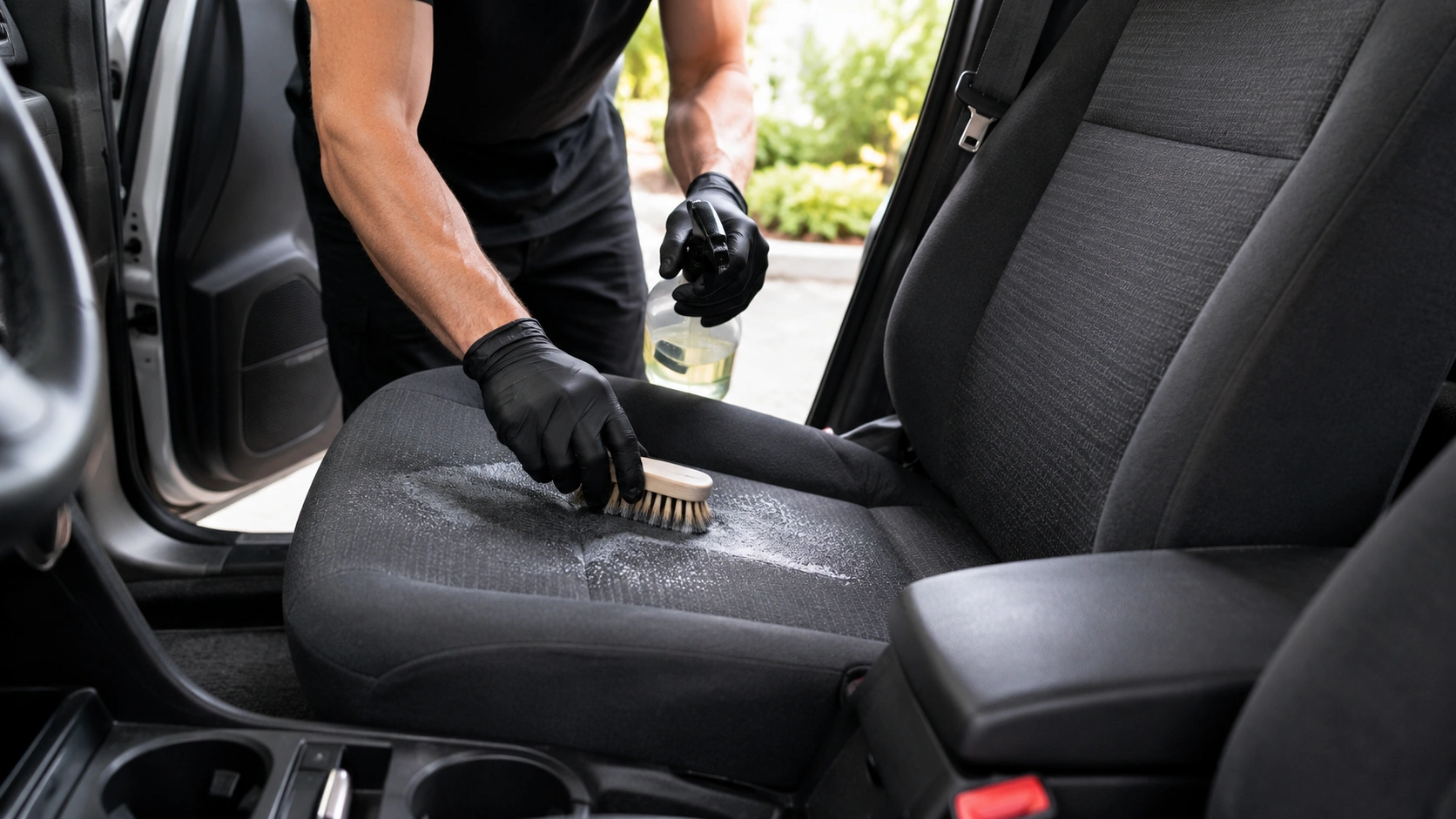
How to clean cloth seats in the car is one of those jobs that looks simple at first, but it can go wrong fast if you use too much water, the wrong cleaning solution, or too much scrubbing. Cloth seats, fabric car seats, and other types of car upholstery tend to hold on to dust, crumbs, dirt, grime, pet fur, spills, and lingering smells far more than hard interior surfaces. That is why the best method is not just about making the seats look cleaner. It is about lifting stains, removing odor, and protecting the fabric without soaking the padding underneath.
The good news is that you do not need to turn this into an all-day project. In most cases, you can clean cloth car seats at home with a handheld vacuum, a spray bottle, microfiber cloths, a soft scrub brush, and a fabric-safe cleaner. If you handle the job gently, dry the material properly, and avoid over-wetting the seat foam, you can get excellent results without damaging the texture or color of the fabric.
Why Cloth Car Seats Need a Different Cleaning Approach
Unlike leather seats or vinyl seats, cloth seats are porous. That means everyday messes can work their way below the surface. A small coffee spill, a few muddy shoes, sweaty summer driving, or a dropped snack can leave behind more than visible marks. Over time, moisture and residue can settle into the fibers and even into the foam below, creating musty smells, stubborn car seat upholstery stains, and in the worst cases, mold growth.
That is why the best way to clean cloth car seats is to treat them like upholstery, not like plastic trim. The goal is to loosen dirt, lift stains, remove residue, and help the seats air dry completely. If you scrub too hard, use harsh chemicals, or saturate the seat, you can create water marks, fading, stiff fabric, or a deeper seat foam moisture risk. A clean seat is not just a bright seat. It is a seat that is dry, fresh, and safe to use.
What You Need Before You Start
Before you start, gather the right seat cleaning tools so the process stays simple and controlled. For most cars, you only need a few basics: a handheld vacuum or regular vacuum with a crevice tool, a couple of microfiber cloths, a spray bottle, a soft brush tool or scrub brush, a small bowl of warm water, and either a mild upholstery cleaner or a gentle DIY mix.
If your seats are heavily soiled, you can also use a wet/dry vac, portable steam vac, or upholstery cleaning machine. These can help with deeper extraction, but they are not always necessary. In fact, one of the most useful things to know is how to clean cloth car seats without a machine, because many ordinary spills and everyday dirt can be handled by hand if you use the right method.
Here is a quick reference table:
| Item | Why it helps |
| Handheld vacuum | Removes loose dirt and debris, crumbs, and dust before wet cleaning |
| Microfiber cloths | Good for wiping, blotting, and lifting residue |
| Spray bottle | Lets you apply cleaner lightly instead of soaking the seat |
| Soft brush / scrub brush | Helps loosen deep stains without shredding the fabric |
| Fabric-safe cleaner | Cleans the surface while protecting upholstery |
| Dry towel | Helps blot dry moisture after cleaning |
| Portable extractor or steam vac | Useful for deeper cleaning on very dirty seats |
If you are shopping for products, look for a pH-balanced upholstery cleaner or a mild carpet and upholstery cleaner labeled as safe for automotive fabric.
Check the Fabric and Test a Hidden Area First
Before applying anything, take a quick look at the seat material. Many cars use nylon, polyester, or blended synthetic materials for fabric seats, while some seats may have leather seats or vinyl seats on the sides with cloth in the center. That matters because a cleaner that works on one surface may not be ideal for another.
This is also the point where you should do a spot check for color-fastness. If you have ever wondered how to identify the type of fabric in your car seats or how to test a cleaning solution in an inconspicuous area, the answer is simple: apply a tiny amount of cleaner to a hidden patch near the lower edge or back of the seat, wait a few minutes, then dab it with a white cloth. If no color comes off and the fabric does not feel rough or sticky after drying, you can move forward.
This small step prevents a lot of problems. Test on a hidden area first is not just a safe tip. It can save you from discoloration, residue, or damage that is much harder to fix later.
Step-by-Step: How to Clean Cloth Seats in the Car
1. Vacuum the Seats Thoroughly
The first step is always to vacuum the seats. This matters more than most people realize. If you skip it, you end up rubbing dirt and debris deeper into the fabric once moisture is added. Use a handheld vacuum or a vacuum with a crevice tool to clean the full seat surface, especially the seat seams, seat tracks, and tight corners where crumbs, dust, and pet hair hide.
A good vacuum pass also helps you see the real problem areas. Once the loose mess is gone, you can tell which parts need simple freshening and which parts need targeted stain removal.
2. Apply a Safe Cleaner Lightly, Not Heavily
Now lightly mist the fabric with your cleaning solution. This is the moment where many people make the biggest mistake: they use too much liquid. If you want to clean cloth car seats without damaging fabric, keep the fabric damp, not drenched. Avoid over-wetting car seats and do not soak the seat foam underneath.
Spraying the cleaner onto a microfiber towel first, then working it into the seat, is often safer than spraying the seat directly. This gives you more control and reduces the chance of saturation. A damp towel can also help distribute the cleaner evenly.
3. Gently Agitate the Fabric
Once the cleaner is on the surface, use a soft brush or scrub brush and work in gentle circular motions. The goal is to lift grime, not grind the fabric down. On small areas, even a toothbrush can help with seams or narrow spots.
If you are trying to follow the classic advice to scrub in circles until the stains lift, do it carefully. Gentle repetition works better than aggressive force. This step is especially helpful for stubborn stains, coffee, grease stains, and built-up body oils.
4. Blot and Lift Residue
After brushing, use a clean cloth to lift the loosened residue. This is where technique matters. Blot, do not rub. Rubbing can spread the stain, damage the fibers, and leave a rough patch behind. A clean microfiber cloth or dry towel should be pressed into the fabric to absorb the dirty moisture. If needed, follow with another slightly damp cloth to remove any leftover cleaner.
This is also the easiest way to rinse with a damp cloth and blot dry without soaking the seat.
5. Let the Seats Dry Completely
Once the seats look clean, let them air dry fully. Open the doors or windows for ventilation. If possible, place the car in a shaded but airy place, or use fan-assisted drying. Warm weather can help, but strong direct heat is not always ideal if it slows airflow or leaves uneven drying.
If you have ever asked how long does it take for cloth car seats to dry, the answer depends on how much cleaner you used, the weather, and airflow in the car. Light cleaning may dry in a few hours. A deeper clean can take much longer. The key point is to let dry completely before using the car heavily or putting covers back on.
Best DIY Cleaning Solutions for Cloth Car Seats
A lot of people search for how to clean car seats with household products, and in many cases, a simple homemade option works well. The trick is to keep the solution mild.
One common option is a light mix of soap and water. A little dish soap in warm water can handle everyday surface dirt. Another popular method is a DIY mix using vinegar, club soda, and a small amount of Dawn dish soap. Some people also use baking soda for odor control or stain lifting.
Here is a quick comparison:
| DIY option | Best for | Notes |
| Warm water + mild dish soap | General cleaning | Good first choice for routine mess |
| White vinegar + water | Light odor and residue | Use lightly and always test first |
| Baking soda paste | Spot treatment | Helpful on some stains and smells |
| Club soda mix | Fresh spills | Can help lift light surface residue |
If you want a simple homemade formula, one version people use is 1 cup vinegar, 1 cup club soda, and ½ cup blue Dawn dish soap in a spray bottle. Another version for spot treatment is 2 parts baking soda to 1 part water to create a paste. You can let it sit for 5–10 minutes before gently scrubbing. For odors, some people lightly sprinkle baking soda and let it sit for at least 15 minutes before vacuuming.
That said, homemade cleaner for cloth car seats is not always better. If your upholstery is delicate, heavily stained, or previously treated with protectant, a dedicated fabric-safe cleaner may be the smarter option. This is especially true if you are trying to clean cloth car seats without vinegar or without baking soda because of residue, smell sensitivity, or fabric concerns.
How to Remove Common Stains From Cloth Car Seats
Not every stain behaves the same way, so it helps to know what you are dealing with.
For coffee or soda spills, blot the liquid first, then apply a mild cleaner and work from the outside of the stain inward. This helps stop spreading. For grease stains or an oil stain, avoid adding too much liquid right away. Instead, absorb what you can first, then use a fabric-safe cleaner. If you need how to absorb oil stains from car seats, the trick is patience: absorb, treat lightly, brush gently, and blot.
For mud, wait until it dries before vacuuming the loose dirt. Then clean the remaining mark with a lightly damp cloth and cleaner. This is especially useful for winter salt and mud cleanup from cloth seats, where dried residue is easier to lift in stages.
For sweat, food spills, and old mystery spots, repeat the cleaning cycle a little at a time rather than flooding the fabric. If you need how to remove old stains from cloth car seats, know that older stains often require multiple light treatments. Rushing usually makes things worse.
For pet-related problems, including how to remove pet urine from cloth car seats or how to remove milk smell from cloth car seats, focus on odor removal as much as stain removal. The visible mark may disappear before the smell does. In these cases, an odor neutralizer for car upholstery or an enzyme cleaner for car seat stains can be more effective than basic soap alone.
How to Remove Odors Without Over-Wetting the Seats
A seat can look clean and still smell bad. That happens because many odors live below the surface. Lingering smells, musty smells, smoke residue, pet mess, and old food spills often get trapped deeper in the material.
To remove odors from car seat fabric, start with dry methods when possible. Vacuum well, then apply a light odor treatment. Baking soda is often used because it can help absorb odors. Sprinkle lightly, let it sit, then vacuum it out. This can work well for everyday smells and mild mustiness.
If the smell is stronger, you may need a cleaner designed to neutralize odors, not just cover them. This matters if you are trying how to remove smoke smell from cloth car seats or how to stop cloth car seats from smelling musty. A seat that repeatedly smells bad after cleaning may still have moisture or deep residue in the foam underneath.
A simple rule helps here: deodorize lightly, clean gently, and dry thoroughly.
How to Dry Cloth Car Seats Fast and Prevent Mold
This is one of the most overlooked parts of the whole job. People focus on how to wash the seat, but not enough on how to dry it. If you want to know how to dry car seats fast after cleaning, the answer is airflow, not flooding the fabric in the first place.
Open the windows, leave doors open when safe, and use moving air from a fan if possible. In humid weather, drying takes longer, so humid climate car seat drying tips matter more. Use less liquid, blot more often, and allow extra time. During the rainy season, the same rule applies. Rainy season car interior care should always include lighter cleaning passes and stronger ventilation.
If the seats still smell damp the next day, do not ignore it. That can be an early sign of mildew smell after cleaning car seats or deeper moisture. Prevent mold after cleaning cloth seats by keeping the fabric only lightly damp during cleaning and making sure the seat is fully dry before closing the car up overnight.
When to Use a Machine Cleaner, Steam Vac, or Extractor
There are times when hand cleaning is enough, and there are times when you need more help. If the seats have years of buildup, large spills, repeated pet accidents, or strong odors that keep returning, a hot water extractor, portable steam vac, or upholstery cleaning machine can do a better job pulling dirt from below the surface.
This is where people often ask, can I use a steam cleaner to clean my fabric car seats or how to clean cloth seats with an upholstery cleaning machine. The answer is yes, but with caution. Machine cleaning works best when used lightly and followed by strong drying. Too much moisture can create the same problem you were trying to solve.
If the seat smells sour, has visible mold, or stays damp for too long, it may be time to ask when to call a professional detailer. Deep water damage is not the same as a routine seat cleaning job.
Mistakes to Avoid When Cleaning Cloth Seats
A few simple mistakes ruin a lot of DIY jobs. The first is using too much cleaner. Again, avoid over-wetting car seats. The second is using harsh chemicals without testing them. The third is scrubbing too hard and roughing up the fibers.
Other common mistakes include skipping the vacuum step, forgetting the seat seams and edges, rubbing instead of blotting, and failing to dry the seats completely. Many people also assume stronger products mean better results, but a pH-balanced upholstery cleaner is often safer than an aggressive one.
A good rule to remember is this:
Clean gently, blot patiently, and dry completely.
That approach fixes more problems than force ever will.
How Often Should You Clean Cloth Car Seats?
If you use your car every day, regular upkeep makes deep cleaning much easier. A light vacuum once per month is a realistic minimum for many drivers, though families with kids, pets, or long commutes may want to do it more often. A deeper clean once every few months is usually enough for normal use.
If your car deals with food, sports gear, wet weather, pet hair, or frequent road trips, your maintenance schedule for car upholstery should be more frequent. Spot cleaning fresh spills right away is still the best strategy because it stops stains from setting in.
How to Keep Cloth Seats Cleaner for Longer
Once the seats are clean, keeping them that way is much easier than doing another deep clean a month later. Vacuum regularly, wipe up spills quickly, and avoid letting drinks, snack crumbs, and wet clothing sit on the fabric.
You can also use protective car seat covers, waterproof seat covers, or a light fabric protector spray if it is appropriate for your material. For families, kick mats and seat protection are especially helpful. If pets ride with you often, deal with pet hair removal from cloth seats early before the fur works into the fibers.
Cleaner seats also help the car feel better maintained overall, and that can support resale value later on.
Quick Answers to Common Questions About Cleaning Cloth Car Seats
Can you use dish soap on cloth car seats?
Yes, in small amounts mixed with water, but keep it mild and avoid leaving residue behind.
Is vinegar safe for fabric seats?
Sometimes, but always test first. Some materials react differently, so do a hidden patch test.
Can you use carpet cleaner on cloth car seats?
Yes, if it is labeled safe for upholstery or automotive fabric. A carpet and upholstery cleaner can help with stubborn marks.
What is the best cleaner for cloth car seats?
The best cleaner for cloth car seats is usually a gentle fabric-safe cleaner or mild upholstery cleaner that does not leave heavy residue.
Can baking soda remove odor?
It can help with mild smells because it may absorb odors, but deep odor problems often need more targeted treatment.
How long do seats take to dry?
It depends on how wet they got, but lighter cleaning with good airflow can dry in a few hours, while deeper cleaning may take much longer.
Final Thoughts
Learning how to clean cloth seats in the car is really about using the right amount of moisture, the right cleaner, and the right technique. Vacuum first, clean lightly, blot dry, and make sure the seats fully air dry before calling the job done. If you stay gentle and consistent, you can clean cloth car seats, remove car seat upholstery stains, cut down on odor, and keep the fabric looking fresher for longer.
Disclaimer: This article is for general cleaning and informational purposes only. Results may vary based on fabric type, condition, and products used. Always test cleaning solutions on a small hidden area before full use.