
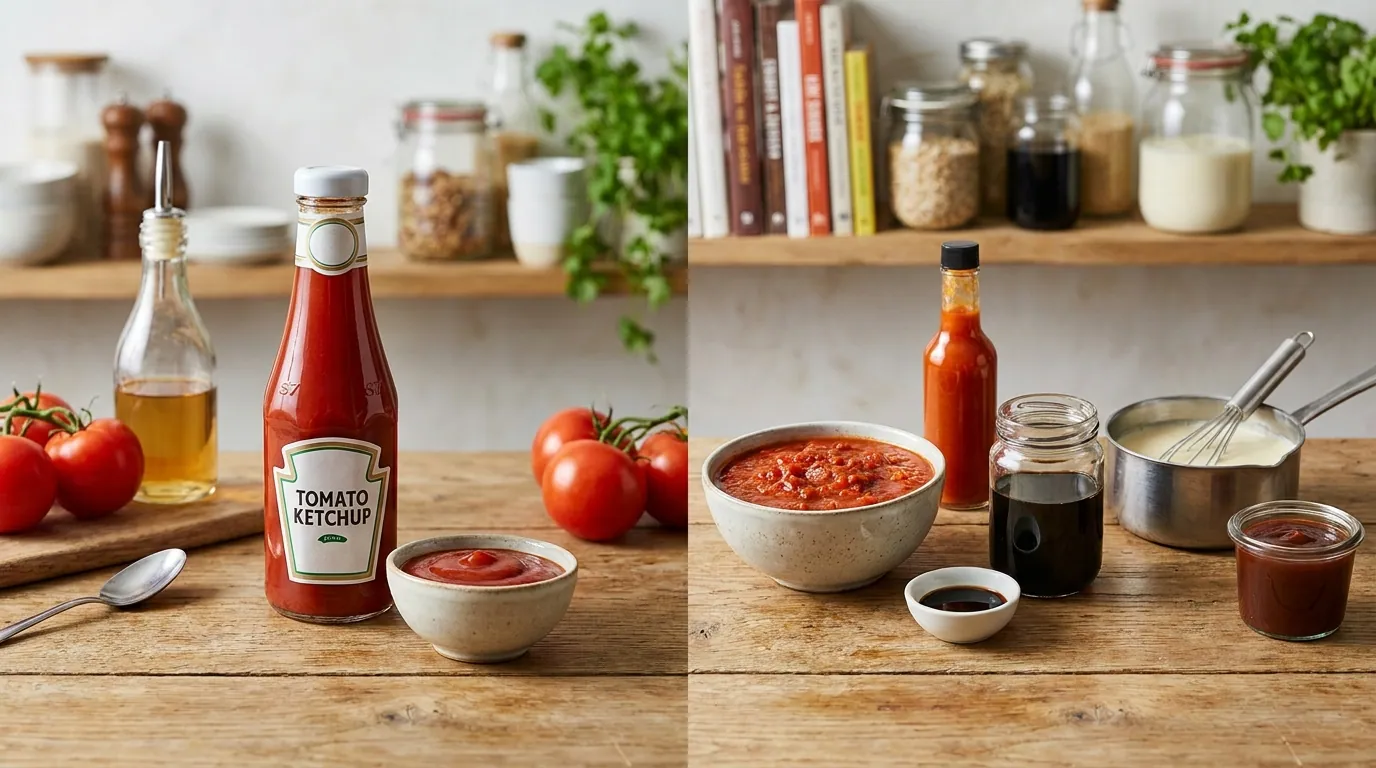
What is the difference between ketchup and sauce? The short answer is that ketchup is a specific type of sauce, while sauce is a much broader category. Ketchup is usually a sweet, tangy, tomato-based condiment made with tomatoes, vinegar, sweeteners, salt, and spices. Sauce, on the other hand, can mean many different things: tomato sauce, hot sauce, soy sauce, pasta sauce, béchamel, and dozens more. That is why people often get confused when comparing sauce vs ketchup or asking whether tomato sauce and ketchup are the same thing. Standard dictionary and regulatory definitions support that distinction: ketchup is a seasoned tomato condiment, while U.S. standards of identity define catsup/ketchup as a tomato-based product with vinegar, sweeteners, and seasonings.
In everyday use, the confusion gets even bigger because regional food terminology changes from place to place. In some countries, people use “tomato sauce” for a table condiment that feels close to ketchup, while in the U.S., tomato sauce usually means a cooking ingredient. So when someone searches difference between ketchup and tomato sauce, they may actually be asking about ingredients, taste, texture, uses, substitutions, or even country-specific naming.
This guide breaks it all down in a simple way so you can understand ketchup vs sauce, know when each one works best, and avoid using the wrong one in a recipe.
Ketchup vs Sauce at a Glance
| Feature | Ketchup | Sauce |
|---|---|---|
| What it is | A specific tomato-based condiment | A broad category of flavoring liquids or semi-liquids |
| Main ingredients | Tomato concentrate, vinegar, sweeteners, salt, spices, sometimes onion or garlic | Depends on the sauce: may include tomatoes, oil, stock, herbs, chili, soy, cream, or more |
| Taste | Usually sweet, tangy, slightly acidic | Can be savory, spicy, creamy, herby, sweet, or tart |
| Texture | Usually thick, smooth, and homogeneous | Can be thin, thick, chunky, or silky |
| Typical use | Dipping, topping, fast-food condiment | Cooking, marinating, finishing, or dipping |
| Served | Most often cold or at room temperature | Often hot, but not always |
| Swap-friendly? | Only sometimes | Depends on the type of sauce |
That quick table reveals the core truth: ketchup is one member of the wider sauce family, not a synonym for every sauce.
What Is a Sauce?
A sauce is any liquid or semi-liquid food used to add flavor, moisture, or texture to another dish. That definition is broad on purpose. Tomato sauce, hot sauce, soy sauce, marinara, vodka sauce, garlic chili sauce, and even classic French sauces like béchamel all fit under the umbrella. Some sauces are designed for cooking, while others are used for dipping, drizzling, or finishing food.
That is why asking “what is the difference between ketchup and sauce” can be tricky. One side of the comparison is a category, and the other is a specific product. It is a bit like asking for the difference between apple juice and juice. One is a particular kind; the other is the bigger group.
In culinary terms, sauce is not defined by one flavor. A sauce can be savory, spicy, sweet-and-sour, umami-rich, creamy, or herbaceous. It may contain tomatoes, oil, garlic, onion, stock, basil, oregano, thyme, or many other ingredients depending on the cuisine and the recipe.
What Is Ketchup?
Ketchup is much more specific. Merriam-Webster defines it as a seasoned pureed condiment usually made from tomatoes, and U.S. regulations describe catsup/ketchup/catchup as a product made from tomato ingredients plus vinegar, nutritive sweeteners, and seasonings such as spices, onions, or garlic.
So, is ketchup a sauce or a condiment? The most accurate answer is: both. It is a sauce by category, but in everyday food language it is usually treated as a condiment because people use it mainly on the table, not as a primary cooking base. Britannica also describes American ketchup as a sweet tomato puree flavored with vinegar and pickling spice, commonly eaten with foods like fries and meats.
That helps explain why ketchup vs sauce is not really a fair one-to-one comparison. Ketchup has a narrow identity. Sauce can mean almost anything.
The Main Difference Between Ketchup and Sauce
The main difference between ketchup and sauce is specificity.
Sauce is the big category.
Ketchup is one specific, usually tomato-based, sweet-tangy, thick, smooth condiment inside that category.
A general sauce may be meant for pasta, pizza, stir-fry, curries, or dipping. Ketchup is mostly meant for burgers, sandwiches, hot dogs, fries, nuggets, and snack foods. It can be used in cooking, but that is not its main job.
This is also why many people confuse ketchup vs tomato sauce. Both may start with tomatoes, but they are usually formulated differently and meant for different roles in food.
Ingredients: What Ketchup and Sauce Are Made Of
If you look at ingredients, the distinction becomes much clearer.
A standard ketchup ingredients list usually includes:
- tomato concentrate or tomato paste
- vinegar
- sweeteners such as sugar or other carbohydrate sweeteners
- salt
- spices
- sometimes onion or garlic
That formula is part of why ketchup tastes so familiar: it balances sweetness, acidity, and mild spice in a way that feels immediate and table-ready.
A general sauce ingredients list can be far more varied. For example, tomato sauce ingredients may include tomatoes, oil, onions, garlic, basil, oregano, thyme, and pepper. Other sauces may skip tomatoes entirely and use soy, chili, cream, butter, or stock instead. Symega’s comparison notes that tomato sauces often include more cooking-style ingredients and may be thinner or chunkier than ketchup.
So if you want the simplest rule, it is this: ketchup is engineered for instant flavor as a condiment, while many sauces are built for cooking, layering, and recipe development.
Taste and Texture Differences
The biggest sensory difference in sauce vs ketchup is how they taste and feel.
Ketchup is usually:
- sweeter
- more tangy
- slightly more acidic
- thicker
- smoother
- more uniform in texture
A typical tomato sauce, by contrast, is often:
- more savory
- less sweet
- less sharply acidic
- thinner or more fluid
- sometimes chunky
- more herb-forward, depending on the recipe
This is why why is ketchup sweeter than sauce is such a common question. The answer is simple: ketchup is specifically designed to include sweeteners and vinegar as part of its identity. Tomato sauce may contain natural tomato sweetness, but it usually is not formulated to taste like a sweet table condiment.
How They Are Used in Cooking and Serving
Usage is where the difference becomes practical.
Ketchup uses usually include dipping, topping, and quick flavor boosts. It works naturally with fries, burgers, sandwiches, hot dogs, nuggets, rolls, and snack foods. In markets such as India, it is also common with items like samosas, pakoras, and noodles.
Sauce uses are broader. A sauce might be used to cook pasta, build a pizza base, coat stir-fry, enrich curries, or finish grilled meat. This is why cooking sauce vs condiment is such an important distinction. Ketchup is mainly ready to eat as-is. Many sauces are designed to be part of the cooking process.
That does not mean ketchup cannot be cooked with. Plenty of people stir it into glazes, barbecue mixes, or quick homemade dips. But as a rule, ketchup is for the plate, while sauce is often for the pan.
Can You Substitute Ketchup for Sauce?
This is one of the most useful questions for home cooks.
Can tomato sauce and ketchup be substituted for each other? Sometimes, but not perfectly.
You can use ketchup instead of tomato sauce in a pinch for things like:
- a quick dip
- a sweet glaze
- meatloaf topping
- some barbecue-style mixes
But ketchup can be a poor substitute in pasta sauce, pizza sauce, or savory dishes because the added sugar and vinegar can make the result taste too sweet or too sharp.
You can also use tomato sauce substitute for ketchup if needed, but you usually have to adjust it. A simple fix is to add a little sugar, a splash of vinegar, and a touch of salt to get closer to ketchup’s flavor profile. Even then, the texture may stay less smooth and less sticky.
So, when not to substitute ketchup for sauce? Avoid it when you need a clean, savory tomato base. That is especially true for pasta, pizza, and dishes where herbs like oregano, basil, or thyme matter more than sweetness.
Which Is Healthier: Ketchup or Sauce?
When people ask which is healthier, sauce or ketchup, the honest answer is: it depends on the exact product.
Many bottled ketchup products contain added sweeteners and are made to taste distinctly sweet and tangy. Symega notes that ketchup may contain around 4 grams of sugar per tablespoon, which is one reason health-conscious shoppers often compare labels closely.
Some tomato sauces, especially plain or lightly seasoned ones, may have:
- less added sugar
- more savory flavor
- fewer sweeteners
- more flexibility in cooking
But other sauces can still be high in sodium, oil, or cream, so there is no universal winner. The smarter approach is to read the nutrition label and ingredient list.
A practical rule:
- Choose ketchup when you want a little concentrated flavor as a condiment.
- Choose a simpler tomato sauce when you want a cooking base and want more control over sweetness and seasoning.
Regional Differences: Why “Tomato Sauce” Does Not Mean the Same Thing Everywhere
This is where much of the confusion comes from.
In the U.S., tomato sauce usually means a cooking ingredient or a base for dishes, while ketchup is the familiar sweet table condiment. That distinction is clear in dictionary, encyclopedia, and regulatory definitions.
But in other places, the language shifts. The Reddit discussion from New Zealand shows that people there often talk about tomato sauce and ketchup as related but still distinct products, with ketchup often seen as thicker, sweeter, and more strongly flavored.
In markets like India, packaged tomato sauce can overlap more with what many people elsewhere would call ketchup, especially in everyday speech and branding. That is why a search like what does sauce mean in India vs America or what does tomato sauce mean in New Zealand can lead to very different expectations.
So if you are comparing labels from Heinz, Cremica, Kissan, or Wattie’s, remember that the product name may reflect local habits, not just one universal rule.
A Brief History of Ketchup
The story of ketchup is another reason people ask whether it is just another sauce. Britannica notes that ketchup has older roots and that modern American ketchup became associated with sweet tomato puree flavored with vinegar and spice. Broader historical accounts trace ketchup to earlier savory sauces rather than the exact tomato condiment people know now.
In other words, non-tomato ketchup history is real. Ketchup did not begin as the sweet red bottle most people picture today. Over time, it evolved into the tomato-based condiment now defined in modern standards and dictionaries.
That evolution is important because it shows why ketchup belongs to the world of sauces, but also why it became its own highly recognizable category.
Ketchup vs Sauce vs Tomato Sauce: The Terms People Mix Up Most
Here is the clearest way to separate the terms:
- Sauce = the broad category
- Tomato sauce = one kind of sauce, often used for cooking
- Ketchup = a seasoned, sweetened, vinegar-based tomato condiment
That is the simplest answer to what is the difference between ketchup tomato sauce and pasta sauce. Pasta sauce is generally made for cooking and coating pasta. Tomato sauce may be plain or seasoned for recipes. Ketchup is made for table use, dipping, and quick flavor impact.
Once you understand that structure, the whole topic becomes much easier.
How to Choose the Right One
If you are deciding quickly in the kitchen, use this rule of thumb:
Choose ketchup for:
- burgers and fries
- sandwiches
- hot dogs
- nuggets
- quick dips
- sweet-and-tangy glazes
Choose sauce for:
- pasta dishes
- pizza
- curries
- cooking bases
- simmered dishes
- savory recipes that need depth more than sweetness
That is the most practical answer to when to choose between sauce and ketchup.
FAQs
Is ketchup a sauce or a condiment?
It is technically both. It is a type of sauce, but in daily use it is mostly treated as a condiment because people add it to finished food rather than use it as a broad cooking base.
Is tomato sauce the same as ketchup?
Usually, no. Tomato sauce is often more savory and cooking-focused, while ketchup is sweeter, tangier, and thicker. In some countries, though, the naming overlaps more.
Can you use ketchup instead of tomato sauce?
Only sometimes. It can work in a pinch for glazes or dips, but it is usually too sweet for pasta sauce or pizza sauce.
Why is ketchup sweeter than sauce?
Because ketchup is formulated with sweeteners and vinegar as part of its standard identity. Tomato sauce is not usually built that way.
Which is healthier: ketchup or tomato sauce?
It depends on the label, but plain tomato sauce often gives you more control because it may contain less added sugar.
Are all ketchup made with tomatoes?
Modern mainstream ketchup usually is, but ketchup as a concept has a longer history and was not always tomato-based.
Conclusion
So, what is the difference between ketchup and sauce? The simplest answer is that ketchup is a specific kind of sauce, while sauce is a broad category that includes many different products and uses. Ketchup is usually thick, smooth, sweet, and tangy, made mainly from tomato concentrate, vinegar, sweeteners, and spices. Sauce can be almost anything: savory, spicy, creamy, herby, thin, or chunky.
That is why ketchup vs sauce is really about specific condiment versus broad category, and why tomato sauce vs ketchup depends not only on ingredients and texture, but also on how people use the terms in different countries. Once you know that, choosing the right one for dipping, cooking, or substituting becomes much easier.
Disclaimer: This article is for general informational and educational purposes only. Definitions, ingredients, and uses of ketchup, tomato sauce, and other sauces may vary by country, brand, recipe, and personal preference. Always check product labels and ingredients if you have dietary, allergy, or nutritional concerns.