
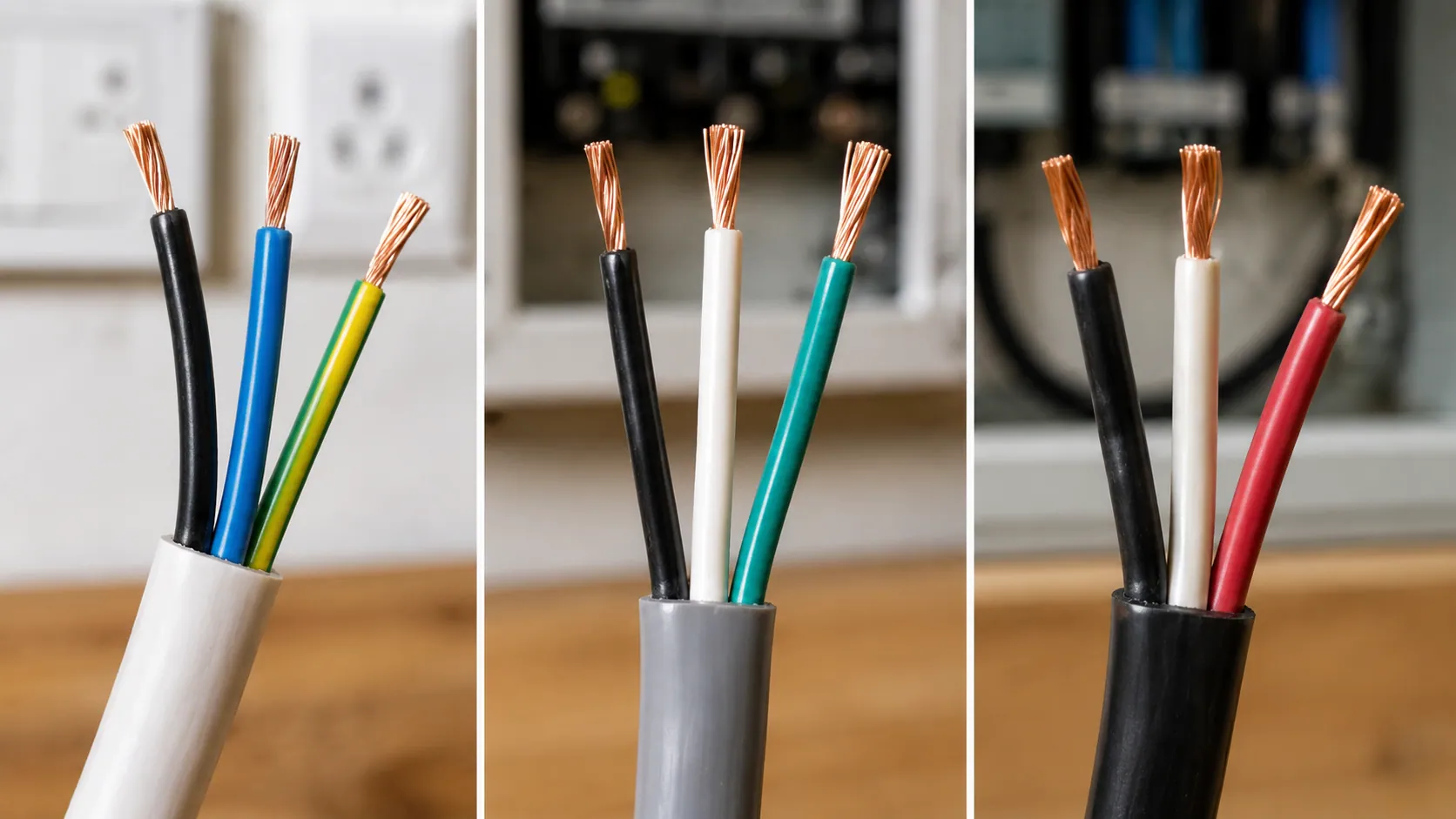
What is the colour of neutral wire is a common question, and the safest answer depends on where you live, which wiring standard is used, and whether the wiring is modern or old. In modern UK and IEC-style wiring, the neutral wire colour is blue. In the United States and Canada, the neutral wire color is usually white or gray. In older UK wiring, the neutral wire may be black.
That simple answer is helpful, but it is not enough for real electrical safety. Wire colours can vary by country, installation age, local code, and even previous DIY mistakes. A blue neutral wire, white neutral wire, or black neutral wire should never be touched or worked on just because it “looks neutral.”
This guide explains what colour is neutral wire, how it compares with live wire, earth wire, and ground wire, what N means on a plug or socket, and why you should always verify wiring safely before doing anything.
What Colour Is the Neutral Wire?
The neutral wire colour depends mainly on the electrical standard being used. In many modern systems, especially in the UK, Europe, and other IEC wire colors systems, the neutral wire is blue or light blue. In the US and Canada, the neutral wire is normally white or gray. In older UK systems, the neutral wire was commonly black.
Here is the quick answer:
| Region or Wiring Standard | Neutral Wire Colour |
| Modern UK wiring | Blue |
| Europe / IEC wiring | Blue or light blue |
| United States wiring | White or gray |
| Canada wiring | White or gray |
| Old UK wiring | Black |
So, if someone asks what color wire is neutral, the answer is not universal. A blue wire may be neutral in the UK, but a white wire may be neutral in the US. A black wire may be neutral in old UK wiring, but black is often used as a hot wire in US wiring.
This is why the best answer is: neutral wire colour is usually blue in modern UK/IEC wiring, white or gray in US/Canada wiring, and black in old UK wiring.
Neutral Wire Colour by Country: Quick Reference Chart
Because wire colour codes are regional, a country-by-country chart is one of the easiest ways to understand the difference. This is especially useful for homeowners, students, appliance users, and anyone checking plug wiring colours.
| Country / Region | Neutral Colour | Live / Hot Colour | Earth / Ground Colour |
| UK | Blue | Brown | Green/yellow |
| US | White or gray | Black, red, or other hot colours | Green or bare copper |
| Canada | White or gray | Black or red | Green or bare copper |
| Europe / IEC | Blue or light blue | Brown, black, or gray | Green/yellow |
| Australia / New Zealand | Usually blue | Brown or red, depending on wiring type | Green/yellow |
| India / Pakistan | May vary by standard, age, and installer | May vary | Often green for earth |
This table gives a general guide, but it should not replace local electrical code. Older buildings, imported appliances, and modified circuits may not follow the expected colour system.
For example, in modern UK wiring, brown live wire, blue neutral wire, and yellow and green earth wire are standard. In US wiring, a white neutral wire or gray neutral wire is common, while green electrical wire or bare copper wire is normally used for grounding.
The key point is simple: do not rely on colour alone. Colour is a guide, not a guarantee.
What Does the Neutral Wire Do?
The neutral wire helps complete the electrical circuit. In simple terms, electricity flows from the live wire or hot wire to the appliance or electrical load, then returns through the neutral wire. This return path allows the circuit to work properly.
A helpful way to think about it is this: the live wire brings power to the device, and the neutral wire carries current back to the source. This is why the neutral wire is sometimes described as a return conductor or grounded conductor, especially in NEC-based terminology.
However, neutral does not mean harmless. A neutral wire can still carry electrical current, especially when a circuit is operating. It may also become dangerous if there is a faulty connection, open neutral, shared neutral, or reverse polarity issue.
A common misconception is that the neutral wire is always safe to touch. That is not true. Even if the wire is blue, white, gray, or black according to the expected standard, it should still be treated with caution.
In electrical safety, the safest mindset is: every wire should be considered potentially dangerous until it has been properly isolated and tested by a competent person.
Neutral, Live, and Earth Wire Colours Explained
To understand the neutral wire colour, it helps to compare it with the other main wires: live wire, earth wire, and ground wire.
| Wire Type | UK / IEC Colour | US / Canada Colour | Main Function |
| Neutral wire | Blue | White or gray | Completes the return path of the circuit |
| Live / hot wire | Brown | Black, red, or other hot colours | Carries power to the load |
| Earth / ground wire | Green/yellow | Green or bare copper | Provides a safety path during a fault |
In the UK, the common phrase is live, neutral, and earth wires. In the US, people usually say hot, neutral, and ground wires. The wording is different, but the basic idea is similar.
The live wire or hot wire is the conductor that supplies voltage to the appliance, light, socket, or outlet. The neutral wire completes the normal circuit. The earth wire or ground wire is mainly a protective safety conductor.
This is where many people get confused. The neutral wire and ground wire are not the same thing. A neutral is part of the normal working circuit. A ground or protective earth is meant to help protect people and equipment if something goes wrong.
So if you are asking what colour is live neutral and earth, the modern UK answer is: brown for live, blue for neutral, and green/yellow for earth.
UK Neutral Wire Colour: Modern and Old Wiring Colours
In modern UK wiring, the neutral wire is blue. This applies to common domestic wiring and UK plug wiring where the modern harmonised colours are used.
Modern UK wiring colours are:
| Wire | Modern UK Colour |
| Live wire | Brown |
| Neutral wire | Blue |
| Earth wire | Green/yellow |
This is why many UK users searching what colour is neutral wire in the UK are looking for one direct answer: blue.
However, older UK wiring used different colours. In old UK wiring, the common colours were:
| Wire | Old UK Colour |
| Live wire | Red |
| Neutral wire | Black |
| Earth wire | Green |
This means a black neutral wire may be found in older UK homes, plugs, or electrical installations. The colour change is commonly linked with the UK move toward harmonised European wiring colours. You may see references to 2004, 2006, BS 7671, IEC 60446, IEC 60445, and the 17th Edition Wiring Regulations when researching the UK wiring colour change.
This matters because older and newer colours may exist in the same property. For example, a renovated home may have both old wiring colours and new wiring colours. That can make identification confusing and potentially dangerous.
If you see red and black wires, do not assume they are safe or simple to identify. In old UK wiring, red live wire and black neutral wire were common. In other countries, black may mean something completely different.
US and Canada Neutral Wire Color
In the United States and Canada, the neutral wire color is usually white or gray. This is different from the modern UK system, where neutral is blue.
In US wiring, common colours are:
| Wire | Common US Colour |
| Hot wire | Black or red |
| Neutral wire | White or gray |
| Ground wire | Green or bare copper |
The National Electrical Code, often called the NEC, commonly uses the term grounded conductor when referring to the neutral conductor. In everyday language, most people simply call it the neutral wire.
This section is important because a user may search is white wire neutral or live. In many US and Canadian systems, a white wire is typically neutral. But again, colour alone should not be the only check. A wire may have been re-identified, incorrectly installed, or changed during previous electrical work.
The same caution applies to a gray wire. A gray neutral wire is also commonly associated with neutral in NEC-style systems, but local rules and specific applications matter.
So the safe answer for North America is: white and gray electrical wires usually indicate neutral, while black and red wires are commonly used as hot wires.
What Colour Wire Goes to N?
On many plugs, sockets, outlets, and terminals, N means neutral. So when users ask what colour wire goes to N, they are usually asking which conductor connects to the neutral terminal.
In modern UK plug wiring, the blue wire goes to N. The brown wire goes to L, which means live or line. The green/yellow wire goes to the earth terminal, usually marked with an earth symbol.
A simple UK plug guide looks like this:
| Terminal Marking | Meaning | Modern UK Wire Colour |
| L | Live / line | Brown |
| N | Neutral | Blue |
| Earth symbol | Earth | Green/yellow |
In US-style wiring, a white neutral wire or gray neutral wire may connect to the neutral side, depending on the device and wiring method.
This topic must be handled carefully because incorrect wiring can create a shock risk. If the terminal markings are unclear, the wire colours do not match expected standards, or the installation looks old or modified, stop and call a qualified electrician.
Neutral Wire vs Earth/Ground Wire
The neutral wire vs ground wire question is one of the most important safety topics in electrical wiring. Many people assume that because neutral and ground may be connected at certain points in an electrical system, they are the same. They are not.
The neutral wire is part of the normal current path. It helps complete the circuit and carries current back to the source during normal operation.
The earth wire or ground wire is a protective conductor. It is designed to provide a safer path for fault current if something goes wrong, such as a damaged appliance, exposed metal part, or insulation failure.
Here is the difference in simple terms:
| Feature | Neutral Wire | Earth / Ground Wire |
| Normal role | Completes the circuit | Safety protection |
| Carries current normally | Yes, in many circuits | Usually no, except during a fault |
| UK colour | Blue | Green/yellow |
| US colour | White or gray | Green or bare copper |
| Common confusion | Called grounded conductor in some systems | Called grounding conductor in NEC language |
This is why grounded conductor vs grounding conductor matters. In basic terms, the neutral is the grounded conductor in some systems, while the ground wire is the protective grounding conductor. They should never be treated as interchangeable in ordinary wiring work.
Can a Neutral Wire Shock You?
Yes, a neutral wire can shock you. This is one of the biggest safety myths in household wiring. Many people think neutral is automatically safe because it is not the live or hot conductor. That assumption can be dangerous.
A neutral wire can carry electrical current when a circuit is operating. It may also become dangerous because of wiring faults, damaged connections, reverse polarity, an open neutral, or a shared neutral situation. In some cases, a neutral wire may have voltage present when you do not expect it.
This is why the phrase neutral wire is not always safe to touch is so important. Neutral is part of the electrical system, not a harmless spare wire.
For example, imagine a homeowner replacing a light fitting. They see a blue wire and assume it is safe because blue is neutral in modern UK wiring. But if the circuit was incorrectly modified before, or if the neutral is shared with another circuit, that wire may still be hazardous.
A simple safety quote to remember is:
“Wire colour can guide you, but testing and isolation keep you safe.”
Never touch a wire based only on colour. If you are unsure, call a licensed electrician.
Can Wire Colours Be Wrong?
Yes, wire colours can be wrong or misleading. This is why electrical safety guides often warn people not to rely only on colour.
Wire colour problems can happen for many reasons. An older installation may still use old wiring colours. A previous person may have made an incorrect repair. Insulation may be faded, dirty, heat-damaged, or hidden inside sleeving. Some wires may also be marked with tape, which can fall off or be applied incorrectly.
In older UK properties, a black wire may be neutral. In US-style wiring, black often means hot. In modern UK wiring, neutral is blue. In North America, neutral is usually white or gray. These differences can easily confuse someone who reads advice from another country.
Common reasons wire colours may not be reliable include:
- Old wiring colours mixed with new wiring colours
- Previous DIY electrical work
- Incorrectly wired plugs, outlets, or switches
- Faded wire insulation
- Imported appliances
- Poor or missing wire marking labels
- Country-to-country wiring differences
The safest rule is simple: verify before touching wires. A colour code is useful, but it is not a substitute for correct testing, safe isolation, and professional judgment.
How to Identify Neutral Wire Safely
Knowing how to identify neutral wire safely is more important than simply memorising colours. The colour gives a clue, but proper identification depends on the full context: country, wiring age, terminal markings, circuit type, and safe testing.
A careful approach starts with the local wire colour code. In the UK, blue normally means neutral. In the US and Canada, white or gray usually means neutral. In old UK wiring, black may be neutral. But this should only be a starting point.
You can also look for terminal markings. Terminal N usually means neutral, while terminal L means live or line. Manufacturer wiring diagrams can also help when dealing with appliances, plugs, or light fittings.
A basic safety checklist includes:
- Do not rely on colour alone.
- Turn off power at the breaker before inspection.
- Isolate the circuit properly.
- Use a voltage tester, polarity tester, or suitable testing equipment only if trained.
- Check terminal N, terminal L, and earth markings.
- Stop if the wiring looks old, damaged, overheated, or confusing.
- Contact a qualified electrician if there is any doubt.
This section should not be treated as DIY permission to work on fixed wiring. Electrical work can be dangerous and may also be controlled by building regulations or local electrical rules.
What Happens If Live and Neutral Are Reversed?
If live and neutral are reversed, the device or socket may still appear to work, but it can become unsafe. This condition is often called reverse polarity.
The danger is that parts of an appliance or fitting that should be disconnected or safer may remain live. For example, a switch might interrupt the neutral instead of the live conductor. That means the appliance may look switched off while some internal parts still have live voltage.
Reverse polarity may happen because of incorrect wiring, a damaged plug, a wrongly connected outlet, or careless DIY work. It is not always obvious just by looking.
Signs of wiring problems may include tripping protection devices, unusual appliance behaviour, burning smells, heat marks, or inconsistent tester readings. However, many wiring faults show no obvious signs.
If you suspect live and neutral reversed wiring, do not guess. A polarity tester or professional inspection may be needed. In fixed wiring, a qualified electrician should check and correct the problem.
Common Places You May See Neutral Wires
You may see or hear about neutral wires in many common electrical situations. These include plugs, sockets, outlets, light fittings, ceiling roses, extension leads, appliance cords, electrical panels, consumer units, and fuse boxes.
In UK plug wiring, the blue wire is normally neutral and connects to N. In a light fitting, neutral wires may be grouped or connected differently depending on the wiring method. In a socket outlet, the neutral conductor is part of the normal circuit path.
Common places where neutral wire colour matters include:
| Location | Why Neutral Colour Matters |
| Plug wiring | Helps identify which wire goes to N |
| Socket wiring | Helps distinguish live, neutral, and earth |
| Light fitting wiring | Prevents confusion between switched live and neutral |
| Ceiling rose wiring | Older wiring may be harder to identify |
| Appliance cord wiring | Imported appliances may follow different standards |
| Electrical panel / consumer unit | Should only be handled by qualified professionals |
Neutral wires are common, but that does not mean they are safe to handle. Work inside a consumer unit, fuse box, or service panel should be left to trained professionals.
When Should You Call a Qualified Electrician?
You should call a qualified electrician whenever the wiring is unclear, old, damaged, or does not match the expected colour code. Electrical safety is not a place for guesswork.
Call a professional if:
- The neutral wire colour does not match your local standard.
- You see old and new colours mixed together.
- The wiring has burn marks, heat damage, or loose connections.
- You suspect reverse polarity.
- You are dealing with fixed wiring, sockets, lights, or a consumer unit.
- A breaker, fuse, RCD protection, or GFCI protection keeps tripping.
- You are unsure which wire is live, neutral, or earth.
- You do not have proper testing equipment or training.
In some regions, certain electrical work must follow local electrical code, building regulations, or specific safety rules such as Part P electrical safety in domestic UK contexts.
A professional electrician can test the circuit, confirm the correct conductor, check for faults, and make sure the installation is safe.
Quick Safety Checklist Before Identifying Any Wire
Before identifying any wire, remember that electrical safety comes first. Even if you know the standard colour code, never assume a wire is safe.
Use this simple checklist as a safety mindset:
| Safety Step | Why It Matters |
| Do not rely on colour alone | Colours can be wrong, old, or region-specific |
| Turn off power at the breaker | Reduces shock risk before inspection |
| Verify before touching wires | Confirms the circuit is not live |
| Check terminal markings | N, L, and earth symbols help identify function |
| Look for old or damaged wiring | Old insulation and mixed colours can be unsafe |
| Use proper testing equipment only if trained | Incorrect testing can be dangerous |
| Call a licensed electrician if unsure | Professional testing is safer than guessing |
The safest approach is never to rush. A wire that looks like a neutral wire may still be carrying current or may be incorrectly connected.
FAQs About Neutral Wire Colour
Is the neutral wire blue or black?
In modern UK and IEC-style wiring, the neutral wire is blue. In older UK wiring, the neutral wire may be black. This is why both answers can be correct depending on the age of the installation. If you see a black wire, do not assume its function without proper verification.
Is white wire neutral or live?
In many US and Canadian electrical systems, a white wire is usually the neutral wire. A gray wire can also be neutral. However, colour alone is not enough because wiring may be modified, damaged, or incorrectly installed.
What colour is neutral wire in a plug?
In a modern UK plug, the neutral wire is blue and usually connects to the N terminal. The brown wire connects to L, and the green/yellow wire connects to earth.
What colour wire goes to L and N?
In modern UK wiring, brown goes to L and blue goes to N. In US-style wiring, neutral is usually white or gray, while hot wires are often black or red. Always check the local standard and terminal markings.
Is green wire live or neutral?
A green wire is usually not live or neutral. It is commonly used as an earth wire or ground wire. In UK and IEC wiring, earth is normally green/yellow. In US wiring, ground may be green or bare copper.
Can a neutral wire shock you?
Yes, a neutral wire can shock you. Neutral can carry current and may become dangerous due to faults, reverse polarity, an open neutral, or incorrect wiring. Never touch a wire because of colour alone.
What does N mean on a plug or socket?
N means neutral. It marks the neutral terminal. In modern UK plug wiring, the blue neutral wire connects to N. L usually means live or line.
What is the difference between neutral and earth wire?
The neutral wire completes the electrical circuit and can carry current during normal operation. The earth wire or ground wire is a protective safety conductor that normally carries current only during a fault.
Conclusion
The safest answer to what is the colour of neutral wire is: blue in modern UK and IEC wiring, white or gray in US and Canadian wiring, and black in older UK wiring. The neutral wire colour changes by country, wiring age, and electrical standard, so a single colour answer is not always enough.
A blue neutral wire, white neutral wire, or black neutral wire should still be treated carefully. Neutral wires can carry current, wire colours can be wrong, and old installations may not match modern standards.
Use wire colours as a guide, but always follow electrical safety, check local electrical code, verify before touching wires, and call a qualified electrician whenever you are unsure.
Disclaimer: This article is for general informational and educational purposes only and does not constitute professional electrical, engineering, or safety advice. Electrical wiring colours, codes, and standards vary by country, region, installation age, and local regulations. Always verify wiring safely and consult a licensed electrician before performing any electrical work or making wiring-related decisions.