
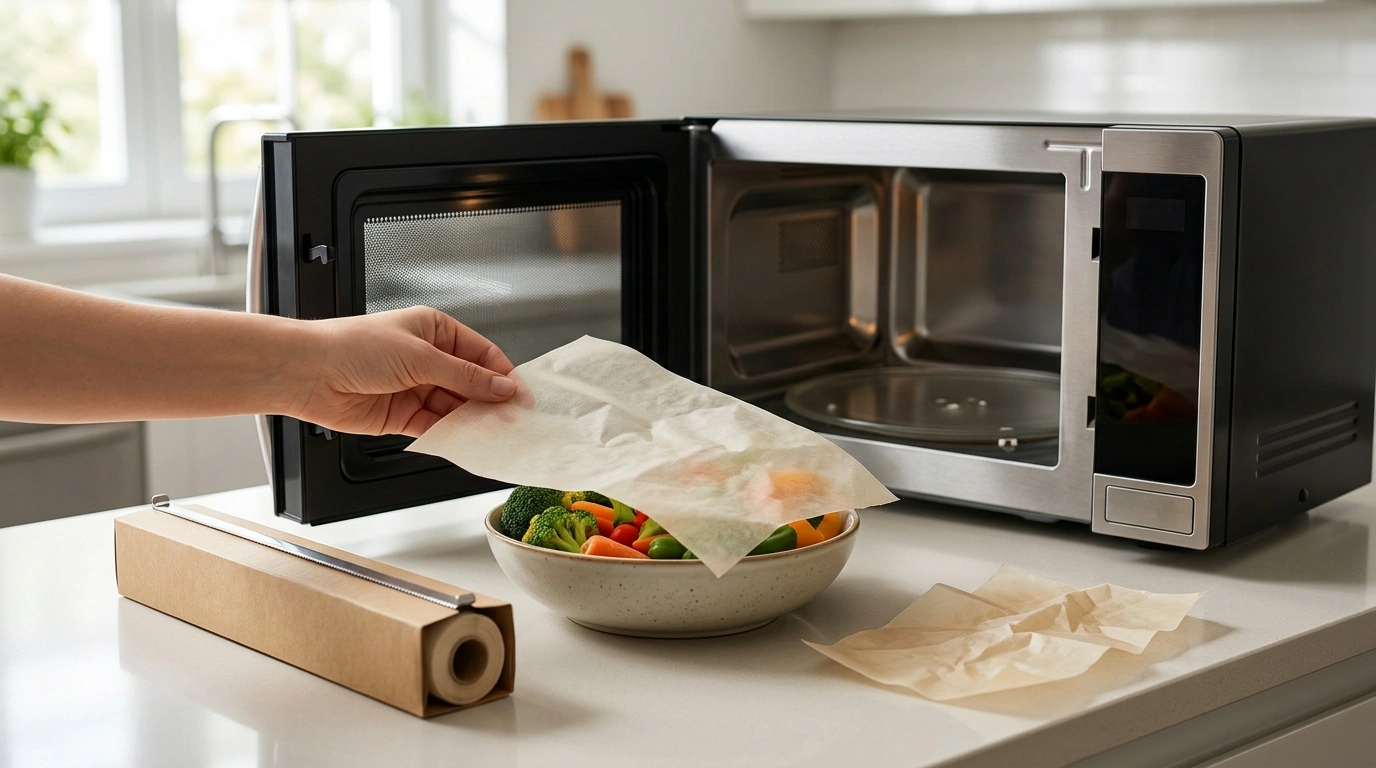
Yes — in most cases, parchment paper is generally considered microwave-safe when you use it correctly, keep it away from risky conditions, and follow the product’s packaging directions. That is why it often shows up in microwave-safe material guidance alongside items like paper towels, cooking bags, and white paper products. At the same time, not every paper product belongs in the microwave, and that is where many people get confused. Parchment paper, wax paper, decorative paper, coated paper, and brown paper bags are not all the same thing.
For most home cooks, the real question is not just “can you microwave parchment paper” but how to do it safely. Maybe you want to cover leftovers, stop food splatters, steam vegetables, or avoid using plastic wrap. Maybe you are wondering whether parchment paper in the microwave is better than a paper towel, whether it can touch food, or whether it can burn in hot spots. These are practical, everyday kitchen questions, and the answer depends on what parchment paper is made for, how long you are heating food, and whether the paper is clean, flat, and being used the right way.
This guide will walk you through what parchment paper is, why it is usually safe, when it is not safe, how it compares with wax paper, plastic wrap, and paper towels, and what to do if you want safer or easier alternatives. By the end, you will know the short answer, the cautious answer, and the practical answer you can actually use the next time you reheat food.
What Is Parchment Paper?
Parchment paper is a non-stick, heat-resistant, moisture-resistant paper used in cooking and baking. It is commonly treated or coated to help it resist grease and sticking, which is why people use it for baking trays, lining pans, wrapping food, and keeping cleanup easier. Some sources describe parchment as being made from cellulose fibers and treated for durability, and many consumer kitchen brands market it for high-heat kitchen use.
That matters because not all paper in your kitchen behaves the same way. Wax paper has a wax coating that is not meant for the same heating conditions. Paper towels may be fine for certain short microwave tasks, especially when they are plain and unprinted. Brown paper bags, decorative napkins, newspapers, and paper with unknown coatings are a different story and can create unnecessary risk. So when someone asks, “can you put parchment paper in the microwave?”, what they are really asking is whether this particular heat-resistant paper belongs in the same “safe enough” category as other approved microwave materials. In most cases, it does.
You may also see discussion around bleached parchment paper, unbleached parchment paper, silicone-coated paper, and even chemical terms like PFAS or Quilon. Those details matter more in the context of product choice and cautious shopping than in basic microwave use. For day-to-day kitchen use, the more important issue is simple: use real parchment paper, keep the use short and sensible, and follow the package directions when they are available.
Is Parchment Paper Microwave-Safe?
In general, parchment paper microwave safe is an accurate description. Official food-safety guidance has included parchment paper among microwave-safe materials, and consumer kitchen publications regularly describe it as safe for common microwave tasks like covering dishes, reducing mess, and supporting gentle reheating.
Part of the reason this works is that microwaves heat the food and moisture in the food, not the paper in the same direct way an open flame or broiler would. That does not mean parchment paper is indestructible. It means it is usually fine in the everyday situations people care about: loosely covering leftovers, reheating a sandwich, catching splatter, or steaming vegetables. Southern Living even notes a high heat tolerance for parchment, citing 450°F, while another competitor references 420℉ / 215.5°C as a working tolerance point. Those exact numbers should not tempt you to push microwave use aggressively, but they do help explain why parchment paper is treated differently from weaker or more questionable paper products.
So, can parchment paper go in the microwave? Yes, usually. Can parchment paper be used in the microwave for everything? No. Safe use still depends on the product label, the condition of the paper, what food you are heating, and how long you heat it. That is why the best answer is not a casual yes — it is a qualified yes with a few smart rules.
How to Use Parchment Paper in the Microwave Safely
If you want to know how to microwave parchment paper safely, the simplest approach is to use it in light, practical ways. You can place a sheet loosely over a bowl or plate to reduce splatter. You can put food on a small piece of parchment while reheating. You can wrap or tent vegetables for gentle steaming. These are the kinds of uses competitors repeatedly mention because they match how people actually cook.
A few habits make a big difference. First, use clean, flat parchment paper, not a greasy, overused, wrinkled sheet from a previous cooking session. Second, do not jam large sheets awkwardly into the microwave where they bunch up, fold into hot corners, or press against heating areas unnecessarily. Third, keep reheating sessions reasonable. One source specifically mentions ~2 minutes as a reference point for some other paper products, and while that is not a universal rule for parchment, it reflects a good microwave habit overall: short reheating periods with check-ins are safer than one long blast.
It is also smart to vent food loosely. If you are using parchment as a cover, do not seal food tightly. Microwave reheating works better when steam can escape a little. This is one area where official microwave-safety guidance is useful, because it focuses not just on the material itself but on how food should be reheated safely in general. Loose covering, steam release, and using microwave-safe containers are part of that bigger picture.
So if you are asking “can you cover food with parchment paper in the microwave?”, the practical answer is yes, loosely. If you are asking “can you reheat leftovers on parchment paper?”, the answer is also yes, in many cases, especially when it helps prevent sticking or splattering. And if you want to steam vegetables with parchment paper in the microwave, that is one of the common uses that food and kitchen sites specifically mention.
Why People Use Parchment Paper in the Microwave
The biggest reason people reach for parchment paper is convenience. It helps prevent splatters in the microwave, which means less mess on the walls and ceiling of the microwave and less scrubbing later. That makes it useful for foods like leftovers with sauce, reheated proteins, or anything likely to pop and spit while warming.
It can also help retain moisture in food. A loose cover traps some steam without fully sealing the dish, which can keep reheated food from drying out too quickly. That is especially helpful for leftovers that go rubbery or stale fast. Competitor content also connects parchment use with even heating and practical kitchen ease, which fits the way many people already use it for quick meals and reheating tasks.
There is also a “small upgrade” factor. If you do not want plastic wrap touching hot food, and you do not want to use a heavy lid every time, parchment paper in the microwave can feel like an easy middle ground. It is light, simple, non-stick, and easy to throw away after a messy job. That is why why use parchment paper in the microwave is almost as important a subtopic as the basic yes-or-no safety question.
When Parchment Paper Is Not Safe in the Microwave
This is where the topic gets more useful than the average quick answer. When parchment paper is not microwave-safe usually has less to do with parchment itself and more to do with bad conditions, poor-quality products, or misuse.
One problem is reused parchment paper. A sheet that has already been through cooking, absorbed oil, or become brittle is not the same as a fresh sheet. Another issue is greasy foods on parchment paper, especially when people try to heat them aggressively. Competitor content specifically points to fatty foods like bacon as something that deserves extra caution because grease and concentrated heat can increase the chance of smoking, scorching, or other problems.
A second issue is unclear coatings or product quality. If the packaging is vague, the paper feels unusual, or it is not clearly normal food-grade parchment, cautious use matters more. This is one reason some articles discuss PFAS, Quilon, or other coating-related concerns. Those discussions do not mean every sheet of parchment is dangerous. They mean shoppers who care about material choice should stick with reputable products, read packaging, and avoid unknown papers dressed up as kitchen-safe.
The third issue is simple overheating or poor setup. Can parchment paper burn in the microwave? Under normal, sensible microwave use, it is not supposed to be the star of the problem. But hot spots, overexposure, contact with greasy foods, or using damaged paper can raise the risk. If something smells wrong, starts scorching, or looks like it is drying and darkening too aggressively, stop immediately. The smart mindset is not “parchment is impossible to damage.” It is “parchment is usually safe when used the way it is intended.”
Parchment Paper vs Wax Paper vs Plastic Wrap
A lot of microwave confusion disappears once you compare the materials side by side.
| Material | Usually okay in microwave? | Best use | Main caution |
| Parchment paper | Yes, generally | Loose cover, splatter control, light reheating | Avoid misuse, overheating, damaged sheets |
| Wax paper | Not the same as parchment | Cold prep, non-heat tasks | Wax coating makes it a poor substitute for parchment in heating situations |
| Plastic wrap | Sometimes, if microwave-safe | Covering containers | Do not let it touch food unless packaging says it is safe for that |
| Paper towel | Sometimes | Covering food briefly, absorbing moisture | Best when plain, white, and unprinted |
| Brown paper bag | No | None for microwave reheating | Safety concerns and poor reliability |
This is where parchment paper vs wax paper in the microwave becomes one of the most important long-tail questions. People mix them up because they look similar on the roll. But they are not interchangeable. Consumer kitchen sources and common-sense safety guidance consistently separate parchment from wax paper for heated use.
Then there is plastic wrap. Some microwave-safe plastic wraps exist, but official guidance warns against letting plastic wrap touch food unless the labeling says it is safe to do so. That makes parchment appealing to many cooks who want a lighter cover without that concern. So if you are asking “is parchment paper better than plastic wrap in the microwave?”, the honest answer is that parchment can be the simpler, lower-fuss option for many reheating tasks.
Other Paper Products You Should and Shouldn’t Microwave
Many people do not really want to know only about parchment. They want a quick mental list of which paper products are safe in the microwave and what paper products should not go in the microwave. Here is the practical version.
Usually safer choices include parchment paper, plain white paper towels, and in some cases plain white paper plates, depending on the product and how you are using them. Official guidance tends to favor white, unprinted paper products because inks, decorative finishes, and unknown coatings add uncertainty.
Higher-risk or avoid items include brown paper bags, newspapers, decorative napkins, and paper with coatings, finishes, or printing that was never intended for heating food. One Reddit answer also raises concerns about contamination and germs with brown paper bags, while competitor articles more broadly point to the risk of unsafe materials and potential toxic fumes from the wrong kinds of paper.
So, are brown paper bags safe in the microwave? No, that is not a good shortcut. Can wax paper go in the microwave? It should not be treated like parchment paper. Is parchment paper better than a random paper product? Absolutely. When in doubt, use actual parchment paper or transfer your food to a proper microwave-safe container.
Does Bleached vs Unbleached Parchment Paper Matter?
This question comes up a lot because shoppers increasingly care about material processing and chemical exposure. Competitor content brings up bleached parchment paper, unbleached parchment paper, chlorine treatment, and even dioxin concerns.
From a practical microwave-use standpoint, the more important issue is not color alone. It is whether the parchment is food-grade, clearly intended for cooking use, and sold by a reputable brand with normal kitchen labeling. Can you microwave bleached parchment paper? Usually, if it is standard food-grade parchment intended for kitchen use. Can you microwave unbleached parchment paper? Usually yes as well. The safer consumer advice is to buy quality parchment and follow the package, not to assume every brown or white sheet is automatically better.
If you personally prefer unbleached parchment paper for peace of mind, that is a reasonable shopping choice. But the microwave question should still be answered mainly through product labeling, condition of the paper, and correct use, not just color.
Is Parchment Paper Safe for Health?
This is one of those questions where the internet can become dramatic fast. Some content raises concerns about PFAS, Quilon, or chemical leaching, and those are worth knowing about in a general product-awareness sense. But the basic consumer question — “is parchment paper safe for your health?” — should be answered calmly.
For ordinary microwave reheating, the stronger evidence-based takeaway is that parchment paper is widely treated as a safe kitchen material when used as intended. If you want to be extra cautious, choose parchment from a reputable brand, avoid vague imported or unmarked products, and read the label when available. Health-minded shoppers can also look for products marketed with fewer questionable coatings or simpler material claims.
So yes, there is a place for careful shopping. But there is no need to turn normal parchment-paper microwave use into panic. The bigger real-world risks are usually using the wrong material, overheating greasy food, or confusing parchment with something like wax paper.
Best Microwave-Safe Alternatives to Parchment Paper
Sometimes the smartest answer is not “use parchment.” It is “use something even better for this specific job.”
If your main goal is to stop splatter, a microwave-safe lid is often the easiest option. If you are reheating something in a bowl, heat-proof glass or glass-ceramic containers with a loose cover can be even more reliable. Official guidance also mentions cooking bags and approved paper products in some circumstances.
If you are in a hurry and just need a quick cover, a plain white paper towel can work for some reheating tasks. If you are reheating takeout and the original packaging looks questionable, the best move is to transfer the food to a microwave-safe dish instead of guessing whether the packaging is safe. That is one of the biggest content gaps competitors missed, and it is one of the most useful things readers can actually do.
So, best cover for reheating leftovers? It depends. Parchment paper is a good option. Microwave-safe lids are often even better. And when safety is unclear, a microwave-safe container is better than any paper shortcut.
Common Microwave Mistakes to Avoid With Parchment Paper
Most microwave mishaps come from a few repeated mistakes.
The first is using wax paper by mistake. The second is using old, greasy, reused parchment paper that is already brittle or overloaded with oil. The third is assuming that oven-safe automatically means anything goes in the microwave. Another mistake is reheating greasy foods like bacon too aggressively on parchment without checking them. And one more is skipping the packaging entirely and assuming every parchment product is identical.
A good kitchen rule is this: check the label, keep the heating reasonable, and stop if something smells or looks wrong. That is more useful than memorizing myths. One competitor even organizes its recap around four safety tips, which reflects how simple the core advice really is: use the right material, use it the right way, avoid obvious risks, and do not overdo the heating.
Frequently Asked Questions
Can parchment paper touch food in the microwave?
Yes, that is one of its normal kitchen uses. It is often used directly with food for wrapping, lining, or covering. The key is that the parchment should be clean, food-grade, and used sensibly.
Can parchment paper catch fire in the microwave?
Under normal microwave use, it is generally considered safe. But misuse, overheating, damaged paper, or greasy conditions can still create problems. That is why safe use matters.
Can you microwave parchment paper with bacon or greasy foods?
You can, but with more caution. Grease and concentrated heat make this less forgiving than lightly reheating leftovers or steaming vegetables. Watch it closely and do not overdo the time.
Is parchment paper better than a paper towel for reheating?
Often, yes. It is sturdier, non-stick, and designed for cooking tasks. But a plain white paper towel can still work for some short reheating uses.
Can you microwave reused parchment paper?
That is not the best habit. Fresh parchment is safer and more predictable than old paper that may be wrinkled, oily, or weakened.
Final Answer
So, can you put parchment paper in the microwave? Yes — in most everyday kitchen situations, you can. It is generally treated as a microwave-safe material, and it works well for covering food loosely, reducing splatter, retaining moisture, and handling light reheating tasks.
The safest way to think about it is this: use real parchment paper, keep it clean and flat, avoid confusing it with wax paper, use short reheating periods, and follow the packaging directions whenever possible. If you are reheating something messy or want an even simpler option, a microwave-safe lid or microwave-safe container may be better. And if the paper or packaging looks questionable, do not guess — switch to a safer dish.
In other words, parchment paper in the microwave is usually safe, but smart use matters more than blind confidence. That is the answer most readers really need.
Disclaimer: This article is for general kitchen and safety information only. Usage may vary based on product quality, microwave conditions, and manufacturer guidelines. Always follow packaging instructions and use caution when heating any materials.