
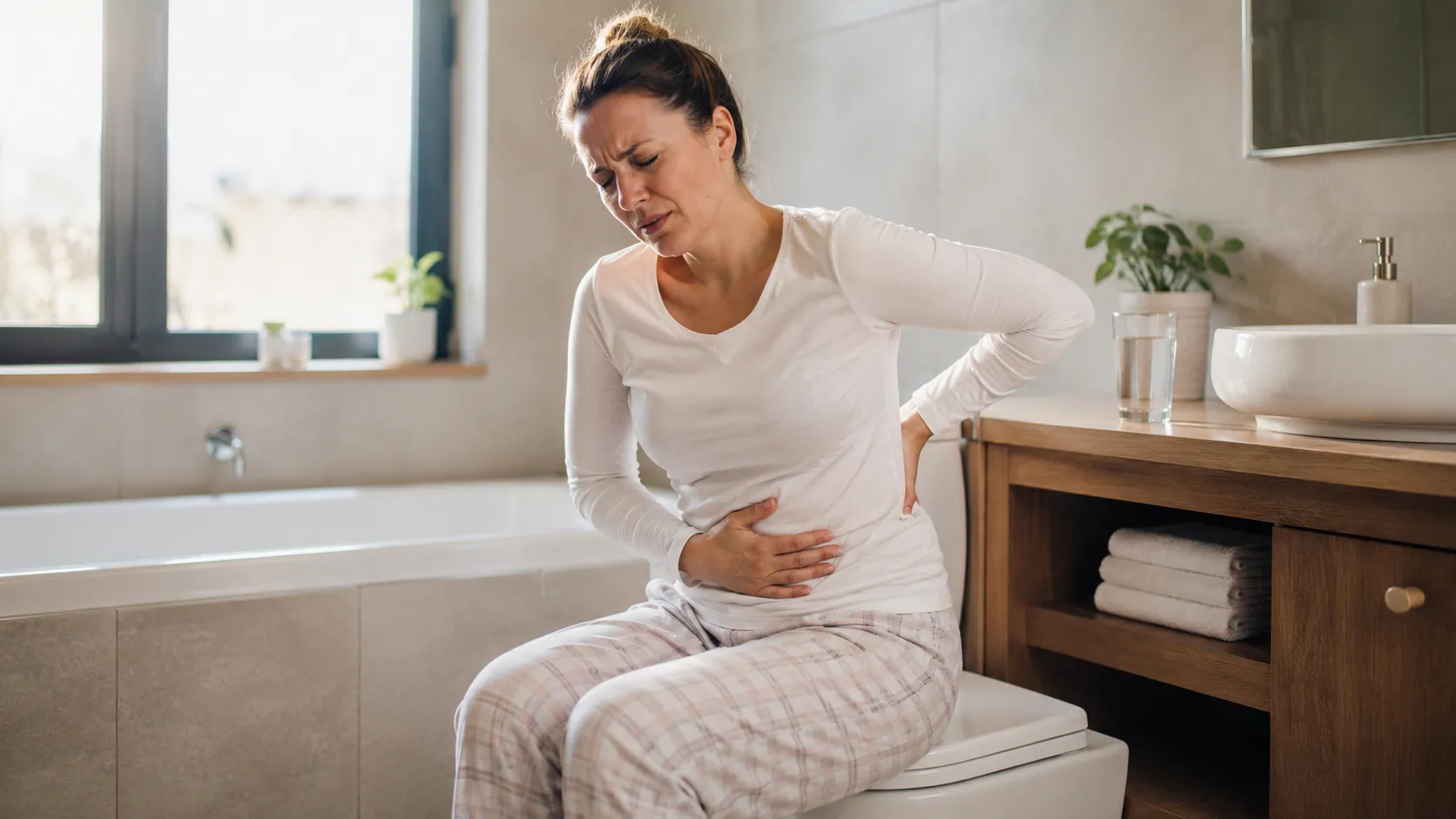
Introduction: Why Constipation and Back Pain Can Happen Together
Yes, it can. Many people do not immediately connect bathroom trouble with lower back discomfort, but the gut, pelvis, and lower back are closely connected. When the bowel is full, bloated, or under pressure, that discomfort can sometimes spread toward the lower back.
Constipation usually means you are having fewer than three bowel movements per week, passing hard stool, or having difficulty emptying your bowels. It can also come with bloating, cramping, straining, or a feeling that you still need to go even after using the bathroom. Common causes include not eating enough fiber, not drinking enough fluids, low physical activity, certain medicines, and some medical conditions.
This can be especially common for new parents. When you are caring for a baby, it is easy to forget to drink water, skip balanced meals, move less than usual, or delay going to the bathroom. Postpartum recovery, pain medicines, iron supplements, breastfeeding-related dehydration, and frequent bending or lifting can also make new parent constipation, postpartum constipation, and lower back discomfort happen at the same time.
The good news is that constipation-related back pain is often manageable, but it is still important to understand why it happens, what it feels like, and when it may need medical attention.
How Constipation Can Cause Lower Back Pain
Constipation can lead to lower back pain when stool stays in the colon too long. As stool sits there, the colon absorbs more water from it. This can make the stool dry, hard, and difficult to pass. Over time, stool buildup can stretch the lower bowel and increase pressure in the abdomen, pelvis, rectum, and nearby tissues.
That pressure may be felt as heaviness, aching, tightness, or pain in the lower back. Medical sources note that constipation can sometimes affect the lower back when a mass of stool presses near nerves in the lower spine, including the sacral nerve area.
Here are the main ways constipation may cause back discomfort:
Stool buildup: When too much stool collects in the lower colon or rectum, it can create pressure that radiates toward the back. This may feel like a dull ache or deep pressure rather than a sharp injury.
Gas and bloating: Constipation often slows gas movement. When gas builds up, the abdomen may feel swollen or tight. This bloating can pull on the abdominal and back muscles, making the lower back feel sore.
Straining during bowel movements: Pushing too hard can stress the abdominal muscles, pelvic floor, and lower back. Over time, repeated straining may make the back feel tense or tired.
Fecal impaction: This is a more serious form of constipation where hard stool becomes stuck, often in the rectum. Cleveland Clinic describes fecal impaction as stool stuck inside the rectum after ongoing constipation, and it can cause pain and other digestive symptoms.
Pelvic floor tension: Chronic constipation can also affect the pelvic floor muscles. These muscles help support bowel and bladder control. If they become tight, weak, or poorly coordinated, a person may feel pelvic pressure, rectal pressure, or low back discomfort. Cleveland Clinic notes that too much straining can damage pelvic floor muscles over time.
In simple words, constipation can cause back pain because the lower bowel, pelvis, nerves, and lower back muscles all share the same crowded space.
What Constipation-Related Back Pain Usually Feels Like
Constipation-related back pain is usually not the same as pain from a sudden back injury. It is often described as dull, achy, heavy, crampy, or pressure-like. It is most commonly felt in the lower back, although some people also feel abdominal bloating, gas, cramps, nausea, pelvic pressure, or a feeling of incomplete emptying.
You may suspect constipation is involved if the back pain appears along with clear constipation symptoms, such as hard stool, fewer bowel movements, or straining. It may also feel worse when you are bloated or unable to pass stool.
Common clues include:
- Back pain started around the same time as constipation.
- Pain feels worse when the abdomen is bloated or full.
- Pain improves after a bowel movement or after passing gas.
- Stools are hard, dry, pellet-like, or difficult to pass.
- You feel rectal pressure or like stool is stuck.
- You strain often or spend a long time on the toilet.
Constipation-related pain may improve once bowel movements become easier and more regular. However, sharp, severe, one-sided, or worsening back pain should not be automatically blamed on constipation. Back pain with vomiting, fever, blood in the stool, unexplained weight loss, numbness, weakness, or loss of bladder or bowel control needs medical attention. Cleveland Clinic highlights that severe abdominal pain, vomiting, blood in stool, and unexplained weight loss can be warning signs when constipation is present.
When Back Pain and Constipation May Be Unrelated
Constipation can cause lower back discomfort, but it does not explain every case of back pain. A person can have back pain and constipation unrelated to each other simply because both problems are common. For example, you may be constipated from diet, dehydration, or medication, while your back pain may come from posture, muscle strain, or lifting something the wrong way.
Back pain can have many causes, including muscle strain, poor posture, weak core muscles, a herniated disc, sciatica, kidney problems, endometriosis, arthritis, or other health conditions. If the pain feels sharp, travels down one leg, causes numbness or weakness, or does not improve as constipation gets better, it may not be coming from the bowel.
This is especially important for new parents. New parent back pain is very common because daily baby care puts repeated stress on the body. Feeding in a hunched position, rocking a baby for long periods, carrying a baby on one hip, lifting car seats, bending over a crib, pushing strollers, and sleeping awkwardly can all strain the lower back. For someone recovering from pregnancy or delivery, postpartum back pain may also be linked to core weakness, pelvic floor changes, healing tissues, or changes in body mechanics.
Constipation may make this discomfort feel worse because bloating and abdominal pressure can add tension around the lower back. Still, constipation may only be one part of the problem.
In rare cases, back pain and bowel problems can happen together because of a more serious spinal or nerve issue. Some infections, tumors, spinal cord pressure, or nerve compression problems can affect bowel function. Warning signs such as leg weakness, numbness in the groin or saddle area, loss of bladder or bowel control, severe pain, fever, or unexplained weight loss should be checked urgently.
Common Reasons Constipation Happens in the First Place
To understand can constipation cause back pain, it helps to understand why constipation starts. Constipation usually happens when stool moves too slowly through the digestive tract or becomes too dry and hard to pass. This can happen because of everyday habits, routine changes, medications, or underlying health conditions.
Common constipation causes include:
- Low fiber intake: A low fiber diet can make stool smaller, harder, and slower to move.
- Not drinking enough fluids: Dehydration constipation can happen when the body pulls more water from the stool, making it dry and firm.
- Too much processed food: Fast foods, refined grains, and low-fiber snacks may slow digestion.
- Skipping meals or irregular eating: Regular meals help trigger normal bowel movement patterns.
- Low physical activity: Movement helps stimulate the intestines, so sitting for long periods may contribute to slow bowel movements.
- Ignoring the urge to go: Holding stool too often can make it harder and more difficult to pass later.
- Travel, stress, or routine changes: Changes in sleep, meals, hydration, and bathroom access can disrupt bowel habits.
- Pregnancy and postpartum changes: Hormonal shifts, pressure on the bowel, reduced movement, and recovery after delivery can all lead to postpartum constipation.
- Iron supplements: Iron can make stool harder or darker and may contribute to constipation in some people.
- Opioid pain medication: Opioid constipation is common after surgery, injury, or delivery because these medicines slow bowel movement.
- Other medicines: Some antidepressants, antacids, blood pressure medicines, and antihistamines may cause medication constipation.
- Medical conditions: Thyroid problems, diabetes, IBS, pelvic floor dysfunction, and some neurological conditions can also affect bowel function.
For new parents, the cause is often a mix of small daily changes. You may drink less water, delay bathroom breaks, eat quickly, rely on easy snack foods, move less, or feel too busy to notice early constipation symptoms. Over time, these small habits can quietly lead to hard stool, bloating, and lower back discomfort.
Safe Ways to Relieve Constipation and Back Discomfort at Home
If your symptoms are mild and there are no warning signs, simple home steps may help support bowel movements and ease pressure-related back discomfort. The goal is not to force the body, but to help stool move more comfortably through the colon.
Start with gentle constipation relief habits:
- Drink more water throughout the day. Better water intake can help keep stool softer, especially if you are adding more fiber.
- Add fiber gradually. Good sources include fruits, vegetables, beans, oats, whole grains, chia seeds, and psyllium. Increase fiber slowly so you do not make gas and bloating worse.
- Walk daily. Even 10–15 minutes of walking can help stimulate digestion and support lower back mobility.
- Use a footstool on the toilet. Raising your feet slightly can improve toilet posture and make bowel movements easier for some people.
- Avoid straining. Pushing too hard can stress the pelvic floor, abdomen, and lower back.
- Do not sit on the toilet too long. Long bathroom sessions can increase pressure and may worsen discomfort.
- Try warm fluids in the morning. Warm water, tea, or another gentle drink may help trigger the natural bowel reflex.
- Eat regular meals. Meals help activate movement in the digestive tract, especially breakfast.
- Use gentle stretching. Light lower back, hip, and pelvic stretches may ease tightness from bloating, posture, or straining.
- Ask about safe over-the-counter options. A pharmacist or healthcare professional can guide you on fiber supplements, stool softeners, osmotic laxatives, or other options if lifestyle changes are not enough.
For new parents, small systems can make a big difference. Keep a water bottle near your feeding or pumping area, prepare simple fiber-rich snacks, and take short stroller walks when possible. If you are postpartum, breastfeeding, recovering from a C-section, taking iron, or using pain medicine, ask your healthcare provider which constipation options are safest for your situation.
If back pain improves after a bowel movement or passing gas, constipation may have been part of the cause. But if pain continues, becomes severe, spreads down the leg, or comes with fever, vomiting, blood in stool, weakness, numbness, or loss of bladder or bowel control, do not treat it as simple constipation. Those symptoms need medical attention.
What Not to Do When Constipation Causes Back Pain
When constipation and back pain happen together, it is natural to want fast relief. But some common constipation mistakes can make the problem worse or delay the right care. The goal is to support your body gently, not force a bowel movement at any cost.
First, do not keep straining hard. Straining constipation may seem like the only way to pass stool, but pushing too much can irritate the rectum, worsen hemorrhoids, stress the pelvic floor, and make the lower back feel tighter. If stool feels stuck, it is better to pause, hydrate, walk, adjust your toilet posture, or ask a healthcare professional about safe options.
Do not ignore severe or worsening pain. Mild pressure or dull lower back discomfort can happen with constipation, but severe constipation back pain should be taken seriously, especially if it does not improve after passing stool or gas.
Also, do not rely on frequent stimulant laxatives without medical advice. Occasional use may be appropriate for some people, but regular use without guidance can lead to cramping, dehydration, or a pattern where the bowel depends on stronger stimulation. This is why laxative safety matters, especially for older adults, pregnant people, postpartum parents, and anyone taking regular medicines.
Another common mistake is suddenly eating a large amount of fiber without drinking enough water. Fiber can help constipation, but adding too much too quickly may cause more gas, bloating, and abdominal pressure. Increase fiber slowly and pair it with enough fluids.
You should also avoid assuming every case of back pain is from constipation. Back pain may come from muscle strain, sciatica, a disc problem, kidney issues, injury, or another condition. Constipation may be present at the same time without being the main cause.
Finally, avoid random “detox” teas, harsh cleanses, extreme home remedies, or repeated enemas unless a clinician recommends them. These are important constipation remedies to avoid because they may irritate the gut, cause dehydration, or hide a more serious problem.
Constipation is common, but severe, unusual, or persistent symptoms deserve proper medical evaluation. A careful diagnosis is safer than guessing, especially when back pain warning signs are present.
When Constipation and Back Pain Could Be Serious
Most constipation is not an emergency, but constipation with back pain can sometimes point to a more serious problem. You should know the difference between mild discomfort and symptoms that need medical attention.
Contact a healthcare provider if constipation is new for you, keeps coming back, lasts longer than expected, or does not improve with basic lifestyle changes. You should also seek care if bowel movements are painful, symptoms last more than three weeks, or you notice changes that feel unusual for your body.
Get medical help promptly if you have constipation emergency symptoms such as:
- Severe or worsening abdominal pain
- Severe back pain that does not improve
- Vomiting
- Major bloating or a swollen abdomen
- Blood in stool or black, tarry stool
- Fever
- Unexplained weight loss
- Constipation lasting more than three weeks
- Inability to pass gas
- New weakness, numbness, or loss of bladder or bowel control
- Back pain after an injury or fall
- Constipation in a newborn or very young baby
- Postpartum severe pain, fever, heavy bleeding, or feeling very unwell
These symptoms may suggest something more than simple constipation. Possible concerns can include fecal impaction symptoms, bowel blockage, infection, inflammation, nerve compression, or another medical condition that needs proper care.
Pay special attention to symptoms such as vomiting with constipation, a swollen belly, severe cramping, or inability to pass gas. These may be possible bowel obstruction symptoms and should not be treated with random laxatives at home.
Also, if back pain comes with leg weakness, numbness around the groin or saddle area, or loss of bladder or bowel control, seek urgent medical care. These symptoms may suggest a nerve or spinal problem rather than ordinary constipation.
In simple terms, mild constipation-related pressure can often improve with safer bowel habits, but severe pain, blood in stool, vomiting, fever, weakness, or loss of control should never be ignored.
Special Considerations for New Parents, Pregnancy, and Postpartum Recovery
Postpartum constipation and back pain can happen for many reasons, and it is not a personal failure. New parents are often exhausted, dehydrated, eating at odd times, moving less, and spending long hours feeding, rocking, lifting, and carrying a baby. These daily demands can affect both digestion and the lower back.
During pregnancy, constipation may be linked to hormonal changes, pressure from the growing uterus, reduced movement, iron supplements, and slower bowel activity. This is why pregnancy constipation back pain can sometimes happen together. After delivery, constipation may continue because of postpartum recovery, C-section discomfort, perineal pain, pelvic floor changes, breastfeeding-related fluid needs, and pain medicines.
New parent back pain may also come from body mechanics. Bending over a crib, nursing or bottle-feeding in a hunched position, lifting a car seat, carrying a baby on one side, or sleeping in awkward positions can strain the back. Constipation can add pressure and make that discomfort feel worse.
Practical steps that may help include:
- Do not ignore the urge to have a bowel movement.
- Use doctor-approved stool softeners if recommended after delivery.
- Support your feet with a small stool while using the toilet.
- Keep fluids nearby during breastfeeding or pumping to reduce breastfeeding dehydration.
- Add fiber slowly so you do not create extra gas and bloating.
- Use safe lifting posture when picking up the baby.
- Avoid holding the baby on one hip for long periods.
- Ask a clinician about pelvic floor therapy if constipation, pelvic pressure, tailbone pain, or back pain persists.
If you had a C-section, are taking iron, using opioid pain medicine, or recovering from a difficult delivery, ask your healthcare provider what is safe for C-section constipation, iron supplements constipation, or postpartum bowel discomfort. Some remedies that are fine for one person may not be ideal for another.
Most of all, be patient with your body. Pregnancy, delivery, and early parenting can change your routines quickly. Constipation and back pain often improve with hydration, regular meals, gentle movement, safe bathroom habits, and the right medical guidance when needed.
How Doctors Diagnose Constipation With Back Pain
A constipation diagnosis usually starts with a simple conversation about your symptoms. A doctor may ask how often you have bowel movements, what your stool looks like, whether you strain, how long symptoms have lasted, and whether you feel completely empty after using the bathroom. They may also ask about your diet, water intake, activity level, stress, travel, and daily routine.
Because back pain can have many causes, the clinician may also ask where the pain is located, whether it spreads into the legs, and whether you have numbness, weakness, fever, vomiting, blood in the stool, weight loss, or bladder changes. These details help guide the back pain evaluation and show whether constipation is likely involved or whether another condition needs attention.
A doctor may also review your medications and supplements. Iron supplements, opioid pain medicines, some antidepressants, antacids, antihistamines, and certain blood pressure medicines can contribute to constipation. For pregnant or postpartum patients, the doctor may ask about delivery recovery, C-section healing, breastfeeding, pelvic pressure, perineal pain, and postpartum bowel habits.
Depending on your symptoms, the exam may include:
- A physical exam
- An abdominal exam to check tenderness, bloating, or stool buildup
- A rectal exam if fecal impaction diagnosis is a concern
- Blood tests if thyroid disease, diabetes, anemia, infection, or inflammation is suspected
- Imaging if severe pain, obstruction, injury, or another condition is possible
- Referral to primary care, gastroenterology, spine care, or pelvic floor therapy
If constipation keeps coming back, it may be considered chronic constipation. Chronic constipation often means symptoms have been recurring for several months, not just a few days. In that case, home remedies may not be enough. A healthcare professional may look for deeper causes such as pelvic floor dysfunction, IBS, medication effects, thyroid problems, diabetes, nerve issues, or other digestive conditions.
Getting checked does not always mean something serious is wrong. It simply helps make sure the treatment matches the real cause of your bowel habits and back discomfort.
Conclusion: Can Constipation Cause Back Pain?
So, can constipation cause back pain? Yes, it can. Constipation may lead to lower back discomfort when stool buildup, bloating, gas, straining, or fecal impaction puts pressure on the lower abdomen, pelvis, nearby nerves, or surrounding muscles.
In many cases, constipation-related back pain is felt in the lower back. It often feels dull, achy, heavy, crampy, or pressure-like rather than sharp or shooting. Some people notice that the discomfort improves after passing stool or gas, especially when bloating and pressure go down.
The main takeaway is that healthy bowel habits can help. Drinking enough water, adding fiber slowly, walking regularly, using better toilet posture, avoiding straining, and keeping a steady bathroom routine may support constipation relief and reduce pressure-related discomfort.
New parents may need extra support because sleep disruption, dehydration, irregular meals, postpartum recovery, lifting, pain medicines, and feeding posture can all contribute to constipation and lower back pain. Small changes, such as keeping water nearby, eating fiber-rich snacks, taking short walks, and using safer lifting posture, can make daily recovery easier.
Still, constipation should not be used to explain every case of back pain. Severe, persistent, unusual, or worsening symptoms should be checked by a healthcare professional. Pay attention to back pain warning signs such as fever, vomiting, blood in stool, unexplained weight loss, weakness, numbness, inability to pass gas, or loss of bladder or bowel control.
Constipation is common and often manageable, but your body’s warning signs matter. When pain feels severe, different, or concerning, it is always better to get medical guidance than to guess.
FAQ About Constipation and Back Pain
Can constipation cause lower back pain?
Yes. Constipation can sometimes cause lower back pain when stool buildup, gas, bloating, or fecal impaction creates pressure in the lower abdomen and pelvis. This pressure can make the lower back feel achy, heavy, or uncomfortable.
Where is constipation back pain usually felt?
The most common constipation back pain location is the lower back. Some people may also feel pelvic pressure, abdominal cramps, bloating, or a general feeling of heaviness around the lower abdomen.
How do I know if my back pain is from constipation?
It may be related if you also have hard stools, bloating, straining, fewer bowel movements, and the pain improves after passing stool or gas. Back pain after bowel movement relief can be a clue, but it is not a guaranteed diagnosis.
Can constipation cause sharp back pain?
Constipation-related pain is usually dull, achy, heavy, or pressure-like. Sharp, severe, one-sided, or worsening back pain should be checked, especially if it comes with fever, vomiting, blood in stool, weakness, numbness, or urinary symptoms.
Can trapped gas and constipation cause back pain?
Yes. Gas constipation back pain can happen when bloating increases pressure in the abdomen. This pressure may make the lower back feel tight, sore, or uncomfortable.
Can constipation cause back pain in pregnancy or postpartum?
Yes, constipation can contribute to pregnancy constipation back pain and postpartum discomfort. However, pregnancy and postpartum back pain can also come from posture changes, pelvic floor strain, delivery recovery, lifting, feeding positions, C-section healing, or muscle strain.
Does back pain go away after constipation is relieved?
If constipation is the main cause, back pain may improve after bowel movements become easier and more regular. If the pain does not improve, keeps returning, spreads down the leg, or feels severe, another cause should be considered.
Disclaimer
This article is for general informational purposes only and is not a substitute for professional medical advice, diagnosis, or treatment. Individual symptoms, results, and health situations may vary. Always speak with a qualified healthcare professional if you have concerns about constipation, back pain, or any ongoing symptoms.