
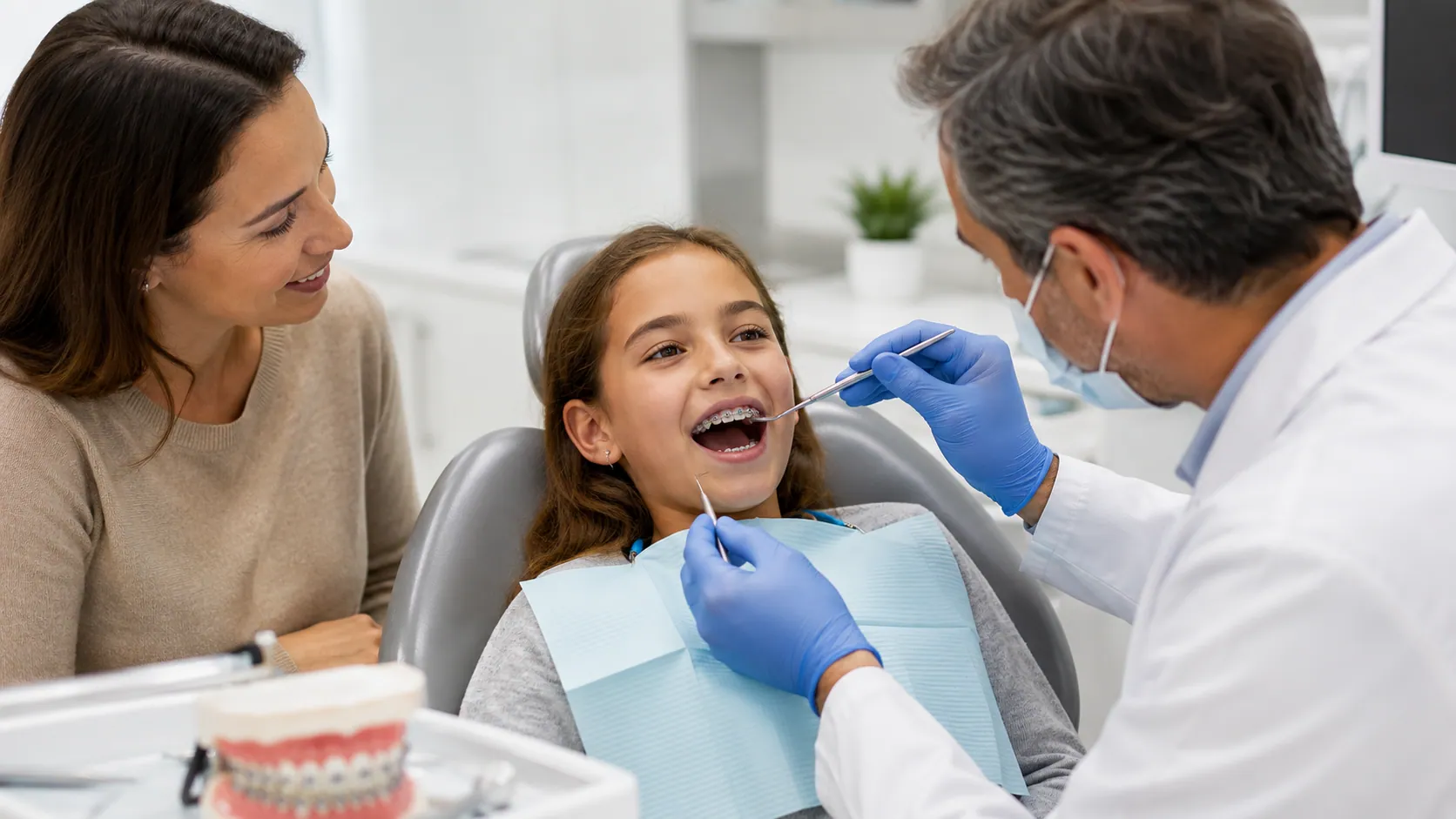
What age can you have braces is a common question for parents who start noticing crowded teeth, bite problems, or early changes in the way their child’s jaw is growing. The truth is, there is no single perfect age that fits every child. Some children may need orthodontic attention early, while others may only need regular monitoring until more permanent teeth come in.
As a general rule, many orthodontists recommend a child orthodontic checkup by age 7. This does not always mean a child will need braces right away. At this age, an orthodontist can look at how the teeth, bite, and jaw are developing and decide whether treatment is needed now or later. For many children, full braces often begin around ages 10 to 14, when more adult teeth have erupted and the mouth is still growing.
The best age for braces depends on the child’s dental development, not just their birthday. Some children benefit from early treatment to guide jaw growth or fix bite issues, while others may simply need observation for a few years. Parents should remember that braces for children are not only about making teeth look straight. They can also help improve chewing, speech, oral health, jaw balance, and long-term confidence. Understanding the right kids braces age can help families make calm, informed decisions without rushing into treatment too soon.
What Age Can You Have Braces?
Most children can be evaluated for braces around age 7, but that does not mean every child needs treatment at that age. For many kids, the first orthodontic visit is simply a way to check how the teeth, bite, and jaws are developing. The orthodontist may recommend treatment, or they may say the child should be monitored as more permanent teeth come in.
Full braces commonly begin between ages 10 and 14. This is a common braces age range because many permanent teeth have erupted by then, and the jaw is still growing. At this stage, orthodontic treatment can often guide the teeth and bite into a healthier position while the mouth is still developing.
Some children may need early orthodontic treatment between ages 6 and 10 if they have serious bite problems, jaw growth concerns, severe crowding, crossbite, underbite, or teeth coming in the wrong direction. This type of care is not needed for every child, but it can be helpful when an orthodontist sees a problem that may become harder to fix later.
Teens and adults can also get braces if their teeth, gums, and jawbone are healthy. There is no strict upper age for braces. The main difference is that children and teens are still growing, while adult treatment may depend more on gum health, bone support, and the complexity of the bite issue.
So, what age do kids get braces? The simple answer is that many children start full braces around 10 to 14, but the right orthodontic treatment age depends more on dental development than birthday age. A child’s mix of baby teeth and permanent teeth, jaw growth, bite alignment, and oral health all play a role in proper child braces timing.
The American Association of Orthodontists recommends a first orthodontic visit by age 7 because children usually have a mix of baby and permanent teeth at that stage. This helps orthodontists spot early bite and jaw problems before they become more difficult to manage.
Why Orthodontists Recommend a First Checkup Around Age 7
An orthodontic evaluation at age 7 does not mean every child needs braces right away. In many cases, the first visit is simply a careful look at how the teeth, jaw, and bite are developing. At this age, children often have a mix of baby teeth and permanent teeth coming in, which gives the orthodontist a helpful view of what may happen as the mouth continues to grow.
During a first orthodontist visit, the orthodontist can check several important things, including jaw growth, bite alignment, crowding, spacing problems, crossbite, overbite, underbite, and the path permanent teeth are taking as they erupt. These details can show whether a child’s mouth is developing normally or whether there may be a concern that needs early attention.
Parents often think braces should wait until all baby teeth have fallen out, but an early orthodontic checkup is more like a growth-and-bite screening. The goal is not always to start treatment. Instead, the orthodontist looks for signs that the teeth or jaws may need guidance as the child grows.
Early checks help parents know whether it is better to wait, monitor, or treat early. Some small problems, such as a narrow upper jaw, crossbite, severe crowding, or certain bite issues, may be easier to correct while a child is still growing. Catching these concerns early can sometimes reduce the risk of more complicated treatment later.
However, many children are placed on observation rather than immediate braces. This means the orthodontist may check the child every few months or once a year to watch tooth eruption, jaw development, and bite changes. A professional child bite evaluation gives parents a clearer plan, so they do not have to guess whether their child needs braces now or later.
What Is the Best Age to Get Braces?
The best age for braces is often around 11 to 13, but the right timing can be different for every child. Many children are ready for full braces during this stage because several permanent teeth have already come in, and the mouth and jaws are still growing. This makes it a useful time to guide tooth movement and bite correction.
NHS guidance also notes that braces are commonly ideal around age 12 or 13, while the mouth and jaws are still developing. This does not mean every child must start braces at that exact age. Some children are ready earlier, especially if many permanent teeth have erupted and the orthodontic issue is clear. Others may need to wait a little longer if their teeth are still coming in, their jaw growth needs more time, or they are not mature enough to manage braces care.
The ideal age for braces is not only about when teeth look crooked. It is about when treatment can be effective, safe, and manageable. A child should have enough permanent teeth for the orthodontist to guide alignment properly, but they should also be able to brush well, follow food instructions, and attend regular appointments.
A simple way to understand the timing is this:
Age 6–10: Some children may need early or interceptive orthodontic treatment for bite, jaw, spacing, or growth concerns.
Age 10–14: This is the most common age range for full braces because many permanent teeth are present and the jaw is still developing.
Teen years: Teens can still get excellent results with braces, especially when they follow care instructions and wear elastics or retainers as directed.
Adults: Braces are possible at almost any age if the teeth, gums, and supporting bone are healthy.
So, when should kids get braces? For many children, braces at 12 or braces at 13 may be the right time, but the best answer depends on dental development, bite condition, jaw growth, and the orthodontist’s evaluation. The goal is not to start treatment as early as possible, but to begin at the time when it will work best for the child.
Can a Child Get Braces Before All Baby Teeth Fall Out?
Yes, some children can get braces with baby teeth still in their mouth, but this usually depends on the type of orthodontic problem they have. In many cases, early treatment does not mean full braces on every tooth. It may involve limited braces, an expander, a space maintainer, or another orthodontic appliance used to guide growth and create better conditions for permanent teeth.
This type of care is often called Phase 1 braces, Phase 1 orthodontic treatment, or interceptive orthodontics. It usually happens while a child still has a mix of baby teeth and permanent teeth. The goal is to correct certain problems early, especially when waiting could make treatment more difficult later.
Early braces for kids may be recommended if a child has jaw growth problems, severe crowding, a crossbite, an underbite, or teeth that are coming in at an unusual angle. An orthodontist may also suggest early treatment for harmful oral habits, such as long-term thumb sucking, if the habit is affecting the bite or jaw shape.
However, many children do not need braces before all baby teeth fall out. If the orthodontic concern is mild or if too many permanent teeth have not erupted yet, the orthodontist may recommend waiting and monitoring the child’s growth. Full braces are often more effective once more adult teeth have come in.
Parents should also understand that baby teeth and braces do not always mean treatment will be finished early. Phase 1 treatment is not always a shortcut. Some children still need Phase 2 braces later, usually when most or all permanent teeth have erupted. The purpose of early treatment is to guide development, reduce certain risks, and make future treatment more predictable when it is truly needed.
What Is Phase 1 Orthodontic Treatment?
Phase 1 orthodontics is early orthodontic treatment that usually happens around ages 6 to 10, when a child still has a mix of baby teeth and permanent teeth. It is not the same as full braces for every tooth. Instead, it focuses on correcting specific growth, spacing, or bite problems while the mouth is still developing.
The main goal of early orthodontic treatment is to guide jaw growth, create enough space for permanent teeth, improve bite alignment, and reduce the chance of more complex problems later. For example, if a child has a narrow upper jaw, severe crowding, crossbite, underbite, or teeth that are blocked from coming in properly, an orthodontist may recommend treatment before all adult teeth have erupted.
Common Phase 1 appliances may include a palatal expander, limited braces, space maintainers, or habit appliances. A palatal expander may be used to gently widen the upper jaw when needed. Limited braces may help move certain teeth into better positions. Space maintainers can help hold room for permanent teeth if baby teeth are lost too early. Habit appliances may be used when thumb sucking or tongue habits are affecting the bite.
However, interceptive braces or Phase 1 treatment are not needed for every child. Many children only need regular checkups while the orthodontist watches how their teeth and jaws develop. In some cases, starting too early is not helpful if the problem can be treated more effectively later.
Parents should also know that braces before age 10 do not always replace future treatment. Some children still need Phase 2 treatment when more permanent teeth come in, often around the preteen or early teen years. Phase 1 is usually recommended when early action can make future orthodontic care easier, safer, or more predictable.
Some orthodontic problems are easier to manage early because children’s jaws are still growing and their teeth are still developing. When used for the right reasons, Phase 1 treatment can help guide the mouth in a healthier direction before certain bite or spacing problems become harder to correct.
Signs Your Child May Need Braces or an Orthodontic Evaluation
There are several signs your child needs braces or at least an orthodontic evaluation. Some signs are easy to notice, such as crooked teeth in kids, while others may involve the bite, jaw movement, or the way permanent teeth are coming in.
One common sign is crowded teeth in kids. If the teeth overlap, twist, or do not seem to have enough space, an orthodontist may need to check whether the permanent teeth can come in properly. Large gaps between teeth can also be worth checking, especially if they affect the bite or do not close as the mouth develops.
Parents should also pay attention to the timing of baby teeth. Losing baby teeth much earlier or much later than expected can sometimes affect how adult teeth erupt. If permanent teeth are coming in blocked, twisted, or in the wrong place, an orthodontic evaluation can help determine whether space guidance or treatment is needed.
Bite problems are another important reason to see an orthodontist. A child may have an overbite, underbite, crossbite, or open bite. An overbite child may have upper front teeth that cover too much of the lower teeth. An underbite child may have lower teeth that sit in front of the upper teeth. A crossbite in children can happen when some upper teeth sit inside the lower teeth instead of outside them. These bite issues can affect chewing, jaw growth, tooth wear, and long-term oral comfort.
Other signs include trouble biting or chewing, jaw shifting when opening or closing the mouth, jaw clicking, an uneven bite, or teeth that stick out noticeably. Mouth breathing, thumb sucking beyond early childhood, and some speech concerns may also be linked to bite development or tooth position.
Parents do not need to diagnose the problem at home. The most helpful thing is to notice patterns. If your child’s teeth seem crowded, the bite looks uneven, chewing seems difficult, or permanent teeth are not coming in normally, a professional orthodontic evaluation can give you a clear answer and a calm plan.
When Is It Better to Wait Before Starting Braces?
Not every child with crooked teeth needs immediate braces. In some cases, slightly uneven teeth may improve as the mouth grows and more permanent teeth come in. That is why braces timing should be based on a professional evaluation, not only on how the teeth look at one moment.
An orthodontist may recommend that a child wait for braces if too many baby teeth are still present. Full braces often work best when enough adult teeth have erupted, because the orthodontist can guide the final tooth positions more accurately. If treatment starts too early without a clear reason, a child may spend more time in appliances than necessary.
It may also be better to wait if the bite issue is mild, permanent teeth are still erupting, or the child’s growth pattern needs to be monitored. Some children are simply not ready for braces care yet. Braces require careful brushing, food changes, regular appointments, and following instructions. If a child is not ready to clean around brackets properly, waiting may help protect their oral health.
This approach is often called watchful waiting or child orthodontic monitoring. During observation visits, the orthodontist checks jaw growth, tooth eruption, spacing, bite changes, and whether the child is getting closer to the right stage for treatment. The goal is to choose the best time for permanent teeth braces if they are needed.
Delaying treatment under professional guidance is very different from ignoring a problem. Ignoring a serious bite issue, crossbite, or blocked permanent tooth can allow the problem to become harder to correct. But waiting with regular orthodontic checkups can be a smart and careful choice.
A good orthodontic plan is not always the earliest plan. It is the most appropriate plan for the child’s growth stage, dental development, and ability to manage treatment successfully.
Braces Age by Dental Development Stage
A simple braces age chart can help parents understand when orthodontic care may be considered. However, these ages are only general guides. The right time for braces depends on tooth eruption, jaw growth, bite development, oral hygiene, and the child’s individual needs.
Ages 6–8: Early Screening Stage
Around ages 6 to 8, many children are in the early screening stage. This is when a first orthodontic evaluation may happen, especially if a parent or dentist notices crowding, bite problems, jaw changes, or permanent teeth coming in at unusual angles.
A braces for 7 year old plan does not usually mean full braces right away. At this age, treatment is normally recommended only when there are noticeable bite, jaw, or eruption concerns. For example, an orthodontist may check for crossbite, underbite, severe crowding, early loss of baby teeth, or permanent teeth that do not seem to have enough room.
In many cases, the orthodontist will simply monitor the child’s growth and wait for more permanent teeth to come in.
Ages 9–10: Mixed Teeth Stage
Around ages 9 to 10, children usually have a mix of baby teeth and permanent teeth. This is sometimes called the mixed dentition stage. Some children may need early treatment during this time, especially if there are problems with spacing, bite alignment, or jaw development.
A braces for 10 year old plan may involve limited braces, an expander, a space maintainer, or another orthodontic appliance rather than full braces. Orthodontists often monitor how much space is available, how the bite is changing, and whether the jaw is growing evenly.
This stage can be important because early guidance may help reduce more complicated treatment later for selected children.
Ages 11–14: Common Braces Stage
Ages 11 to 14 are often the most common years for full braces. By this stage, many permanent teeth have erupted, and the orthodontist can clearly see how the teeth and bite are developing. The jaw is also still growing, which can make some types of correction more effective.
This is why many children start full braces or aligners during the preteen or early teen years. Treatment may focus on straightening crowded teeth, closing gaps, correcting overbite or underbite, improving bite alignment, and creating a healthier smile.
For many families, this is the stage when orthodontic treatment becomes more predictable because enough permanent teeth are in place.
Ages 15–18: Teen Orthodontic Stage
Braces can still work very well during the teen years. Braces for teenagers are common, and many teens begin or continue treatment between ages 15 and 18. At this stage, treatment may focus on tooth alignment, bite correction, jaw balance, and planning for long-term retention after braces come off.
Teenagers may also have more treatment options depending on their case, such as metal braces, ceramic braces, or clear aligners. However, success still depends on good brushing habits, regular appointments, and following orthodontic instructions, such as wearing elastics if prescribed.
Retention planning is especially important during this stage because teeth can shift after braces if retainers are not worn as directed.
Adults: No Fixed Upper Age Limit
There is no fixed adult braces age limit. Adults can have braces if their teeth, gums, and bone support are healthy. Many adults choose orthodontic treatment to correct crowding, spacing, bite problems, or shifting that happened after earlier dental work or not wearing retainers.
Adult treatment may take longer in some cases because jaw growth is complete. Gum health, bone support, missing teeth, past dental treatment, and bite complexity can also affect the plan. Still, braces or clear aligners can be effective for adults when an orthodontist confirms that the mouth is healthy enough for treatment.
The key message is that braces are not limited to children. The best timing depends on dental development, oral health, and the treatment goal.
Types of Braces and Orthodontic Options by Age
The best orthodontic option depends on the child’s age, bite problem, dental development, responsibility level, and the orthodontist’s recommendation. Some children need simple monitoring, while others may need orthodontic appliances, braces, aligners, or retainers at different stages of growth.
Traditional metal braces are one of the most common options for children and teens. They use brackets and wires to gradually move teeth into better positions. Metal braces for kids are often recommended because they are strong, effective for many bite problems, and do not depend on the child remembering to wear removable trays.
Ceramic braces work in a similar way to metal braces, but the brackets are tooth-colored or less noticeable. They may be a good option for older teens or adults who want a more discreet look. However, ceramic braces can require more careful cleaning because the brackets may show stains or plaque more easily if oral hygiene is poor.
Clear aligners for teens or adults may be another option, depending on the case. Many parents ask about Invisalign age, but the right age depends more on maturity and treatment needs than a number. Clear aligners are removable, so they usually work best for responsible teens or adults who can wear them as directed for most of the day. They may not be the best choice for every complex bite issue.
Expanders are often used in younger children when the upper jaw is narrow or when a crossbite needs correction. An expander can help create more space and improve jaw width while the child is still growing. This type of appliance is usually part of early orthodontic treatment rather than full braces.
Retainers after braces are also an important part of treatment. Once braces or aligners finish moving the teeth, retainers help hold the teeth in their new positions. Without retainers, teeth can slowly shift back over time.
In simple terms, there is no one “best” braces type for every age. Younger children may need growth-guiding appliances, preteens and teens often use metal braces or aligners, and adults may choose braces or clear aligners based on oral health and lifestyle. The safest choice is the option that matches the bite problem, the child’s ability to care for the appliance, and the orthodontist’s treatment plan.
How Parents Can Tell If Their Child Is Ready for Braces
Knowing whether a child is ready for braces is not only about age. A child may be old enough for orthodontic treatment, but they also need the right dental development, hygiene habits, emotional comfort, and family support. Braces work best when the child, parents, dentist, and orthodontist are all prepared for the process.
The first part is dental readiness. An orthodontist will check whether enough permanent teeth have erupted, whether the bite problem is clear, and whether the teeth and gums are healthy enough for treatment. If too many baby teeth are still present or the permanent teeth are still coming in, the orthodontist may recommend waiting. Healthy gums and cavity-free teeth are also important before braces begin.
The second part is hygiene readiness. Braces hygiene for kids matters because brackets and wires can trap food and plaque. A child should be able to brush carefully around brackets, clean near the gumline, and follow flossing instructions. Brushing with braces takes more time than regular brushing, so parents may need to help younger children build a steady routine. A child also needs to understand why sticky, hard, or chewy foods can damage braces.
Another important part is emotional readiness. A child should have a basic understanding of why treatment matters and what braces are meant to do. They do not need to be excited about every appointment, but they should feel supported rather than pressured. Some children feel nervous about how braces will look, whether they will hurt, or what friends may say. Calm, honest conversations can make the experience easier.
Parents also need to think about their own readiness. Braces usually require regular orthodontic appointments, school schedule planning, possible activity adjustments, and budget or insurance preparation. Families may also need to plan for soft foods after adjustments, transportation to visits, and extra time for daily oral care.
A child who is not ready to clean braces properly may have a higher risk of plaque buildup, white spots, staining, or cavities. That does not mean treatment should always be delayed, but it does mean parents should take braces responsibility seriously. The best time to start is when the orthodontic need is clear and the child has enough support to care for their teeth throughout treatment.
What Happens at a Child’s First Orthodontic Appointment?
A child’s first orthodontist visit is usually simple, calm, and focused on learning how the teeth, bite, and jaws are developing. Parents often worry that an orthodontic consultation means braces will start right away, but that is not always true. In many cases, the appointment is mainly a careful checkup to decide whether treatment is needed now, later, or not at all.
The visit often begins with a review of the child’s dental and medical history. The orthodontic team may ask about past dental treatment, tooth loss, oral habits, chewing concerns, jaw discomfort, allergies, medical conditions, or family history of orthodontic problems. This helps the orthodontist understand the child’s overall health before making any recommendation.
Next, the orthodontist will do a visual braces exam of the teeth, bite, jaw, and face. They may look at how the upper and lower teeth meet, whether the jaw shifts when the child bites down, and whether there are signs of crowding, spacing, overbite, underbite, crossbite, or open bite. They may also check how baby teeth and permanent teeth are developing.
If needed, the orthodontist may take dental X-rays for braces, photos, or digital scans. These images can show teeth that have not erupted yet, missing teeth, blocked teeth, root positions, jaw growth, and the amount of space available for permanent teeth. Not every child needs every type of image at the first visit, but these tools can help create a clearer picture.
After the exam, the orthodontist will explain the findings in a parent-friendly way. The recommendation may be that no treatment is needed, growth should be monitored, early treatment may help, or full braces may be better later when more permanent teeth come in. This becomes the child’s orthodontic treatment plan, even if the plan is simply to wait and check again in the future.
Parents can make the visit more helpful by asking clear questions, such as:
Does my child need treatment now or later?
Is this Phase 1 treatment or full braces treatment?
What exact problem are we correcting?
What happens if we wait?
How long might treatment take?
A good orthodontic appointment should leave parents feeling informed, not pressured. The goal is to understand the child’s growth, protect oral health, and choose the right timing if braces or other orthodontic care are needed.
How Long Do Kids Usually Wear Braces?
Many children and teens wear braces for about 18 to 24 months, but the exact orthodontic treatment length can vary from child to child. Some mild alignment problems may take less time, while more complex bite, jaw, or spacing issues may take longer.
Parents often ask, how long do braces take because they want to plan around school, activities, costs, and appointments. The answer depends on the child’s treatment needs and how well the plan is followed. A simple case with mild crowding may move faster than a case involving severe crowding, an overbite, underbite, crossbite, or jaw growth concerns.
Several factors can affect kids braces treatment time, including how crowded the teeth are, how much bite correction is needed, and whether the child is still growing. Missed orthodontic appointments can slow progress because adjustments need to happen on schedule. Broken brackets can also delay treatment, especially if they happen often.
Good oral hygiene is another important part of the braces timeline. If plaque builds up around brackets or the gums become irritated, the orthodontist may need to slow down treatment or pause certain steps until the mouth is healthier. Children who are asked to wear elastics also need to wear them as instructed, because elastics often play a key role in correcting bite problems.
After braces come off, treatment is not completely finished. Retainers after braces are usually needed to hold the teeth in their new positions. Without retainers, teeth can slowly shift over time. This is why parents should think of braces as two parts: the active treatment stage, when teeth are moving, and the retention stage, when the new smile is being protected.
Common Parent Concerns About Braces Age
Parents often have many questions about the right age for braces, especially when they notice crowded teeth, bite changes, or permanent teeth coming in unevenly. The answers can vary because every child develops at a different pace, but these common questions can help families understand the general timing.
Is Age 7 Too Young for Braces?
Age 7 is usually not too young for an orthodontic evaluation, but it is often too early for full braces unless there is a clear problem. At this age, many children still have a mix of baby teeth and permanent teeth, so the orthodontist can check how the bite and jaw are developing.
Some children may need early care around this age, especially if they have a crossbite, underbite, severe crowding, or jaw growth concern. However, many children only need monitoring. So, if parents wonder is 7 too young for braces, the better answer is: age 7 is often the right time to check, but not always the right time to start treatment.
Can an 8-Year-Old Get Braces?
Yes, an 8-year-old can get braces, but usually only for specific bite, jaw, or spacing problems. Full braces are not common for every child at this age. Instead, an orthodontist may recommend limited braces, an expander, or another appliance if early treatment can guide growth or prevent a problem from getting worse.
For many 8-year-olds, the orthodontist may simply watch how the permanent teeth come in before starting treatment.
Is 10 a Good Age for Braces?
Age 10 can be a good age for braces for some children, especially if several permanent teeth have erupted and the orthodontic issue is clear. Parents often ask, can a 10 year old get braces, and the answer is yes when the child’s teeth, bite, and jaw development are ready.
At this age, treatment may involve full braces, limited braces, or early orthodontic care depending on the child’s needs. If too many baby teeth are still present, the orthodontist may recommend waiting a little longer.
Is 12 or 13 the Best Age for Braces?
For many children, braces at 12 or braces at 13 can be very common. Around this stage, many permanent teeth are already in place, and the jaws are still growing. This combination often makes it a good time to correct crowding, spacing, and bite problems.
Still, 12 or 13 is not automatically the best age for every child. Some children need help earlier, while others may start later depending on tooth eruption, jaw growth, oral hygiene, and treatment goals.
Can Teenagers Still Get Braces?
Yes, teenagers can still get braces. In fact, teen braces are very common. Many teens start orthodontic treatment during middle school or high school and still get strong results.
Teen treatment may focus on straightening teeth, correcting the bite, improving jaw balance, and preparing for long-term retention. Teens may also have more options, such as metal braces, ceramic braces, or clear aligners, depending on the complexity of the case and how responsible they are with care instructions.
Is There an Age Limit for Braces?
There is no strict age limit for braces. Children, teenagers, and adults can all have orthodontic treatment if their teeth, gums, and supporting bone are healthy.
For adults, treatment may be different because jaw growth is complete, and gum or bone health becomes especially important. However, many adults still successfully get braces or clear aligners to improve alignment, bite function, and oral health. The main question is not age alone, but whether the mouth is healthy enough for safe and effective treatment.
Mistakes Parents Should Avoid When Deciding About Braces
Choosing the right time for orthodontic care can feel confusing, especially when every child’s teeth develop differently. Parents do not need to make the braces decision alone, but knowing the common mistakes can help them ask better questions and avoid unnecessary stress.
One mistake is waiting too long when there are clear bite problems or jaw concerns. Mild crooked teeth may not be urgent, but issues such as crossbite, underbite, severe crowding, jaw shifting, or teeth that cannot come in properly should be checked by an orthodontist. Some problems are easier to guide while the jaw is still growing.
Another mistake is assuming that crooked baby teeth always mean permanent teeth will be crooked too. Baby teeth can look crowded or spaced in ways that change as the mouth grows. At the same time, parents should not assume that straight-looking teeth mean the bite is healthy. A child can have fairly straight front teeth but still have hidden bite problems, jaw imbalance, or permanent teeth coming in at the wrong angle.
Parents should also avoid choosing braces based only on appearance. Good orthodontic care for kids is about more than a straight smile. It can support chewing, bite balance, tooth spacing, jaw development, oral hygiene, and long-term child dental alignment.
Ignoring oral hygiene readiness is another common concern. Braces require careful brushing, flossing, and food choices. If a child is not ready to clean around brackets properly, plaque buildup, gum irritation, staining, or cavities can become more likely.
It is also important not to compare one child’s treatment timeline to another’s. One child may need braces at 9, another at 12, and another not at all. Tooth eruption, jaw growth, bite development, and maturity all affect timing.
Parents should continue regular dental visits before and during orthodontic care. A dentist helps check for cavities, gum health, cleanings, and overall oral health, while the orthodontist focuses on alignment and bite correction. Both roles matter.
Finally, parents should remember that retainers are part of long-term success. Braces move the teeth, but retainers help keep them in place. Forgetting the retention stage is one of the biggest braces mistakes parents make, because teeth can shift after treatment if retainers are not worn as directed.
How to Prepare Your Child for Braces
Taking time to prepare your child for braces can make the experience feel less scary and more manageable. Children often do better when they understand what is happening, why treatment matters, and how they can take care of their teeth during the process.
Start by explaining braces in simple, positive language. You might say that braces help guide teeth into a better position so the child can bite, chew, clean their teeth, and smile more comfortably. Avoid making braces sound like a punishment or something to fear. A calm explanation can help your child feel more confident before the first appointment.
Let your child ask questions, even if the questions seem small. They may wonder if braces will hurt, what foods they can eat, how they will look, or whether classmates will notice. Honest answers are better than overpromising. You can explain that the teeth may feel sore for a few days after braces are placed or adjusted, but the discomfort is usually temporary.
One of the most useful braces tips for kids is to prepare soft foods for the first few days. Good soft foods for braces may include mashed potatoes, yogurt, scrambled eggs, soup, smoothies, pasta, oatmeal, soft rice, applesauce, and soft cooked vegetables. These foods are easier to chew while the teeth adjust.
It also helps to build a stronger brushing and flossing routine before braces start. Good braces care requires extra attention because food can get stuck around brackets and wires. Parents can encourage children to brush slowly, clean near the gumline, and learn how to use floss threaders or orthodontic floss if recommended.
Parents should also talk about daily routines. School lunches may need small changes because sticky, hard, or chewy foods can damage braces. Children who play sports may need an orthodontic mouthguard. Those who play wind instruments may need a little time to adjust to playing with braces.
During the first week with braces, it is normal for a child to feel some pressure, soreness, or frustration while eating and cleaning their teeth. Try to normalize this without exaggerating it. Remind your child that the adjustment period usually gets easier with time.
Most importantly, encourage patience and consistency. Braces take time, and small daily habits matter. When children feel supported instead of rushed or criticized, they are more likely to follow instructions, take care of their teeth, and feel positive about the treatment journey.
Conclusion
The answer to what age can you have braces depends more on dental development than age alone. A child’s teeth, jaw growth, bite alignment, oral hygiene, and permanent tooth eruption all play a role in deciding the right time for treatment.
In general, the first orthodontic evaluation is recommended around age 7. This does not mean every child needs braces at that age. It simply gives the orthodontist a chance to check jaw growth, bite development, spacing, crowding, and how the permanent teeth are coming in.
Some children may need early treatment between ages 6 and 10, especially if they have jaw growth concerns, crossbite, underbite, severe crowding, or teeth that are not erupting properly. However, many children only need monitoring during these years.
For many kids, the best age for braces is often around 10 to 14, when more permanent teeth have erupted and the jaw is still growing. This is the most common stage for full braces or aligners because the orthodontist can guide the teeth and bite more effectively.
Teens and adults can also get braces if their teeth, gums, and supporting bone are healthy. There is no strict upper age limit, although adult treatment may depend more on gum health, bone support, and the complexity of the bite problem.
For parents wondering when kids need braces, the best step is not to guess based only on how the teeth look. A professional orthodontic evaluation can show whether treatment is needed now, later, or not at all. As this child braces guide shows, the right timing helps make treatment more comfortable, effective, and appropriate for the child’s growth stage.
Disclaimer
This article is for general informational purposes only and should not replace professional dental or orthodontic advice. Every child’s teeth, growth, treatment needs, and comfort level may vary. Parents should consult a qualified dentist or orthodontist for guidance based on their child’s individual situation.