
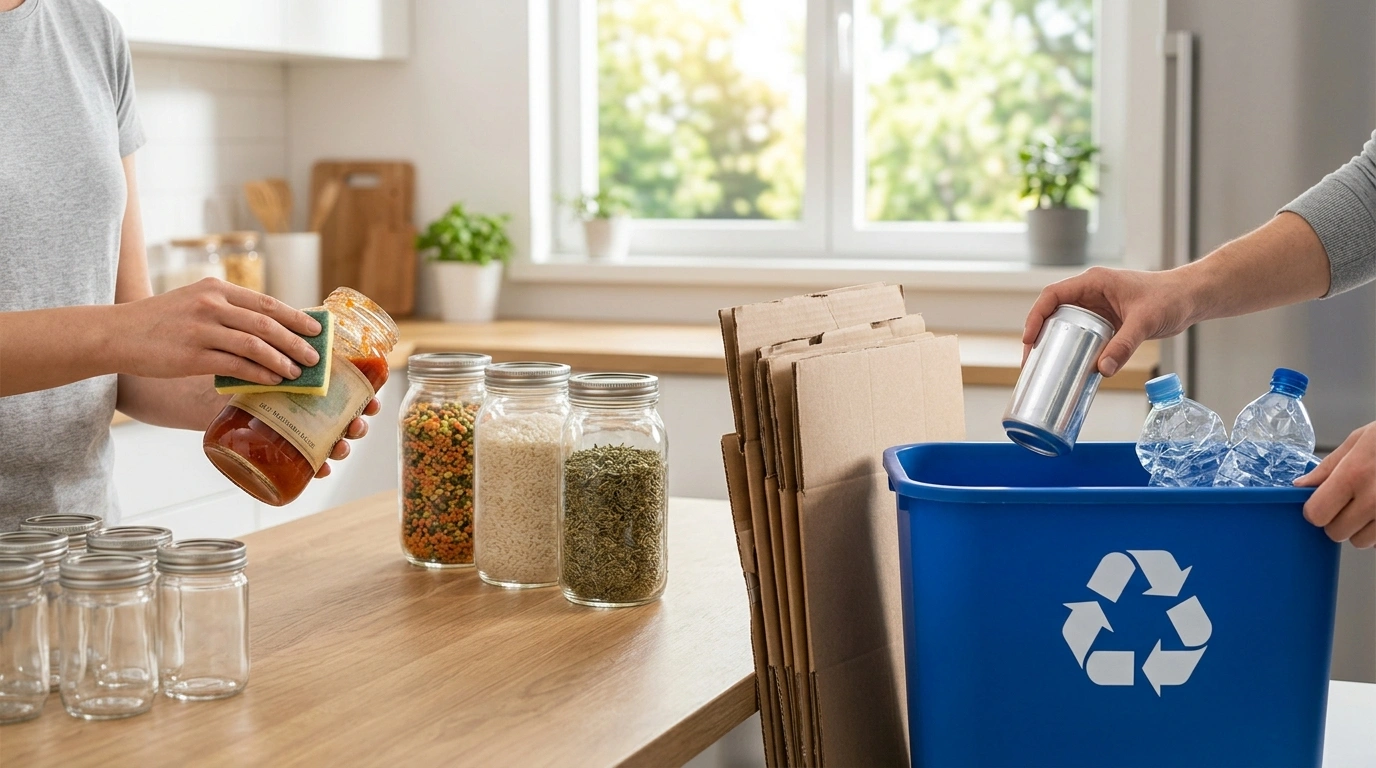
What is the difference between reuse and recycle is a common question, and the answer is simpler than many people think. Reuse means using an item again, often in the same form, while recycling means processing used materials so they can become a new product. That one distinction matters because it affects energy consumption, waste, natural resources, landfills, and your overall environmental impact. Authoritative guidance from the EPA places source reduction and reuse above recycling in the waste hierarchy, which is why understanding this difference is so important.
Many people use reuse, recycle, repurpose, and upcycling as if they mean the same thing. They do not. If you know when to reuse, when to repair, and when to recycle, you can reduce waste, save resources and energy, and make better choices at home, at school, and at work. In this guide, you will learn what is reuse, what is recycling, which is better for the environment, and how both fit into a smarter circular economy.
What Does Reuse Mean?
Reuse means using a product again instead of throwing it away. In many cases, the item stays in the same form and continues to serve the same product purpose. A glass bottle that gets washed and used again is being reused. A storage jar, cloth bag, refillable water bottle, secondhand chair, or donated jacket are all examples of material reuse in everyday life. The EPA explains reuse as using items again “as is” or with very little change, which helps extend the useful life of material and reduces the need for brand-new raw materials.
This is why reuse is often the easiest first step in sustainable practices. It keeps an item in circulation longer and delays waste disposal. Reuse can happen at home, in businesses, in schools, and in industrial settings. A family might reuse containers for leftovers, while a company might reuse shipping boxes, furniture, or equipment. In all of these cases, the goal is the same: extend product life, prevent useful items from entering the waste stream, and avoid unnecessary purchasing. That is also why people searching does reuse mean using the same product again are usually looking for a simple yes: in most cases, yes, it does.
What Does Recycling Mean?
Recycling is different because it involves turning discarded materials into something new. Instead of continuing to use the original item in the same form, recycling breaks it down through a recovery process or transformation process so the material can become a new item or new product. Aluminum cans can be collected, processed, and turned into new cans or other products. Paper can become new paper products. Certain plastics, glass, and metals can also enter this process, depending on local recycling rules. The EPA defines recycling as collecting and processing materials that would otherwise be thrown away and turning them into new products.
This is why the phrase does recycling mean making a new product is such a useful way to remember the definition. Recycling is not just using something again. It usually requires collection, sorting, transportation, industrial handling, and manufacturing. That extra work is still valuable because it can conserve natural resources, reduce demand for virgin materials, and keep waste diverted from landfills. But it is usually more resource-intensive than reuse because it involves an actual remanufacturing step.
Reuse vs Recycle: The Main Difference at a Glance
The easiest way to understand reuse vs recycling is this: reuse keeps the item usable, while recycling keeps the material usable.
| Category | Reuse | Recycle / Recycling |
| Basic meaning | Use the item again | Process the material into something new |
| Form of item | Usually the same form | Usually becomes a new product |
| Energy use | Usually lower | Usually higher because of processing |
| Goal | Extend the life of the product | Recover material value |
| Example | Reusing a glass bottle or container | Melting down old drinks cans |
| Position in waste hierarchy | Preferred before recycling | Helpful when reuse is not practical |
That is the heart of what is the difference between reuse and recycle. If you refill a bottle, donate clothes, repair furniture, or use a box again, you are choosing reuse. If you sort paper, cardboard, cans, or certain plastics so they can be processed into raw material for manufacturing, you are choosing recycling. This also explains another common question: can an item be both reusable and recyclable? Yes, many items can be reused first and recycled later, which is often the best outcome.
Why Reuse Usually Comes Before Recycling
The reason reuse usually comes before recycling is simple: it often uses less energy and resources. The EPA’s waste management hierarchy places source reduction and reuse above recycling, because preventing waste in the first place is usually better than processing it later. When you reuse an item, you avoid much of the energy, transport, and industrial work that recycling requires. That helps conserve natural resources, cut pollution, and keep materials out of landfills for longer.
This is also why many experts say why reuse is more advantageous than recycling is not just a slogan. It reflects how materials move through the economy. If a chair is repaired and kept in use, no new chair has to be made right away. If a jar is used again for storage, no extra packaging is needed for that purpose. If clothing is donated instead of discarded, the product keeps delivering value without re-entering a factory process. In a circular economy, reuse slows down waste generation and reduces dependence on the traditional linear model of production and consumption.
Real-Life Examples of Reuse and Recycling
The best way to understand examples of reuse and recycling at home is to compare common items.
A glass bottle reused for water, oil, or decoration is reuse. A glass bottle collected, crushed, and processed into new glass is recycling. A cardboard box used again for storage or shipping is reuse. A cardboard box placed in a recycling bin to be pulped into new paper products is recycling. Wearing secondhand clothing, donating children’s toys, or refilling a soap dispenser are all reuse. Sorting paper, aluminum, and certain plastics for municipal collection is recycling.
You can also think about it this way: difference between reusing a glass bottle and recycling cans comes down to whether you keep the item usable or turn the material into something new. If you wash and refill the bottle, the same product is still working. If old drinks cans are melted and remade, the original form is gone, but the material still has value. This is also why how recycling works compared with reuse is such an important long-tail angle. Reuse is often more direct and personal. Recycling usually depends on systems, facilities, and accepted materials.
Which Is Better for the Environment: Reuse or Recycling?
For most everyday situations, reuse is better than recycling when it is practical, safe, and realistic. That is because reuse usually avoids the extra energy consumption needed for collection, transportation, and processing. It also helps preserve raw materials and reduces pressure on virgin materials. Recycling is still valuable, especially for items that cannot be reused well, but which is better for the environment reuse or recycling usually has the same answer: reuse first, recycle second.
Some industry and sustainability sources also highlight measurable benefits from reuse-oriented systems and remanufacturing. In the research pool for this topic, figures such as 48% less energy, 51% smaller impact, and high recycled content percentages are used to argue that smarter material management can significantly reduce environmental strain. Those numbers should always be used carefully and in context, but they reinforce the broader point: reducing waste and extending product life can cut resource use in meaningful ways.
A good practical rule is this: if the product can keep serving its purpose with little effort, reuse is usually the better option. If it cannot, then recycle right according to your local system. That balance supports both sustainability and a more efficient waste stream.
How Reuse and Recycling Fit Into the Waste Hierarchy
The waste hierarchy is one of the most important ideas competitors often overlook. According to the EPA, the preferred order is source reduction and reuse, then recycling/composting, then energy recovery, treatment, and disposal. In plain language, that means the best waste is the waste you never create, the second-best option is keeping useful items in circulation, and recycling is the next useful step when reuse is no longer practical.
This matters because many people treat reduce reuse recycle like a catchy phrase without understanding the order. The order matters. Reduce comes first because not buying or not wasting something prevents impacts from the beginning. Reuse comes next because it extends the life of the product. Recycle comes after that because it still requires processing. If you want to understand reduce vs reuse vs recycle, think of them as levels of efficiency. Reducing avoids waste. Reuse delays waste. Recycling manages waste after it exists.
That framework also strengthens your understanding of the 3Rs, resource conservation, materials management, and the circular economy. Instead of asking only whether something is recyclable, a smarter question is: can I avoid it, reuse it, repair it, donate it, or repurpose it before I recycle it? That single mindset shift can make your household waste decisions much more effective.
Reuse, Repurpose, Repair, Upcycle, and Recycle: What Is the Difference?
This is where many readers get confused. Reuse means using the product again, often for the same job. Repurpose means using it again for a different job. Repair means fixing it so it can keep working. Upcycling usually means creatively improving or transforming an item into something of higher perceived value. Recycling means processing the material into something new. These ideas overlap, but they are not identical.
For example, wearing a jacket again is reuse. Turning that jacket into cushion covers is repurpose or upcycling. Sewing a torn seam is repair. Sending fabric fibers into a material processing stream would be recycling. A wooden ladder used again as a ladder is reuse. The same ladder turned into a bookshelf is repurposing. Fixing the loose step is repair. Breaking it down for material recovery would be recycling. Adding this distinction improves topical authority because users often search repurpose vs reuse, upcycle vs recycle, and repair before recycle even when their main keyword is about reuse and recycling.
When Should You Reuse, and When Should You Recycle?
Reuse an item when it is still safe, functional, cleanable, repairable, or useful to someone else. Containers, furniture, books, clothing, bags, tools, and many household goods fall into this category. Donation, resale, refill systems, and secondhand use all support reuse. The EPA specifically encourages actions such as using durable items, donating goods, and finding new uses for products before disposal.
Recycle an item when it can no longer serve its purpose well, cannot be safely reused, or is accepted by your local recycling system as a recoverable material. This is where local recycling rules matter. Something recyclable in one city may not be accepted in another. That is why recycling contamination is such a big problem. Wish-cycling, or tossing questionable items into the bin and hoping for the best, can damage the process and increase handling costs. So if you are asking what can be reused or what can be recycled, the best answer is to think first about product life, then about local program rules.
Common Mistakes People Make
One common mistake is assuming recycling is always the best environmental choice. It is useful, but it is not always the first-best choice. Another mistake is ignoring repair, donation, or refill options that could keep an item useful longer. A third mistake is focusing only on whether something can be recycled instead of asking whether it should be bought, reused, or maintained differently in the first place.
Another major mistake is ignoring local recycling rules. Putting the wrong items in the recycling bin can create contamination and weaken the whole system. Food-soiled materials, mixed materials, or non-accepted packaging may not be recyclable in your area even if they look recyclable. That is why recycle right guidance matters. Good environmental choices are not just about good intentions. They are also about accurate sorting and realistic product use.
Benefits for Households and Communities
The benefits of reuse and recycling go beyond individual homes. Reuse can help people save money, reduce spending on single-use items, and make sustainable living more practical. Buying used furniture, borrowing tools, repairing clothes, and reusing containers all reduce household costs while lowering waste. These habits also support longer product life and lower demand for constant replacement.
Recycling also has broader economic and community benefits. In the research pool tied to this topic, figures such as 681,000 jobs, $5.5 billion in tax revenue, and $37.8 billion in wages are used to show how recycling-related activity can support the economy. Those numbers come from broader recycling-economy discussions and illustrate that smart material systems are not only environmental; they can also have labor and economic value.
A Quick Case Study: The Glass Bottle Example
A glass bottle is one of the best case studies for explaining what is the difference between reuse and recycle.
If you wash the bottle and use it again, that is reuse. You keep the bottle in the same form, and you avoid the extra steps of transport and processing. If the bottle breaks or can no longer be reused safely, and your local system accepts glass, then recycling becomes the better option. The glass may be crushed and processed into a new product. Both actions can be good, but reuse usually comes first because it preserves more of the product’s original value with less extra work.
That one example captures the whole topic clearly: reuse keeps the object alive; recycling keeps the material alive.
Frequently Asked Questions
Is reuse always better than recycling?
Usually, yes, when the item is safe and practical to keep using. That is because reuse often requires less processing and aligns with the EPA waste hierarchy.
Can something be reused and recycled?
Yes. Many items can be reused first and recycled later. A container, box, or bottle may have a long reuse life before it reaches end-of-life.
Why does recycling use more energy than reuse?
Because recycling usually involves collection, sorting, transport, and industrial processing. Reuse often skips most of those steps.
What comes first: reduce, reuse, or recycle?
Reduce comes first, then reuse, then recycle. That order reflects the standard waste hierarchy.
What if my local rules are different?
Always check your city or waste hauler’s guidance. Local recycling rules determine what is actually accepted.
Conclusion: Reuse First, Recycle When Needed
So, what is the difference between reuse and recycle? Reuse means using the item again, while recycling means processing the material into a new product. Both matter, but they do not play the same role. In most cases, reuse is the better first choice because it helps reduce waste, preserve natural resources, lower energy consumption, and support a stronger circular economy. Recycling still matters, especially when an item can no longer be reused, repaired, donated, or repurposed.
The smartest long-term approach is not just to ask whether something is recyclable. It is to think in this order: reduce, repair, reuse, repurpose, and then recycle. That mindset supports zero waste goals, better household waste management, and more practical sustainability in everyday life. If you follow that order, you will make better environmental choices without overcomplicating the decision.
Disclaimer: This article is for general environmental and educational information only. Recycling rules, practices, and benefits may vary by location and system. Always follow local guidelines for proper waste management and disposal.